
T20 World Cup: Greatest hits from each edition—From Misbah’s desperate scoop to India’s great escape
India vs Pakistan, 2007
After a group-stage tie settled by a bowl-out, India and Pakistan were drawn back into each other’s orbit for the final, and Johannesburg braced itself for another classic. India’s innings was shaped by Gautam Gambhir’s nerveless 75, an anchor forged in pressure and lit up by a fearless 20-year-old Rohit Sharma, whose brisk 30 pushed the total to a tense, tantalising 157. Pakistan’s reply exploded into life through Imran Nazir’s breathtaking 33 off 14, a blitz that threatened to tear the chase open until Robin Uthappa’s arrow throw found him short and swung the night again. Wickets fell, hope flickered as Misbah-ul-Haq stood firm, carrying Pakistan to the edge of a miracle. Then came the final over. Joginder Sharma. One wicket left. Six needed from four. A slower ball. A desperate scoop. A simple catch at short fine leg. In that suspended heartbeat, India’s improbable journey found its perfect ending.
ALSO READ | How India shed its T20 inhibitions to become the format’s defining force
Netherlands vs England, 2009
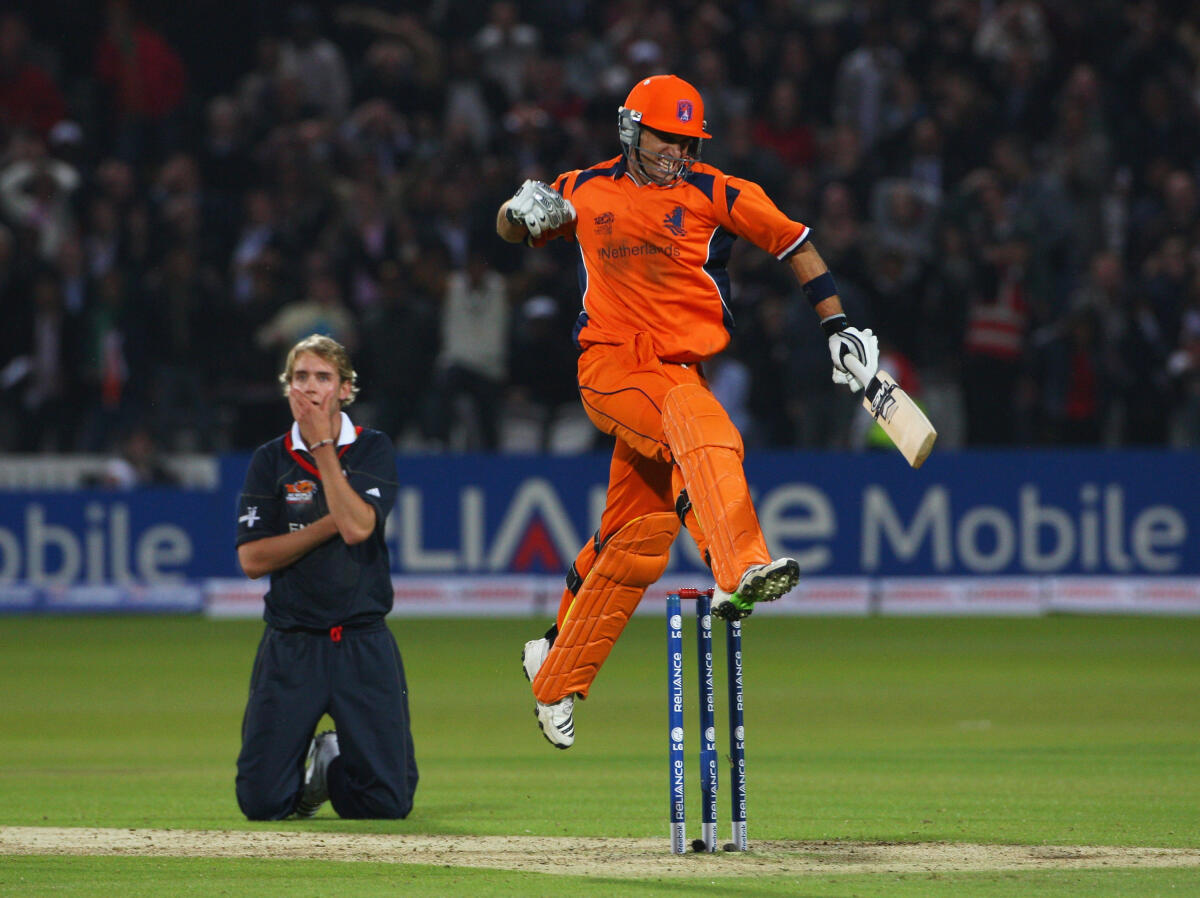
As the equation came down to seven runs from the final over, a series of fielding lapses allowed the Dutch to move closer, reducing the requirement to just two off the last ball.
| Photo Credit:
Getty Images

As the equation came down to seven runs from the final over, a series of fielding lapses allowed the Dutch to move closer, reducing the requirement to just two off the last ball.
| Photo Credit:
Getty Images
In one of the most thrilling upsets in T20 World Cup history, the Netherlands stunned host England in the opening match of the 2009 edition at Lord’s. Asked to bat first, England posted a competitive 162 for five, built around solid contributions from openers Ravi Bopara, who made 46, and Luke Wright, who top-scored with 71. The chase, however, was far from straightforward for the Netherlands. Wickets fell at regular intervals, with James Anderson finishing with figures of three for 23 from his full quota. Despite the pressure, Tom de Grooth (49 off 30 balls) held the innings together and found valuable support from Peter Borren (30) and Ryan ten Doeschate (22 not out). As the equation came down to seven runs from the final over, it was anybody’s game. A series of fielding lapses allowed the Dutch to move closer, reducing the requirement to just two off the last ball. Edgar Schiferli pushed the final delivery straight back to the bowler, Stuart Broad, and set off for a single. Broad hurled the ball towards the non-striker’s end but missed his target, and the Netherlands capitalised on the mistake, scrambling through for an extra run via overthrows, registering an “unbelievable and special” win, as Dutch captain Jeroen Smits put it.
Australia vs Pakistan, 2010
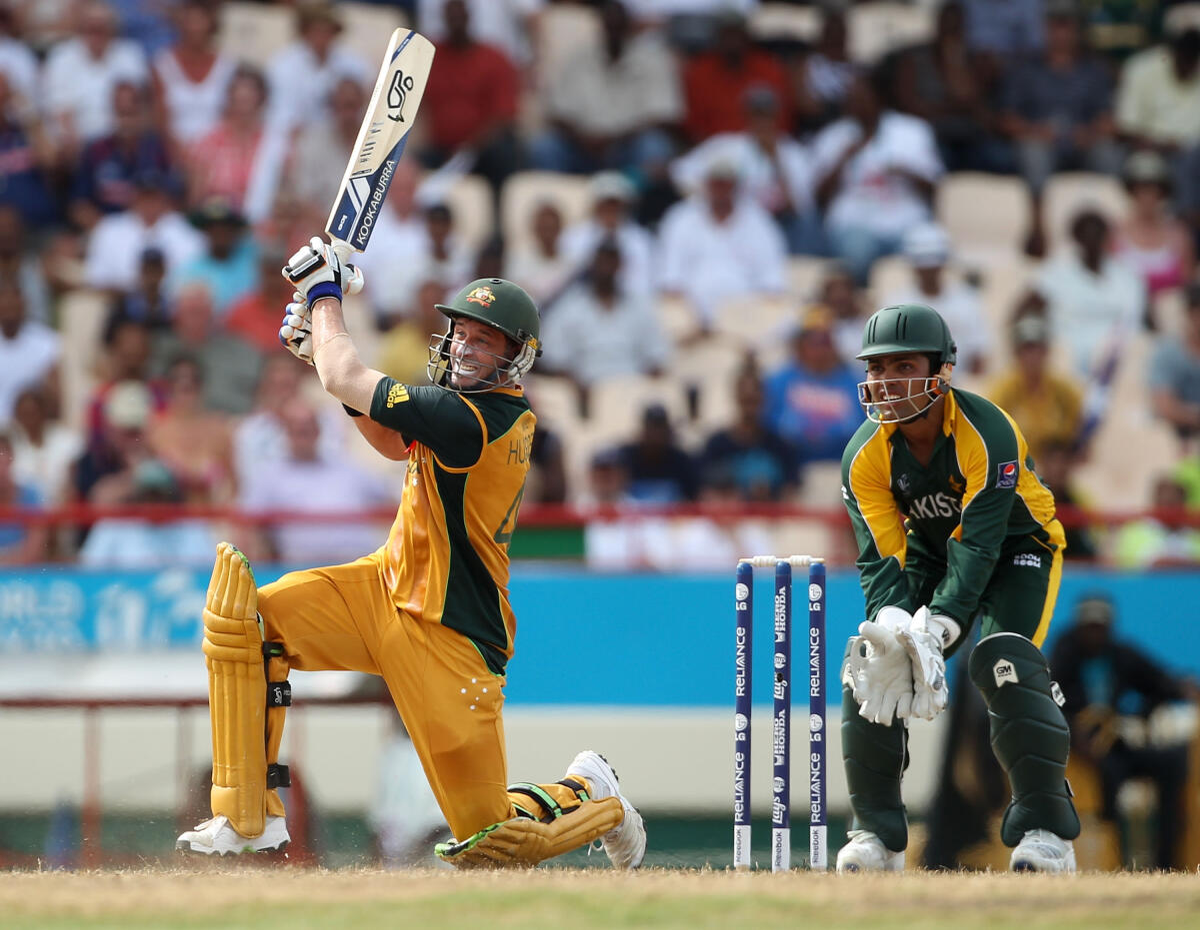
Pakistan’s defence was finally broken in the final over with a towering six over long-on as Hussey carried Australia into the final.
| Photo Credit:
Getty Images
Pakistan’s defence was finally broken in the final over with a towering six over long-on as Hussey carried Australia into the final.
| Photo Credit:
Getty Images
Semifinal. World Cup. Chasing 192. Against defending champion Pakistan. It didn’t get bigger than this. For long stretches of the chase, Australia appeared down and out. At 144 for seven in 17.1 overs, Pakistan was the clear favourite in Gros Islet, Saint Lucia, with runs on the board and pressure firmly on the batting side. Then Michael Hussey decided otherwise. The left-hander kept Australia alive through the 18th over, adding 14 crucial runs alongside No. 9 Mitchell Johnson. Mohammad Amir, who had already claimed three wickets, was brought back for the penultimate over, but Hussey turned the tide — striking two fours and hustling hard between the wickets as 16 came off the over. With 18 needed off the final six balls, Pakistan turned to Saeed Ajmal, the joint second-highest wicket-taker of the tournament. Johnson ensured Hussey was back on strike for the second delivery. Carnage followed. Hussey pulled a short ball for six, slogged the next over long-on for another maximum, then fiercely slashed a four past backward point to level the scores. The contest, and Pakistan’s defence, was finally broken with a towering six over long-on as Hussey carried Australia into the final.
West Indies vs New Zealand, 2012
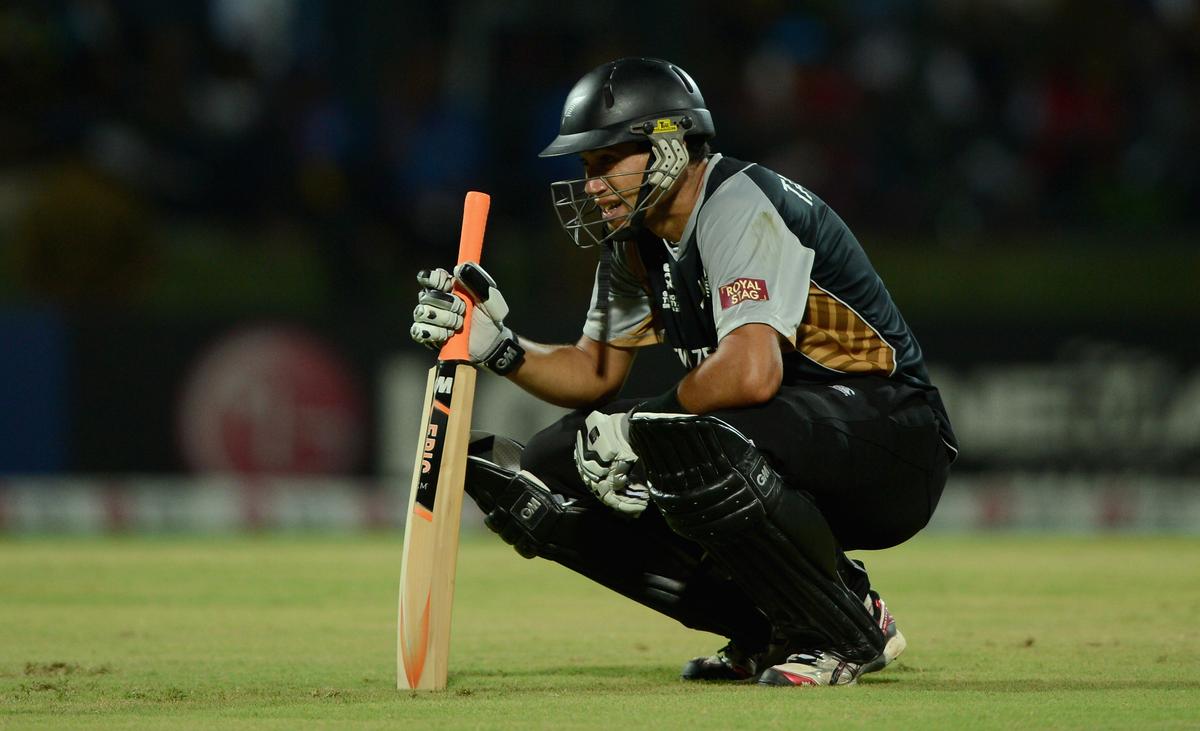
Ross Taylor’s 62 dragged New Zealand back from the brink and into a Super Over, where West Indies chased 18 with ease.
| Photo Credit:
Getty Images
Ross Taylor’s 62 dragged New Zealand back from the brink and into a Super Over, where West Indies chased 18 with ease.
| Photo Credit:
Getty Images
New Zealand’s uneasy relationship with the Super Over did not begin at Lord’s in 2019. It started seven years earlier, quietly and cruelly, in the Caribbean. Its first brush with the format came in the 2012 World T20 against Sri Lanka, a game it lost in the tie-breaker. Four days later, fate circled back, sharper this time, and far less forgiving. This one was a must-win, and for long stretches New Zealand seemed to have it under control. Even Chris Gayle’s early thunder could not lift West Indies beyond 139. The chase unfolded smoothly enough to reduce the target to a manageable 27 from four overs, a position that usually belongs to the batting side. Then Sunil Narine intervened, bending the game to his will with two overs that cost five runs and claimed two wickets. Momentum seeped away. Ross Taylor refused to let it die. His 62 dragged New Zealand back from the brink and into a Super Over. He struck again in the tie-breaker, but West Indies hunted down 18 with unsettling ease. New Zealand was out, and a quiet pattern of heartbreak had begun to form.
South Africa vs New Zealand, 2014

Dale Steyn set the tone early, conceding just five runs across his first two overs, and then came back in the final over to pick up two wickets and effect a run out.
| Photo Credit:
Getty Images
Dale Steyn set the tone early, conceding just five runs across his first two overs, and then came back in the final over to pick up two wickets and effect a run out.
| Photo Credit:
Getty Images
This 2014 World T20 contest ultimately came down to Dale Steyn versus New Zealand. Defending 171, South Africa leaned on its premier fast bowler, and Steyn delivered a masterclass under pressure, finishing with four for 14. He set the tone early, conceding just five runs across his first two overs. When the equation tightened to 29 runs needed from the final three overs, Steyn returned and gave away only eight, keeping South Africa in the game. Ross Taylor and Luke Ronchi struck 14 runs off the penultimate over, narrowing the target to seven off the final six balls. Steyn, though, was relentless. He struck off the first delivery of the final over, firing a thunderbolt to remove Ronchi. After two consecutive dot balls, Nathan McCullum managed to relieve some pressure by dispatching the fourth delivery for a four. But Steyn responded immediately, dismissing McCullum off the fifth ball to swing the balance back South Africa’s way. With three runs required off the last delivery, Taylor could only push the ball straight back to the bowler. Steyn completed the run out to seal a dramatic two-run victory in Chattogram. Reflecting on the narrow defeat, New Zealand captain Brendon McCullum admitted, “We probably should have won it easily — you can’t take it to the final over against a top bowler like Steyn.”
West Indies vs England, 2016
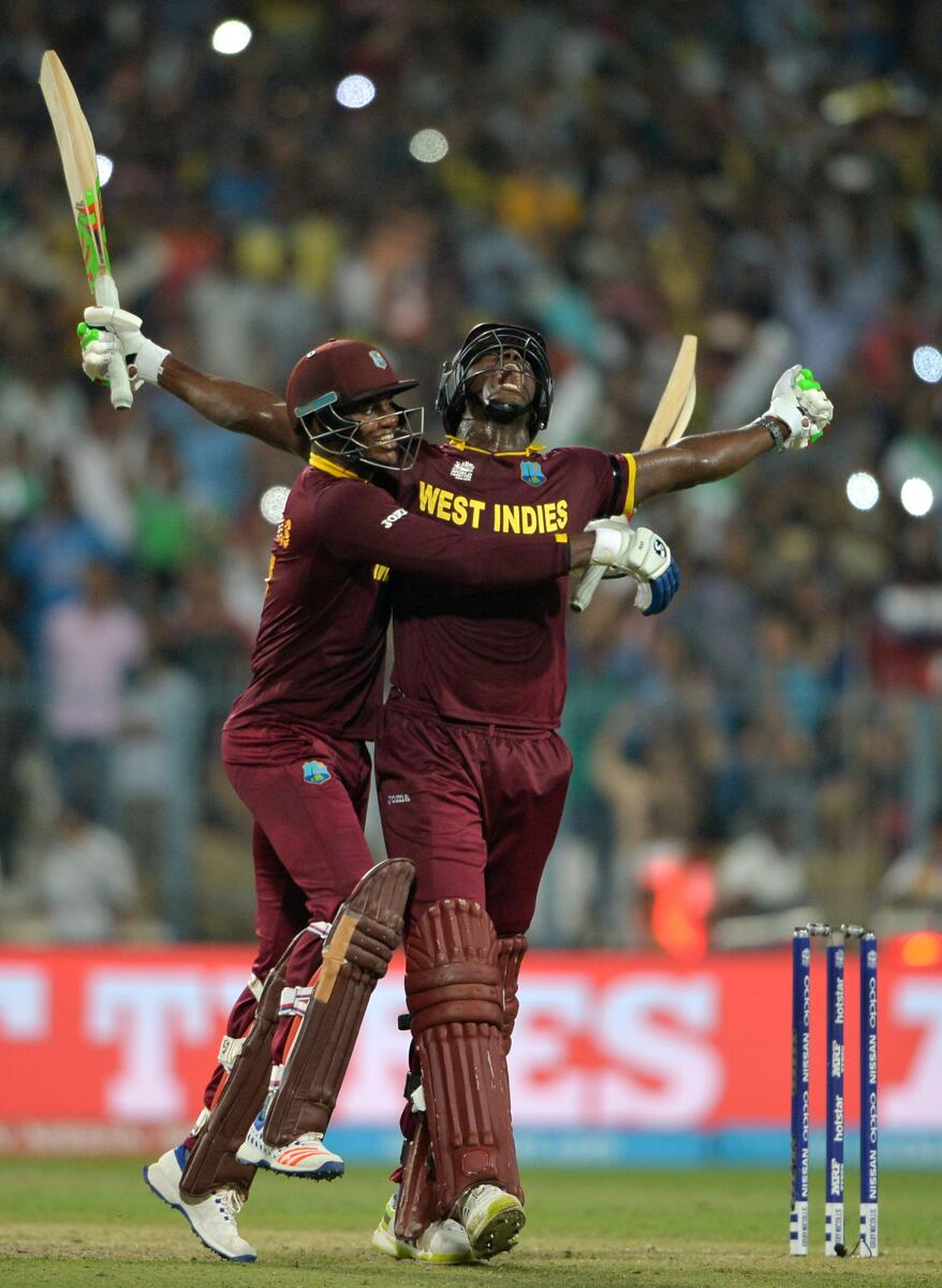
Brathwaite sent successive deliveries soaring into the stands at Eden Gardens in Kolkata to seal the chase of 156.
| Photo Credit:
Getty Images
Brathwaite sent successive deliveries soaring into the stands at Eden Gardens in Kolkata to seal the chase of 156.
| Photo Credit:
Getty Images
Tournament finals are rarely high-scoring affairs. With the two best teams going head-to-head, it is often a single defining innings or spell that tilts the contest. In the 2016 World T20 final, that moment belonged to Carlos Brathwaite, and he delivered it in unforgettable style. Needing 19 runs to become the first team to win the title twice, West Indies turned to Brathwaite, who needed just four balls to finish the job. Ben Stokes was the unfortunate bowler as Brathwaite sent successive deliveries soaring into the stands at Eden Gardens in Kolkata to seal the chase. Set 156 to win, West Indies had stumbled early, slumping to five for two inside two overs. Marlon Samuels once again held the innings together, just as he had in the 2012 final, anchoring the chase with a composed unbeaten 85 off 66 balls. For much of the second innings, England appeared in control, with Liam Plunkett claiming three wickets and Adil Rashid bowling his full quota at under six an over. But Brathwaite, already enjoying a dream night after figures of three for 23 in the first innings, had the final word. His astonishing finish etched the moment in World Cup folklore, giving the West Indies, in captain Daren Sammy’s words, “a memory to cherish for a long time.”
New Zealand vs England, 2021
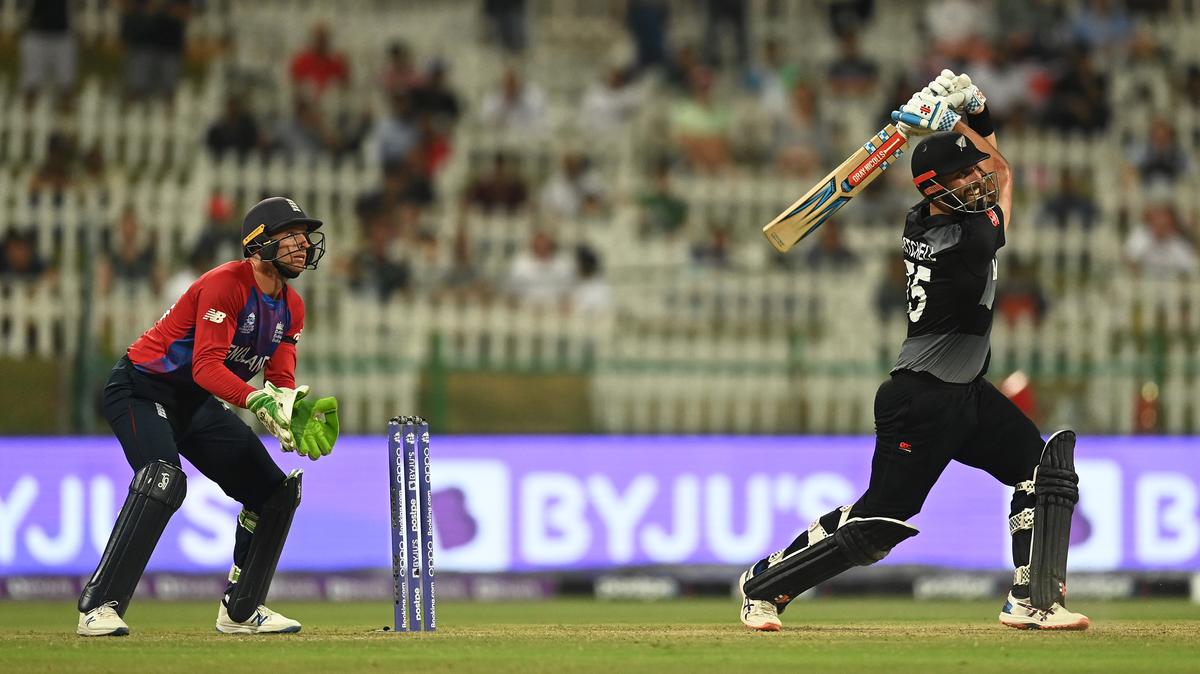
Daryl Mitchell brutalised Chris Woakes for 19 in an over that broke England’s resistance. His unbeaten 72 carried New Zealand home.
| Photo Credit:
Getty Images
Daryl Mitchell brutalised Chris Woakes for 19 in an over that broke England’s resistance. His unbeaten 72 carried New Zealand home.
| Photo Credit:
Getty Images
New Zealand keep doing this, quietly, almost stubbornly, to teams who should know better by now. Against England in the T20 World Cup semifinal, it slipped once more from the noose and into another global final, chasing down 166 with five wickets in hand and an over to spare. For long stretches, the chase felt like it was drifting away. The pitch was slow, England’s bowlers disciplined, and with 57 needed off the last four overs, the moment seemed to belong elsewhere. Then Daryl Mitchell, previously scratchy and uncertain, found his timing and his nerve. Jimmy Neesham arrived like a thunderclap, dismantling Chris Jordan for 19 in a single over that cost 23, and suddenly the game tilted. Neesham fell, but Mitchell did not. He took charge, launching Adil Rashid and then brutalising Chris Woakes for 19 in an over that broke England’s resistance. His unbeaten 72 carried New Zealand home.
India vs Pakistan, 2022
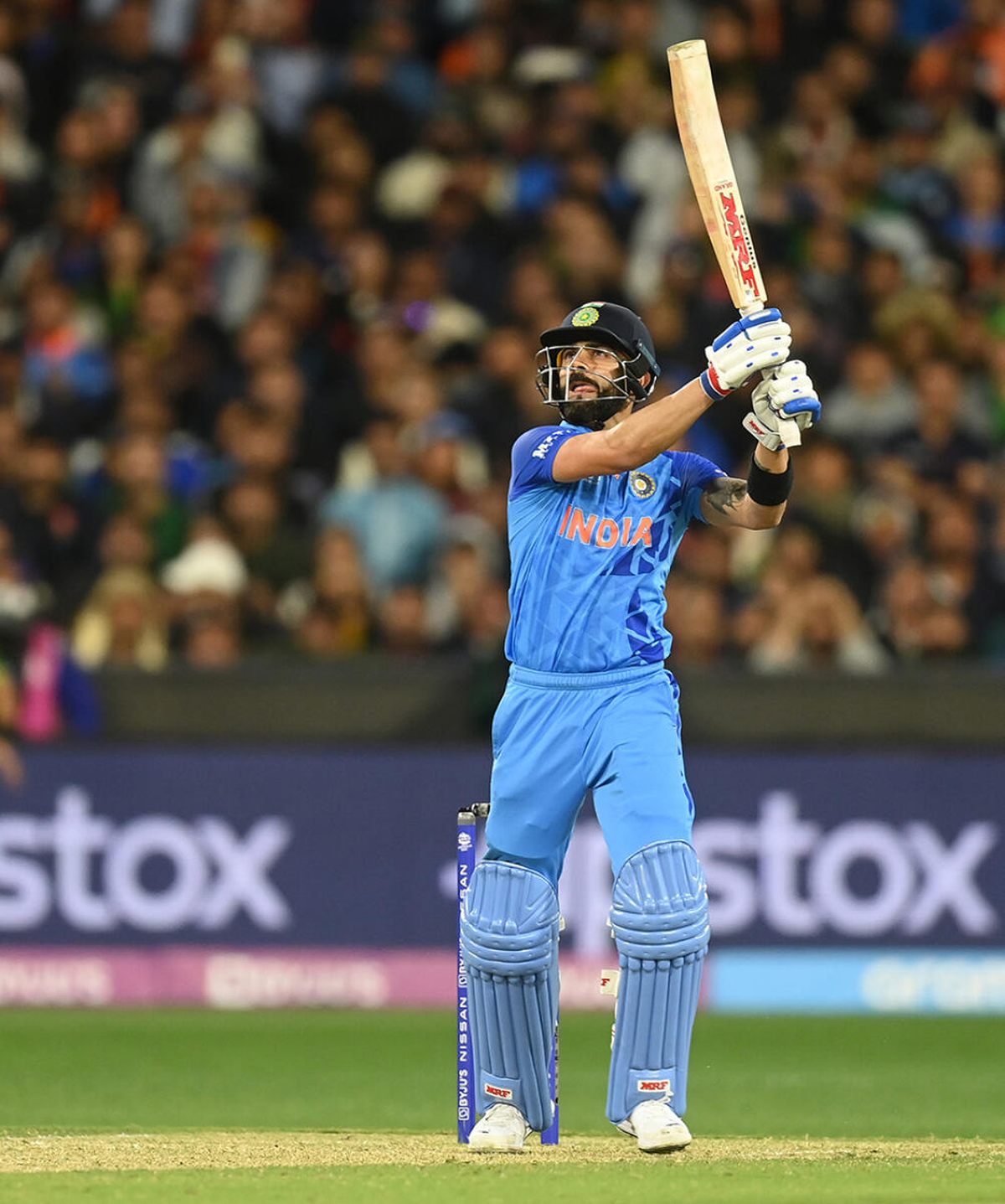
Kohli launched two sixes off pacer Haris Rauf to cut the equation to 16 from the final over.
| Photo Credit:
Getty Images
Kohli launched two sixes off pacer Haris Rauf to cut the equation to 16 from the final over.
| Photo Credit:
Getty Images
In one of the most iconic chases in T20 World Cup history, India defeated Pakistan off the final ball at the Melbourne Cricket Ground (MCG). Chasing 160, India was reeling at 31 for 4 inside seven overs before Virat Kohli and Hardik Pandya stitched together a vital 113-run partnership for the fifth wicket to keep the chase alive. With 28 required off the last eight deliveries, Kohli dramatically shifted the momentum, launching two sixes off pacer Haris Rauf to cut the equation to 16 from the final over. Left-arm spinner Mohammad Nawaz struck immediately, having Pandya caught off the first ball and bringing Dinesh Karthik to the crease. Karthik rotated strike with a single, allowing Kohli to take over. A crucial double followed before Nawaz bowled a waist-high full toss that Kohli dispatched for six, reducing the target to six off three balls. Nawaz then sent down a wide, and the batters scrambled through for a single. Off the ensuing free hit, the ball ricocheted off the stumps and the batters ran three. In a dramatic twist, Karthik was stumped off the fifth delivery, leaving Kohli stranded at the non-striker’s end with Ravichandran Ashwin walking in needing two off the last ball. Under immense pressure, Nawaz bowled another wide. With one required off the final delivery, Ashwin showed remarkable composure, lofting a fuller ball over mid-off to seal a famous victory.
India vs South Africa, 2024
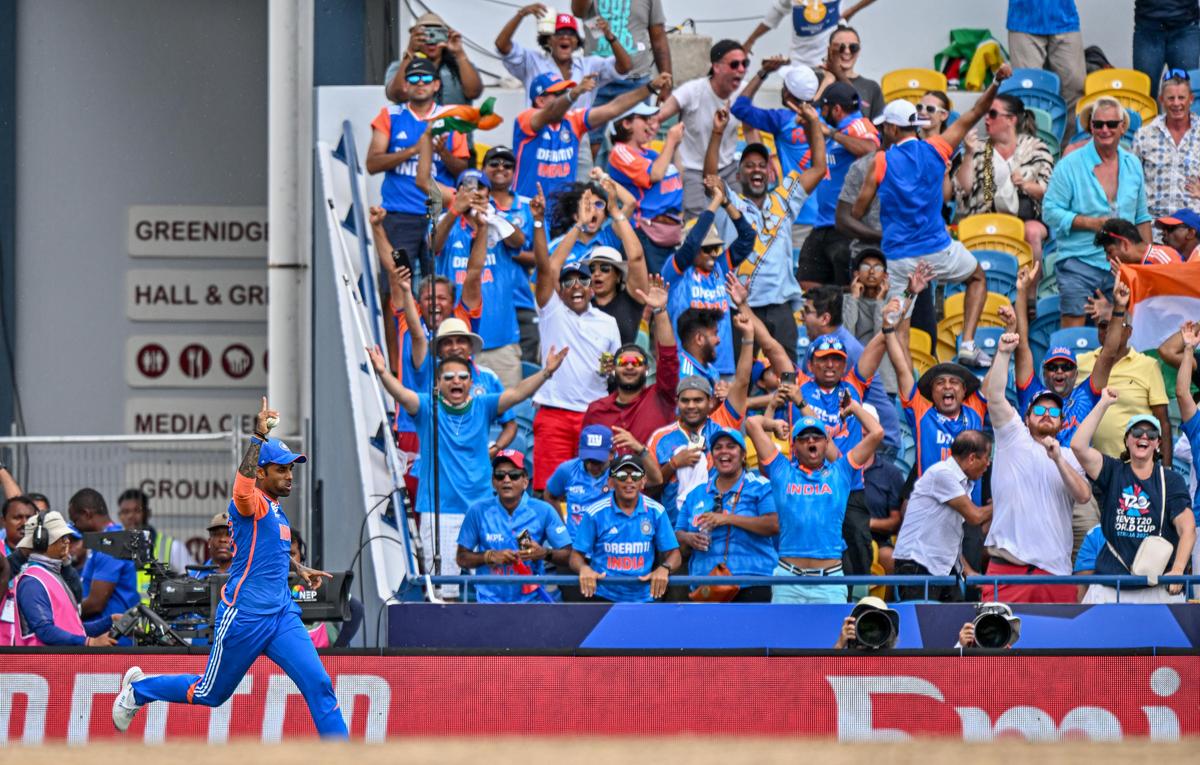
Suryakumar Yadav ran along the boundary, showed remarkable balance, and completed what proved to be one of the defining catches of his career.
| Photo Credit:
K. R. Deepak
Suryakumar Yadav ran along the boundary, showed remarkable balance, and completed what proved to be one of the defining catches of his career.
| Photo Credit:
K. R. Deepak
India’s triumph in the final of the 2024 T20 World Cup was defined by contributions at crucial moments rather than the dominance of a single player. Batting first, India was in early trouble at 34 for three inside five overs, but Virat Kohli, playing his final T20I, steadied the innings with a measured 76. He found vital support in Axar Patel, whose counterattacking 47 off 31 balls injected momentum and helped India recover to post a competitive 176 for seven. South Africa appeared in control for much of the chase at a windy Kensington Oval in Bridgetown, keeping pace with the required rate. The momentum, however, swung decisively when the equation came down to 30 runs off 30 balls. Hardik Pandya provided the first breakthrough, removing a dangerous Heinrich Klaasen (52 off 27 balls), before Jasprit Bumrah followed up by rattling Marco Jansen’s stumps. The pressure intensified when Arshdeep Singh delivered a superb penultimate over, conceding just four runs to leave South Africa needing 16 from the final over. Off the first ball of the final over, Pandya bowled a full toss that David Miller launched towards long-off, where Suryakumar Yadav ran along the boundary, showed remarkable balance, and completed what proved to be one of the defining catches of his career. Pandya conceded only eight runs in the over and also removed Kagiso Rabada, sealing India’s victory. The win ended an 11-year wait for an ICC title and marked India’s second T20 World Cup triumph since its inaugural success in 2007.
Published on Feb 03, 2026


