
SMAT 2025 preview: Format, key players, impact on IPL auction and Indian cricket
The Syed Mushtaq Ali Trophy (SMAT) domestic T20 competition has closely mirrored the evolution and demands of its more glamorous cousin, the Indian Premier League (IPL). Its latest iteration, beginning on November 26, will also serve as a timely audition for the IPL auction scheduled for December 16. By that time, teams progressing out of the group stage and into the Super League would have played nine matches, giving scouts ample game time to assess players, unlike last year when the IPL auction took place after just one round of SMAT.
“SMAT definitely has a place in the auction. Any IPL will be won by a team that has a strong Indian core,” renowned coach and Kolkata Knight Riders scout, Biju George, tells Sportstar.
The Indian domestic cricket schedule now reflects the rigours of international cricket. After five rounds of gruelling four-day Ranji Trophy cricket, players will have just a week to brace for high-tempo T20 action. Like the Ranji Trophy, the Elite (32 teams) and Plate (six teams) divisions have been introduced for SMAT this season to enhance competition and establish parity, which means there will not be any easy games. For the Elite division, the knockout rounds have been replaced with an eight-team round-robin Super League phase followed directly by the final on December 18.
The dollop of star dust from last season will be reduced to a sprinkling this time, with India’s white-ball series against South Africa at home coinciding with SMAT. India T20I captain Suryakumar Yadav and all-rounder Shivam Dube were part of Mumbai’s victorious campaign, while Hardik Pandya (Baroda), Sanju Samson (Kerala), Axar Patel (Gujarat) and Varun Chakaravarthy (Tamil Nadu) were among those who played significant roles for their teams last season. With the T20Is against the Proteas starting on December 9, most of them will miss the Super League phase at least.
The absence of India stars will turn the spotlight on those sidelined or on the fringes, including Riyan Parag (Assam) and Venkatesh Iyer (Madhya Pradesh).
Proven IPL performers released by their franchises will also have an opportunity to reassert themselves. Among them, Deepak Hooda (Rajasthan), Ravi Bishnoi (Gujarat), Vijay Shankar (Tripura), Mayank Agarwal (Karnataka), Rahul Tripathi (Maharashtra) and Prithvi Shaw (Maharashtra) will be keen to make a statement and compete for the 46 vacancies for Indian players at the auction.
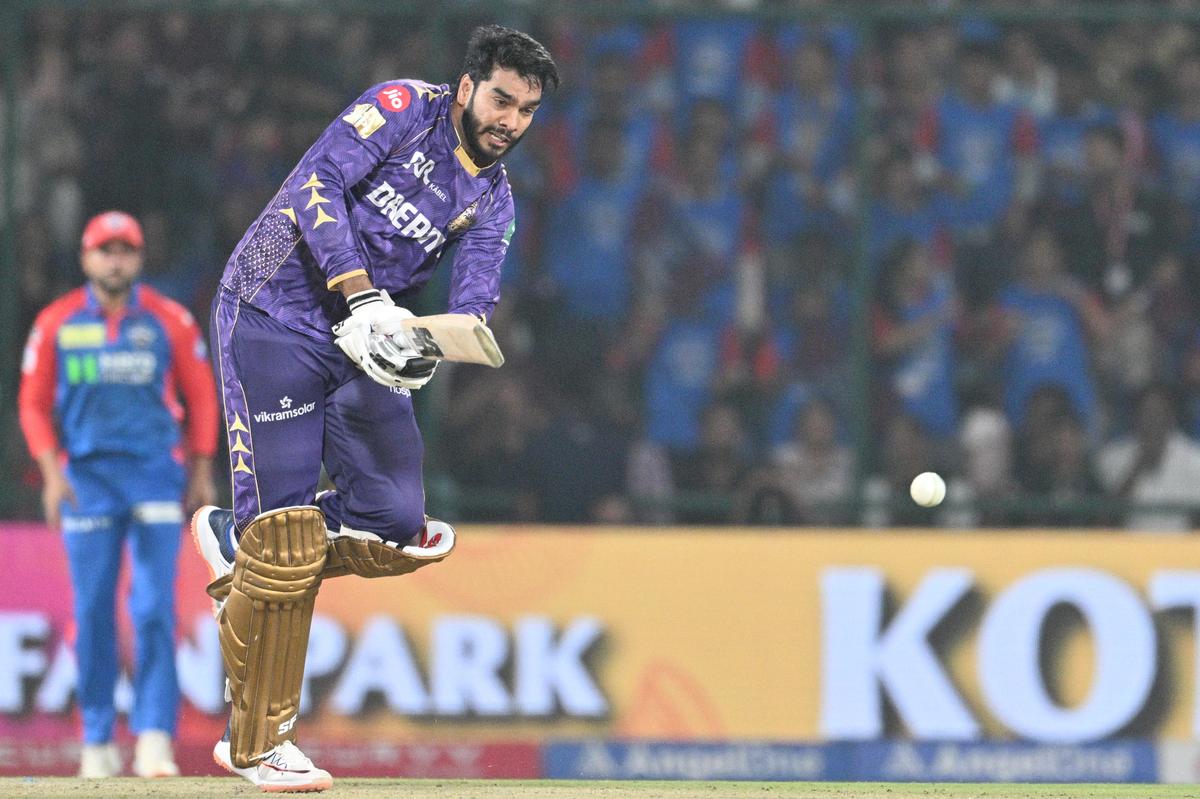
Rebuilding stakes: Venkatesh Iyer, once fast-tracked to India after a breakout IPL season with KKR, enters SMAT as a released player looking to restate his case after a modest 2024 campaign.
| Photo Credit:
SHASHI SHEKHAR KASHYAP

Rebuilding stakes: Venkatesh Iyer, once fast-tracked to India after a breakout IPL season with KKR, enters SMAT as a released player looking to restate his case after a modest 2024 campaign.
| Photo Credit:
SHASHI SHEKHAR KASHYAP
National reckoning
The current Indian T20I setup looks settled, but the search for a reliable seam bowling all-rounder as backup to Hardik continues. Although the Impact Player rule in the IPL has hindered the development of all-rounders, SMAT did unearth a few last season. In 2023-24, when the Impact Player provision was applied to SMAT, only two players, Parag and Krunal Pandya, achieved the double of scoring 200 runs or more and taking at least five wickets. Last season, that number rose to seven, with Prerak Mankad (Saurashtra), Venkatesh, Mohit Jangra (Mizoram), Abhishek Sharma (Punjab), Karan Lal (Bengal), Hardik and Shahbaz Ahmed (Bengal) accomplishing the feat.
Identifying a second line of white-ball fast bowlers should also be high on the Indian team management’s agenda. While Arshdeep Singh is a potent spearhead, the phasing out of Mohammad Shami, along with careful workload management for Mohammed Siraj and Jasprit Bumrah, has made India’s pace resources appear thin. The likes of Khaleel Ahmed and Avesh Khan are IPL regulars, but their potential has not translated into sustained international success. If Jammu and Kashmir pacer Auqib Nabi can carry his Ranji Trophy success into the white-ball formats, both the IPL and Indian cricket will benefit.
Paradigm shift
The shifting dynamics of T20 cricket, reflected in the ever-rising run rates in the IPL, have trickled down to domestic cricket. Despite the scrapping of the Impact Player rule in SMAT last season, the tournament registered its highest ever aggregate run rate of 8.57. Power hitting will remain a top priority for franchises, and the IPL breakthroughs of Priyansh Arya (Delhi) and Urvil Patel (Gujarat) underline that trend. Priyansh struck at 176.63 and Urvil at a staggering 229.92 in SMAT last season, prompting Punjab Kings and Chennai Super Kings to sign them. Both were retained ahead of this year’s auction.
George said that a strike rate between 150 and 170 is what most IPL franchises seek, while those in the anchor mould should still be able to score at more than 140.
Despite the emphasis on stats and data, traits discernible only to the human eye remain vital. “I personally would like to see some practice sessions also. I will get to know how much he is involved in the pre-match stuff. Then, we look for attitude in the game and what he does in a tough situation,” George explained.
As many as 125 Elite division matches will be held in just over 20 days, but the competition will still have everyone’s attention. “We watch every match. There are eight to nine people scouting for every franchise. Every single ball is being watched,” George assured.
Published on Nov 24, 2025


