
Reporter Diary | Smiles, silence, and stadiums: The human stories of the Women’s ODI World Cup
A trip to Indore is never complete without a walk down Sarafa Bazaar, or so the Diary was told, repeatedly. From the staff at the Devi Ahilya Bai Holkar Airport to the cab driver en route to the hotel and even the hotel concierge, everyone had the same suggestion. Indore is a foodie’s haven, even more so during Diwali. After match duties at the Holkar Stadium, the Diary and a few colleagues set out to conquer the jam-packed, winding lanes of Sarafa Bazaar. What began as a casual stroll soon turned into a two-hour gastronomic marathon, and a stomach with absolutely no room left.
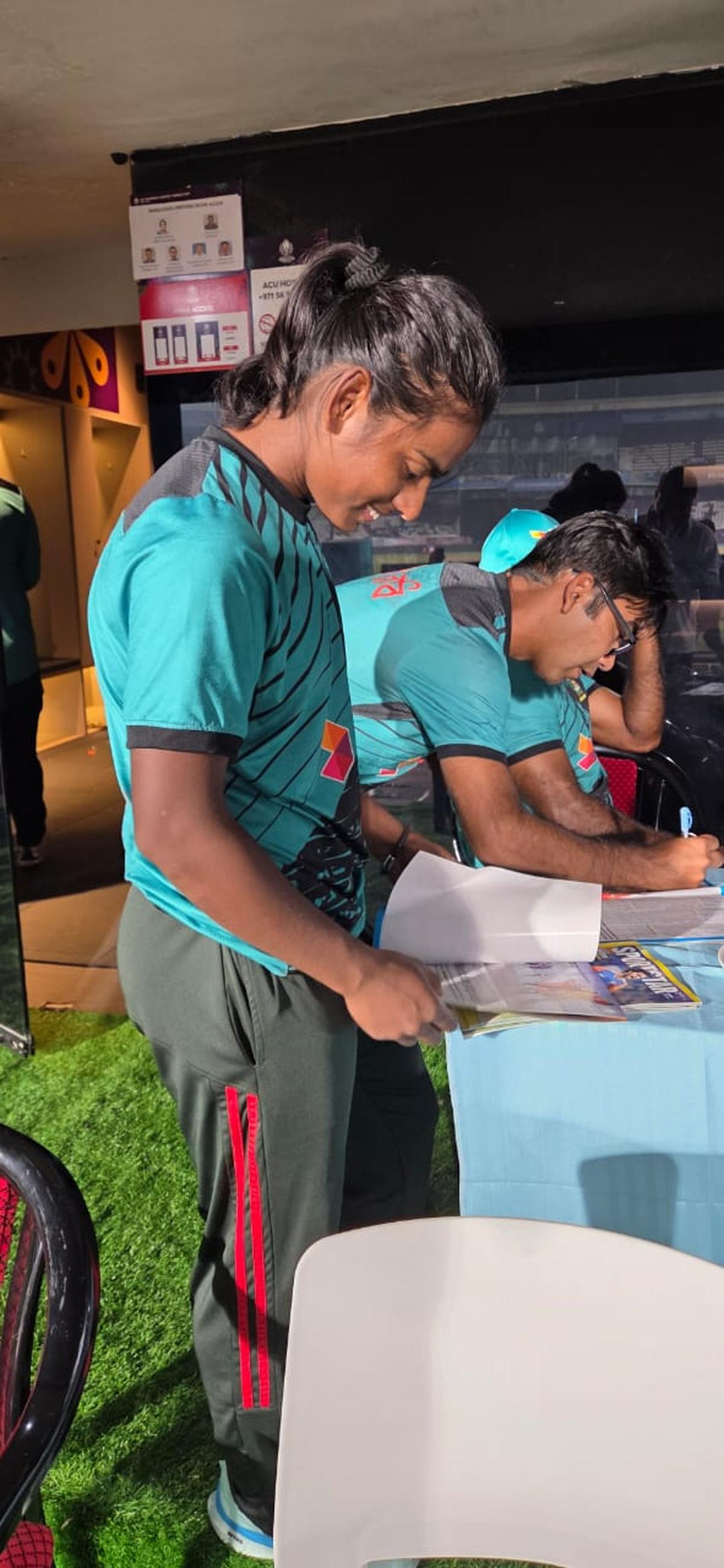
Quiet pride: A smile worth more than a headline, as Bangladesh pacer Marufa Akter holds her Sportstar feature in hand.
| Photo Credit:
ANIRUDH VELAMURI

Quiet pride: A smile worth more than a headline, as Bangladesh pacer Marufa Akter holds her Sportstar feature in hand.
| Photo Credit:
ANIRUDH VELAMURI
The Diary’s World Cup stint spanned three India matches, all defeats, one in Indore and two in the port city of Visakhapatnam. Yet, it wasn’t the cricketing highs or the culinary delights that will linger longest in memory. It was a five-minute exchange with Bangladesh pacer Marufa Akter that etched itself most deeply into the Diary’s pages. An interview with Marufa, conducted earlier in Colombo, had already appeared in Sportstar by the time she flew to India. When the Diary found a quiet moment to hand her a copy of the magazine, the 20-year-old’s radiant smile on seeing it felt like the best review one could ever hope for.
-Anirudh Velamuri reporting from Visakhapatnam and Indore
ALSO READ | Auspicious skies, unlucky games – When monsoon stole the show in Colombo
A city of memories, missing a few
After much coaxing from every tuk-tuk driver the Diary employed for its stadium runs, a day was finally set aside to explore Colombo. The six-hour sightseeing expedition began at the iconic P. Sara Oval, which incidentally now serves as the home base of the national women’s team and its developmental pathways.
Tucked away in Borella, a neighbourhood that has historically borne the brunt of the city’s riots, the venue, home to the Tamil Union Cricket Club, was among the structures burnt down during the anti-Tamil violence of 1983. The premises houses cricket memorabilia from Sir Donald Bradman’s visit to the island. Funnily enough, the only visible female representation on its walls was a framed collage from a celebrity cricket match featuring Bollywood veterans of the 1950s, including Raj Kapoor and Nargis.
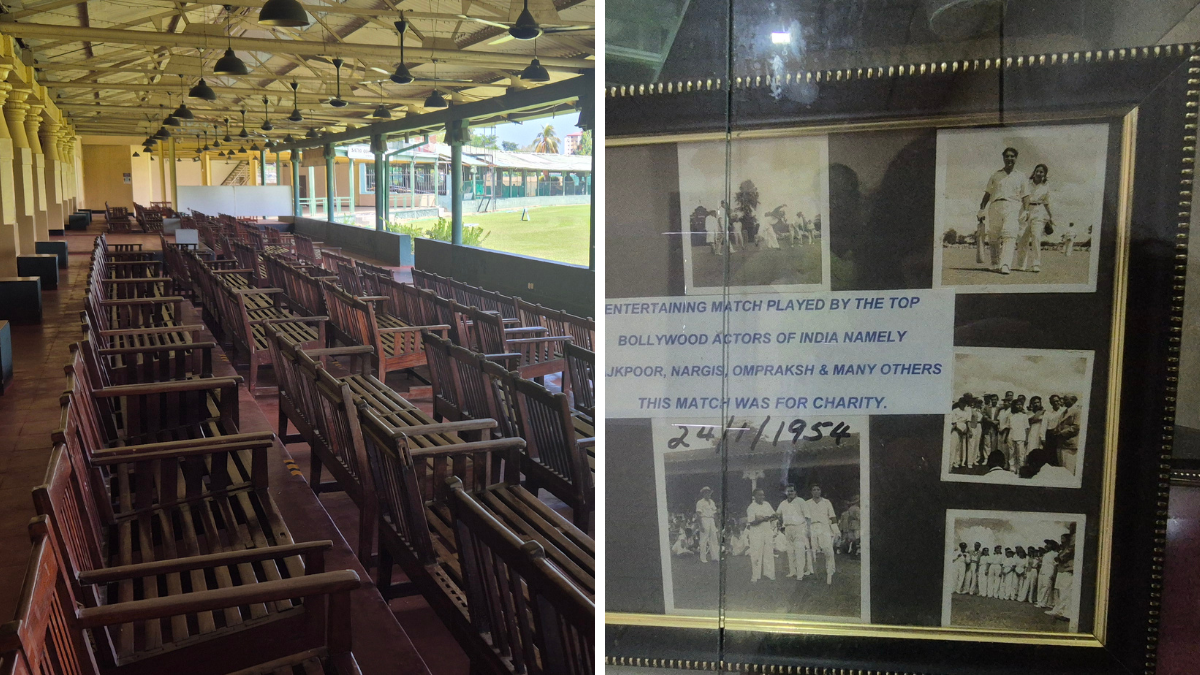
Visuals from the P. Sara Oval
| Photo Credit:
Lavanya Lakshmi Narayanan
Visuals from the P. Sara Oval
| Photo Credit:
Lavanya Lakshmi Narayanan
More than the heavily Instagrammed and crowded Gangaramaya Temple, the Diary found peace in the quiet Seema Malaka Temple just a few hundred metres away. The structure itself stands as a symbol of Colombo’s inter-religious harmony; its reconstruction on the Beira Lake was funded by a Muslim businessman and designed by the legendary Lankan architect Geoffrey Bawa.
The World Cup run in Sri Lanka has been underwhelming, marred by washouts, lacklustre promotion, and thin crowds. Yet, nothing disappointed quite like the Sri Lanka Cricket Museum housed within the board’s headquarters. The exhibits trace the nation’s cricketing journey but abruptly stop at 2016. The small room is lined with trophies from continental and bilateral triumphs, including a proud display of the 2014 Men’s T20 World Cup silverware. But the cherished Women’s Asia Cup trophy, won in Dambulla in 2024 after beating India, remains stashed somewhere in a box; one among many updates the museum sorely needs. It is an opportunity lost for a nation hosting the women’s world showpiece for the first time.
-Lavanya Lakshmi Narayanan reporting from Colombo
ALSO READ | India can be at forefront of where women’s cricket can go, says Sophie Devine
The fan who finally asked
Landing in Colombo ahead of the final few league matches of the Women’s ODI World Cup, the Diary had expected to see signs of support for Sri Lanka, which still had three home games remaining. Every local who asked the reason for visiting received the same reply: cricket coverage at the R. Premadasa, fondly known as Khettarama. For days, tuk-tuk drivers ferried the Diary to and from the stadium, passing the usual flags and banners, yet none seemed curious enough to ask who was playing.
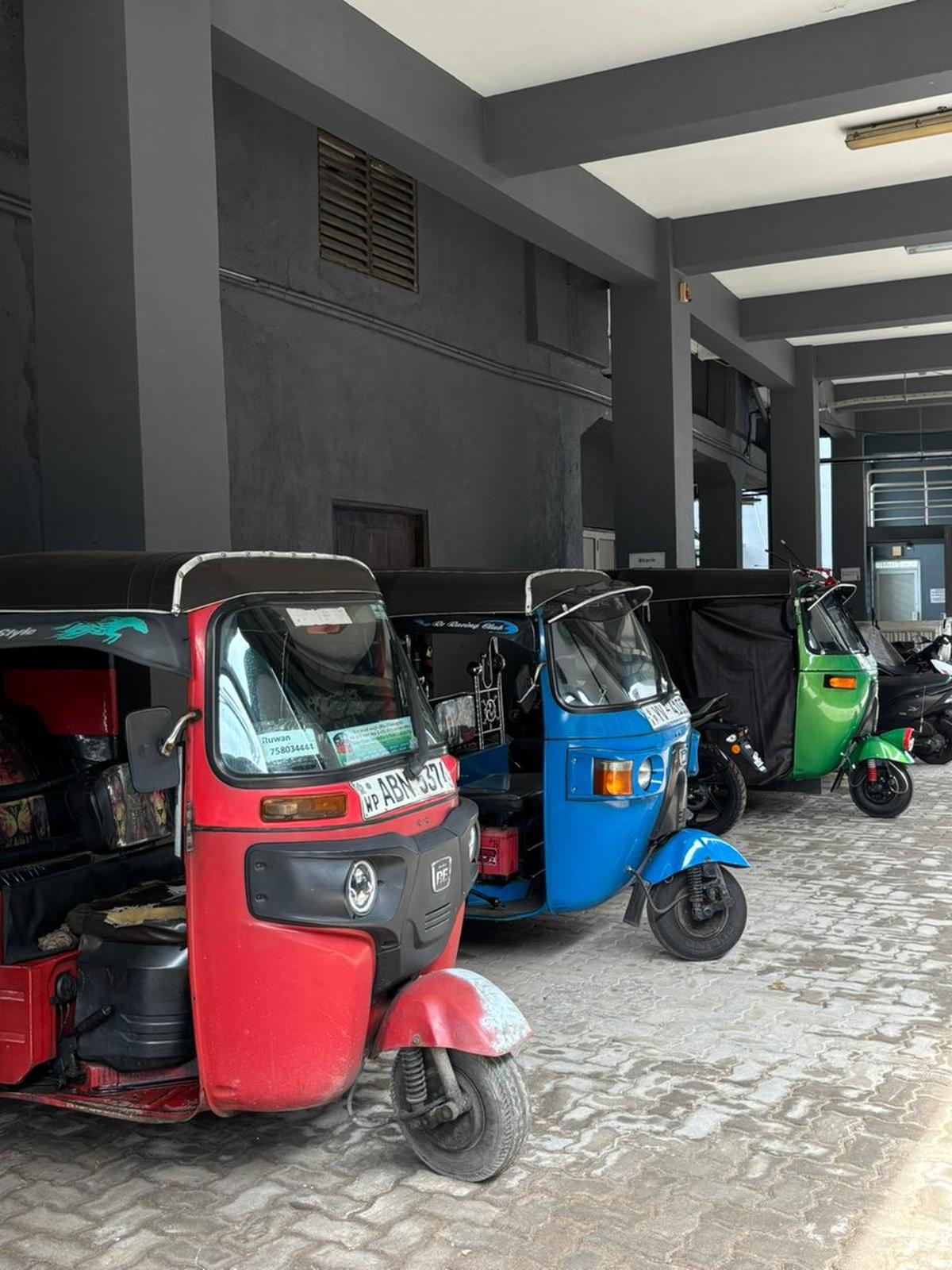
Urban rhythm: Brightly painted tuk-tuks wait outside Colombo’s R. Premadasa Stadium, as much a symbol of the city’s pulse as the cricket they ferry fans to.
| Photo Credit:
KAVITA MENON
Urban rhythm: Brightly painted tuk-tuks wait outside Colombo’s R. Premadasa Stadium, as much a symbol of the city’s pulse as the cricket they ferry fans to.
| Photo Credit:
KAVITA MENON
Until one afternoon, a wide-eyed Nallasamy hesitated before accepting his fare and asked if spectators were allowed to watch. When told that entry was free, his face lit up even more. On learning that Sri Lanka was playing “a good team”, South Africa, he promised to park nearby and join in. Later, when the cameras panned across the nearly empty stands, the Diary smiled. There he was, cheering the teams on despite the rain.
-Kavita Menon reporting from Colombo
ALSO READ | ‘Australia’s Sam Curran’ Jake Jeakings, father call India vs Australia rivalry the best in the world
A city tuned to a different frequency
When the Diary stepped into the taxi pick-up area of the Lokpriya Gopinath Bordoloi International Airport, it was pleasantly surprised to spot a few billboards promoting the Women’s World Cup. But as soon as the cab began its 20-odd kilometre journey into Guwahati city, the Diary was greeted by countless signages paying tribute to Zubeen Garg, the iconic Assamese singer who had recently passed away, outside homes and traffic signals alike.
“He’s considered a legend here. People loved him because he wasn’t afraid to speak his mind, even if it meant going against the establishment,” said a media member from the Assam Cricket Association.
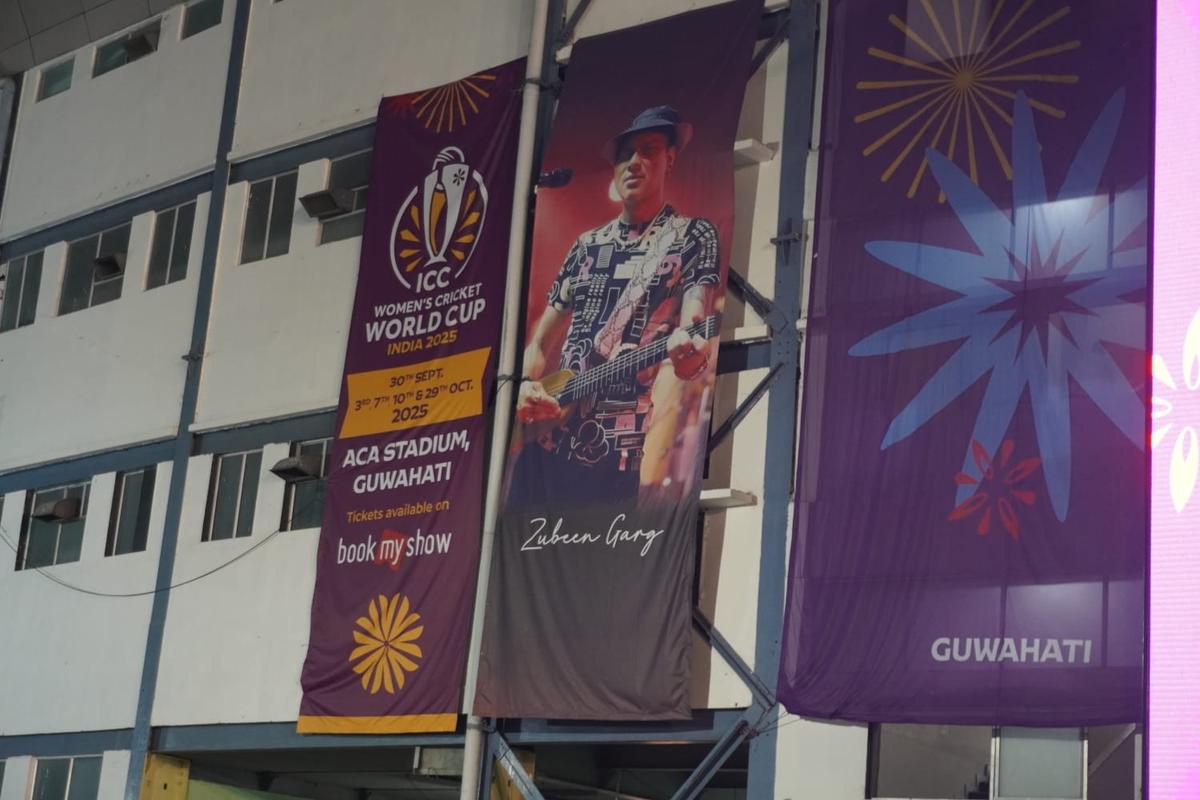
Enduring echo: A billboard of the late Zubeen Garg stands tall in Guwahati, his voice and presence still woven into the city’s everyday rhythm.
| Photo Credit:
RAJDEEP SAHA
Enduring echo: A billboard of the late Zubeen Garg stands tall in Guwahati, his voice and presence still woven into the city’s everyday rhythm.
| Photo Credit:
RAJDEEP SAHA
It was only natural then that the opening match of the tournament between India and Sri Lanka, held in the city, drew record-breaking crowds for a special Garg tribute. His loyal followers made sure they didn’t miss it.
Garg’s voice is unmistakable and seems to follow you wherever you go in Guwahati. You could be in your hotel room writing about how Bangladesh nearly beat England and swear you heard someone outside humming Ya Ali. His voice lingers in restaurants, filling the air, and even at the Barsapara Stadium, helping a groundsman get through his day.
While the New Zealand team trained in the nets to songs like Here Without You by 3 Doors Down, it was clear to the Diary that cricket may come and go in Guwahati, but Zubeen Garg will live forever.
-Rajdeep Saha reporting from Guwahati
Published on Oct 25, 2025


