
Arifa Jahan Bithi — The Bangladesh coach hoping to bring an attitude change towards women’s cricket
When Bangladesh earned the right to host the Women’s T20 World Cup in 2024, the ecosystem rose to the challenge. It was an opportunity to give the vertical the fillip it needed, economically and culturally.
A government overthrow and the ensuing social unrest forced a relocation of the event to the UAE, with player safety assuming top priority. It undid months of build-up, promotional events, and advocacy from players within and outside the nation.
For Arifa Jahan Bithi, who runs the first and only academy in the country for women, the Women’s Dreamer Cricket Academy in her hometown of Rangpur, an opportunity to turn attitudes towards girls pursuing cricket in Bangladesh was lost.
“There is a buzz, but no one takes much interest in women’s cricket,” she told Sportstar about the mood in the nation around the ongoing Women’s ODI World Cup campaign in India and Sri Lanka.
“The reality is that a lot of people in the nation still don’t know women play cricket.”
Arifa coaches over 350 girls for free in her academy. “One of the local division secretaries handling cricket in my area permitted me to use the ground there for my academy. It’s not land I own. Everything else for the academy and players has come from my savings,” she explains. Her wards play across the first division, the second division, the Dhaka Premier League, the U-16, and U-19 levels. Two of her students are in the national camp as well.
RELATED | Marufa: “It’s me vs me, not me vs others”
“Our culture is still fairly conservative. There isn’t a push for women in cricket, so the support to set up something like this was not there.”
Arifa famously posted visuals of Bangladesh pace sensation Marufa Akter ploughing her father’s paddy field during the height of the pandemic, which drew attention and consequently support for the young pacer, then a teenager.
The bowler’s evolution mirrors how systems in Bangladesh have had to grow alongside her. There was a lot of stigma associated with women in sports, rubbing shoulders with boys, or even dressing like them to play. When that’s the discourse, as a coach, striking conversations about strength training, building muscle, and power at the grassroots level has been anything but easy.
“There is no facility in Bangladesh yet where power hitting is being focused on at a baseline level. Earlier, grassroots didn’t have gym sessions or swimming routines or anything. We just bowled, batted, worked on technique, and we were done,” Arifa explained, pointing out how those very elements have helped Marufa evolve as a pacer, both in power and endurance.
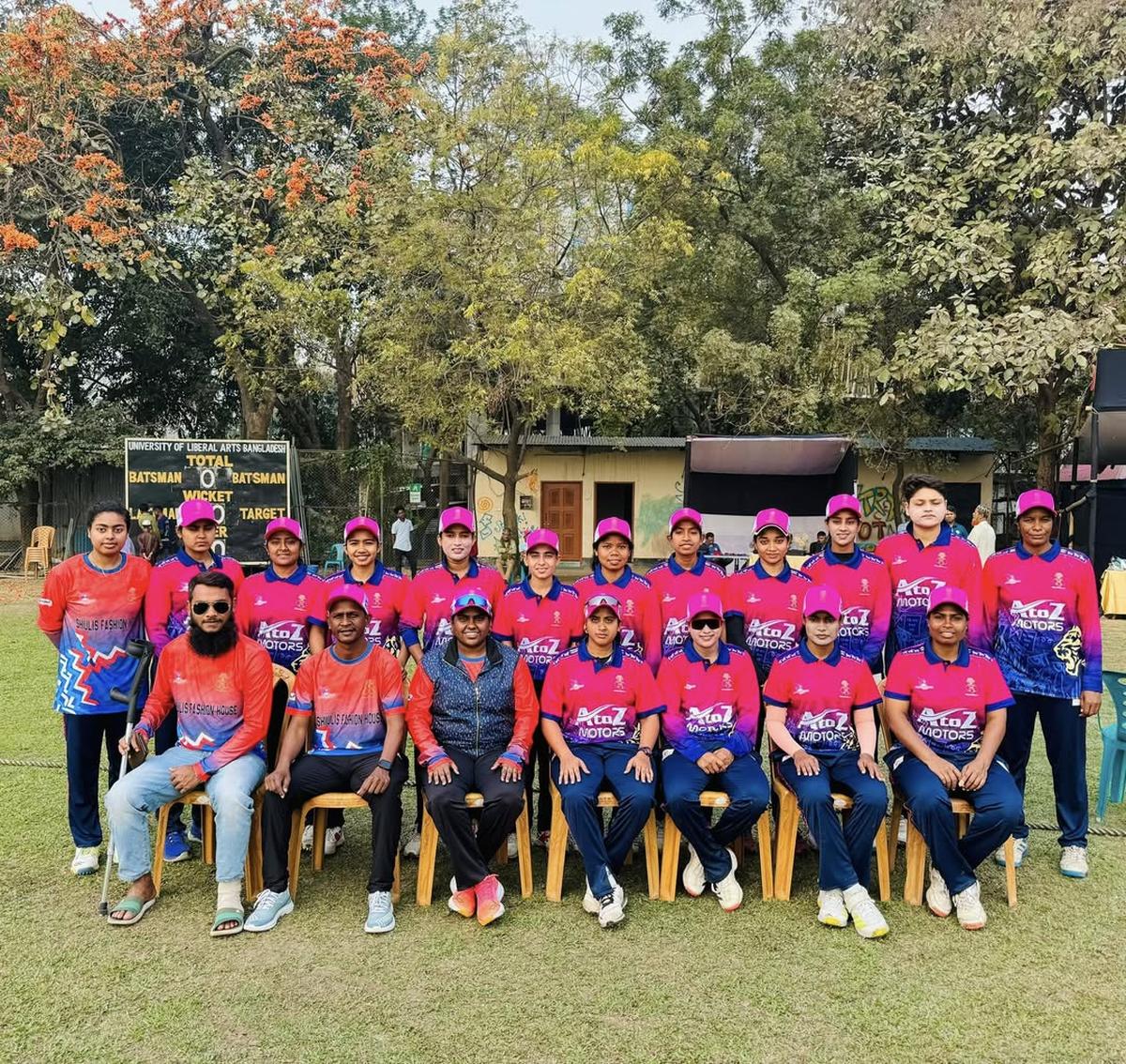
Arifa coaches over 350 girls for free in her academy on land permitted for use by the division’s sports secretary.
| Photo Credit:
SPECIAL ARRANGEMENT

Arifa coaches over 350 girls for free in her academy on land permitted for use by the division’s sports secretary.
| Photo Credit:
SPECIAL ARRANGEMENT
While she has remained one of her biggest supporters, she never officially trained the 20-year-old.
She has drawn lessons from the experiences of Marufa and many others like her coming through the system.
“Cricket needs to reach the school and district level. Our cricket in Bangladesh is primarily still growing from the college division level,” she noted.
“If it drips down to the school level, the pool of players coming through will increase. The facilities our boys get and the tiers of cricket they have don’t exist in the women’s game. Most schools don’t have cricket for girls. That needs to change.”
“There is money now in cricket. People can make a career in this sport. That news should reach people. That’s why our cricket lags behind a fair bit.”
Bangladesh registered just its second win in its second ODI World Cup appearance, beating Pakistan by seven wickets. Arifa knows the tough mandate Bangladesh has on hand, but hopes her country will come away with more positives to carry into the future, on and off the field.
“Through the work I am doing, through talents like Marufa and everything the women do in the national team, I want my country to see that girls are no less than anyone. That they can become professional cricketers and challenge the best in the world,” she signed off.
Published on Oct 07, 2025


