
The Ashes Preview: Key Battles, Form Guide and What Could Decide the Series
Off-the-field banter enlivens professional sport, lending context and raising the stakes. It sets up a narrative, leaving it to the players to validate or undo it. Even cricket’s oldest rivalry needs the needle of the customary argy-bargy between player-turned-pundits and fans every time Australia and England face off in the biennial Ashes.
But criticism hits close to home when it originates from one’s own, prompting introspection and honest self-reckoning. The Ashes down under comes at a time when the rivals, though from different hemispheres and schools of thought, are at a crossroads.
Australia’s greying squad, with an average age of 33, is deemed inconducive to a smooth transition. By contrast, England’s marauding Bazballers, averaging just 28, need to prove back home that their revolution is bearing fruit.
Five long summers separate the two teams, and almost as much time has elapsed since England’s last port of call on balmy Australian shores, in January 2022, when a hopelessly timid visiting team was handed a 0-4 hiding.
It is charmingly poetic that England, under the new captain-coach combination of Ben Stokes and Brendon McCullum, rose like a phoenix from that very Ashes drubbing and the subsequent loss of face in the Caribbean.
The only salvation it could retrieve from the wreckage of that Australian tour — a draw, and a defiant one, in Sydney — is now sacrilege for Stokes’ men, a result that mustn’t be spoken of even in hushed tones. Armed with clarity of the binary world of winning or losing, England is unrecognisable, in spirit and in letter. Only five members of England’s last Test down under, in Hobart, have made the journey this time. Meanwhile, 10 Australians from that game are likely to feature in this Ashes, and nine of them are set to play the opener in Perth.
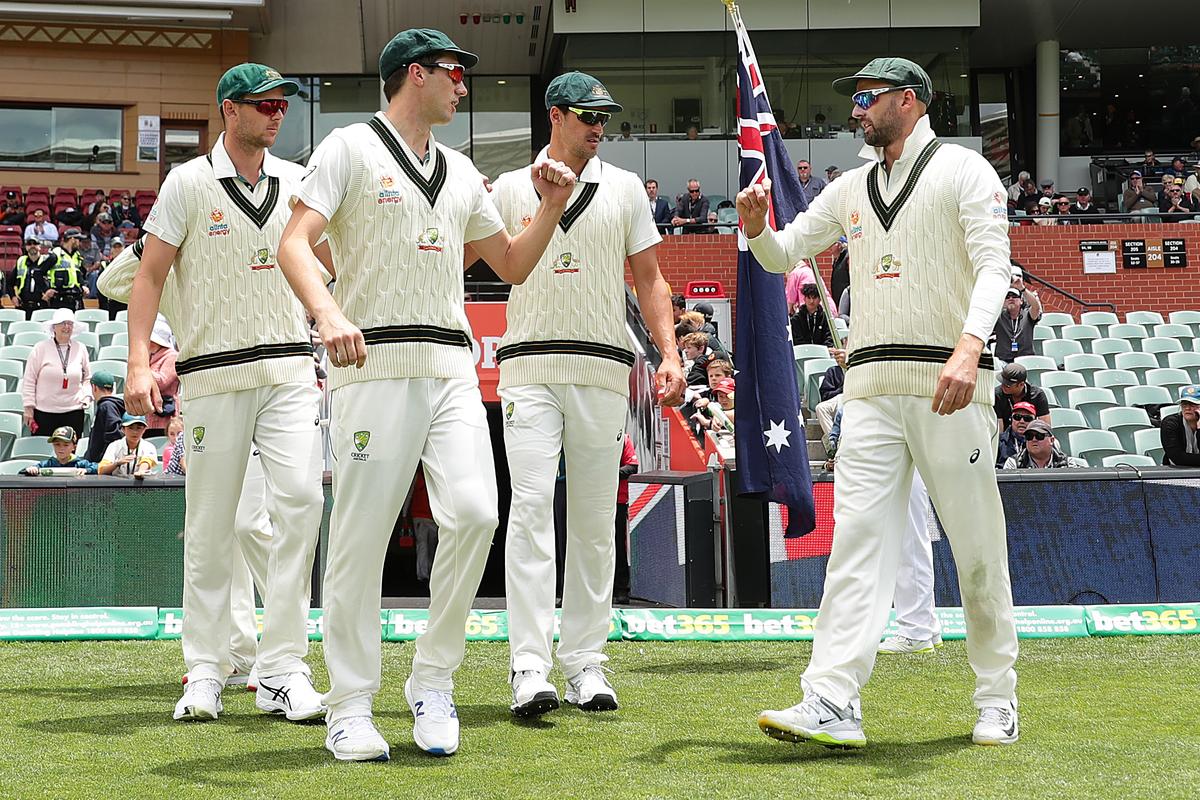
Last hurrah: This may be the last Ashes for Australia’s old guard, consisting of the likes of Josh Hazlewood, Mitchell Starc and Nathan Lyon.
| Photo Credit:
Getty Images

Last hurrah: This may be the last Ashes for Australia’s old guard, consisting of the likes of Josh Hazlewood, Mitchell Starc and Nathan Lyon.
| Photo Credit:
Getty Images
It is a generational battle of sorts. Australia’s 15-member squad for the first Test, which skipper Pat Cummins and Josh Hazlewood will miss due to injury, includes 14 players over 30, with all-rounder Cameron Green the lone exception. England’s 16-man roster has nine players yet to turn 30, and 11 who still haven’t played a Test in Australia. The baggage of 13 defeats and two draws in England’s last 15 Tests in Australia since its last triumph in 2011 is unlikely to weigh heavily on a young brigade bracing for its toughest challenge.
But forewarned is forearmed. This may be the last Ashes hurrah at home for the likes of Steve Smith, Usman Khawaja, Scott Boland, Hazlewood, Nathan Lyon and Mitchell Starc, members of Australia’s old guard who will once again be at the vanguard of protecting the fortress and the urn, which has been in its possession since 2018.
However, some challenges confront the host, and they start from the very top. Khawaja, who hasn’t scored a fifty in his last 10 Test innings, has had five different opening partners since David Warner retired from the format last year. He could get a sixth if 31-year-old left-hander Jake Weatherald is handed a cap after a prolific run for Tasmania and Australia A over the past year.
Weatherald’s debut could pave the way for Marnus Labuschagne’s return to his preferred No. 3 spot, from which he has cracked five centuries in eight innings across the Sheffield Shield and One-Day Cup to force a recall after being dropped for the West Indies tour. But fielding both Weatherald and Labuschagne leaves Australia with the headache of choosing only one between all-rounders Green and Beau Webster. In sharp contrast, England’s opening pair stands tall above their contemporaries. Ben Duckett and Zak Crawley’s partnership has yielded 2,511 runs since 2022, and despite their alliance coinciding with England’s high-risk Bazball, their average of 46.50 is the highest among the top seven most prolific opening pairs in the corresponding period.
Though confusion persists in Australia’s top three, the engine room of Steve Smith and Travis Head, at Nos. 4 and 5, lends assurance. They have been Australia’s highest run-getters in Tests since January last year, with strike rates of 55 and 80.85, respectively. But they meet their match in Joe Root and Harry Brook, who hold the same positions and significance in the England line-up. Root’s stunning late-career surge has seen him amass 2,127 runs at an average of 57.48, with nine tons and six half-centuries in 23 matches since January 2024.
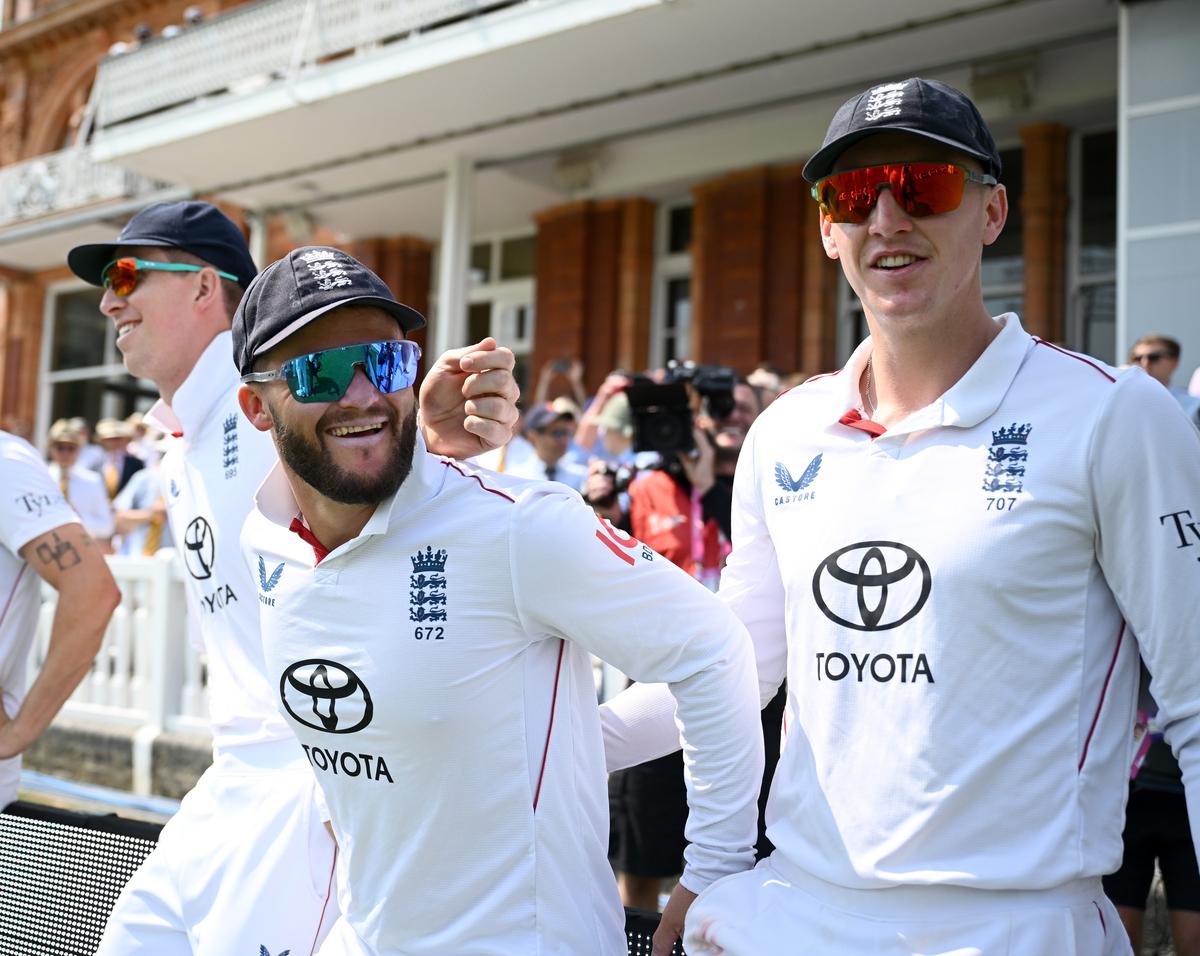
Run machines: In the batting department, England will rely on openers Zak Crawley and Ben Duckett, backed up by Harry Brook and the ever-reliable Joe Root.
| Photo Credit:
Getty Images
Run machines: In the batting department, England will rely on openers Zak Crawley and Ben Duckett, backed up by Harry Brook and the ever-reliable Joe Root.
| Photo Credit:
Getty Images
With the 34-year-old now within touching distance of Sachin Tendulkar’s record run tally in the format, it is an opportune time for Root to snap his century jinx on his fourth Test tour down under.
Flatter pitches back home have been central to England’s ability to liberate its batters, and Australia’s increasingly livelier surfaces will present a litmus test for Bazball. Batting averages here have dipped to 28.63 in the last five years, down from 36.49 between 2015 and 2019.
Throw the pace quartet of Starc, Hazlewood, Boland and Cummins into the mix, and it is a perfect storm for England’s top seven, three of whom — Duckett, Brook and Jamie Smith — are on their first tour down under. The lack of experience in Australian climes percolates to the touring party’s bowling unit, too, with Mark Wood being the exception. The express pacer’s 17 wickets at 26.64 in the last Ashes in Australia were England’s silver lining in 2021-22, but his proclivity for injury will worry Stokes, whose bowling will also be vital. Jofra Archer’s ability to conjure easy hostility could be a point of difference.
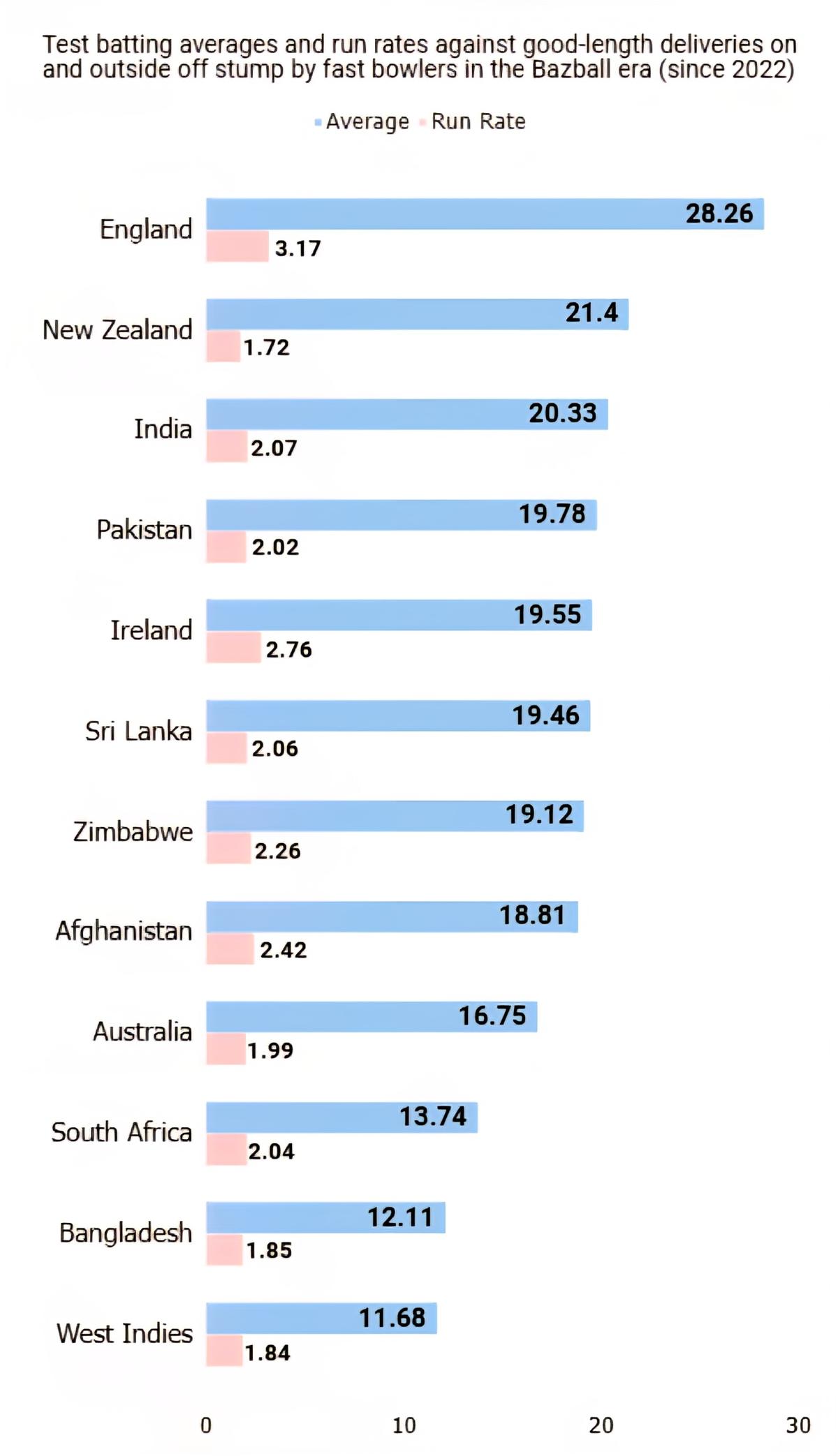
England and Australia are the pacesetters in the Bazball era. They lead the world’s run-rate charts in Test cricket, though they themselves are almost a whole run apart. The devil is in the details. England has upended one of Test cricket’s oldest doctrines — respecting the ‘good’ balls — with stunning consistency. The Bazball upheaval has seen English batters average 28.26 and score at 3.17 runs per over against the good-length deliveries by fast bowlers on a probing off-stump line or just outside it, blazing ahead in both metrics amongst their contemporaries.
The drawn 2-2 Ashes stalemate in 2023 was proof that Stokes’ men won’t relent, though the recent deadlock against India betrayed a refinement of aggression. An Ashes win, almost 15 years in the making, would be the ultimate vindication.
Squads
Australia squad (first Test): Steve Smith (c), Scott Boland, Alex Carey, Brendan Doggett, Cameron Green, Travis Head, Josh Inglis, Usman Khawaja, Marnus Labuschagne, Nathan Lyon, Michael Neser, Mitchell Starc, Jake Weatherald, Beau Webster
England XII for first Test: Ben Stokes (c), Jofra Archer, Gus Atkinson, Shoaib Bashir, Harry Brook, Brydon Carse, Zak Crawley, Ben Duckett, Ollie Pope, Joe Root, Jamie Smith (wk), Mark Wood
Published on Nov 20, 2025


