
T20 World Cup 2026 Group D: Afghanistan, South Africa, New Zealand entangled in qualification battle
Fewer heavyweight clashes in the revamped group-stage format, featuring more Associate nations, might have eroded the high-stakes charm of a T20 World Cup, but the 2026 group phase still has crowd-pulling games in the offing.
With South Africa, New Zealand, and Afghanistan pitted together, Group D is the metaphorical ‘group of death’ this iteration has to offer. Since only two teams advance to the Super Eights, one of these three will crash out in the first stage itself. Canada and the United Arab Emirates (UAE) complete the five-team group.
Out of the big three, New Zealand has been the most consistent since the last World Cup, winning 15 of its 27 games. Mitchell Santner’s side will be hoping to ride this momentum to advance in the competition and banish the demons of its group-stage exit in 2024.
The Kiwis’ resurgence has hinged on their batting. It might not be as brazenly explosive as Australia’s or India’s, but it has served the side well of late. New Zealand scored at 8.73 an over in the PowerPlay in 2025, just short of its trans-Tasman rival and home favourite India.
A minor tweak at the top of the order could further sharpen its attack. Finn Allen has played just five games in this cycle but has an average of 36 to accompany a strike rate of 211. He is a more compelling option to partner Tim Seifert than Devon Conway, who hits at 124 and is yet to calibrate his game to the demands of modern T20.
RELATED | T20 World Cup 2026 Group C Preview: Nepal, Scotland hope to be spanner in works for former champions
Daryl Mitchell, Glenn Phillips and Mark Chapman form the middle order and have enough wares to build on momentum if given a platform. All-rounders Michael Bracewell and Santner can chip in too, but New Zealand will turn towards them more for their spin bowling in the dry subcontinent conditions.
An injury ruled Adam Milne out of the tournament, but New Zealand’s pace unit looks insulated from such tremors. Since the last World Cup, Jacob Duffy has emerged as a linchpin in the pace battery, and only one bowler has taken more wickets than his tally of 44. He also boasts an enviable economy rate of 6.72. Kyle Jamieson, Lockie Ferguson and Matt Henry complete a well-rounded bowling unit.
Searching for answers
South Africa’s fortunes have seen a downturn in the shortest format since its runner-up finish at the last World Cup. Only West Indies and Ireland have a worse win-loss ratio than the Proteas’ 0.562 among Full-Member teams.
The void left by the international retirements of Heinrich Klaasen and Quinton de Kock has been evident. South Africa’s run rate in the first six overs through this World Cup cycle has been a middling 7.30, a sharp drop from 9.47 in the previous cycle. Across the 20 overs, it has dipped from nearly nine per over to 8.12.
The return of de Kock should mend this to an extent, but the team still needs the middle order to shoulder more burden.
This predicament could set the stage for Dewald Brevis’ coming of age. After striking at 172 and averaging 31 since July 2024, the 22-year-old has a shot at establishing himself as a mainstay in the batting order.
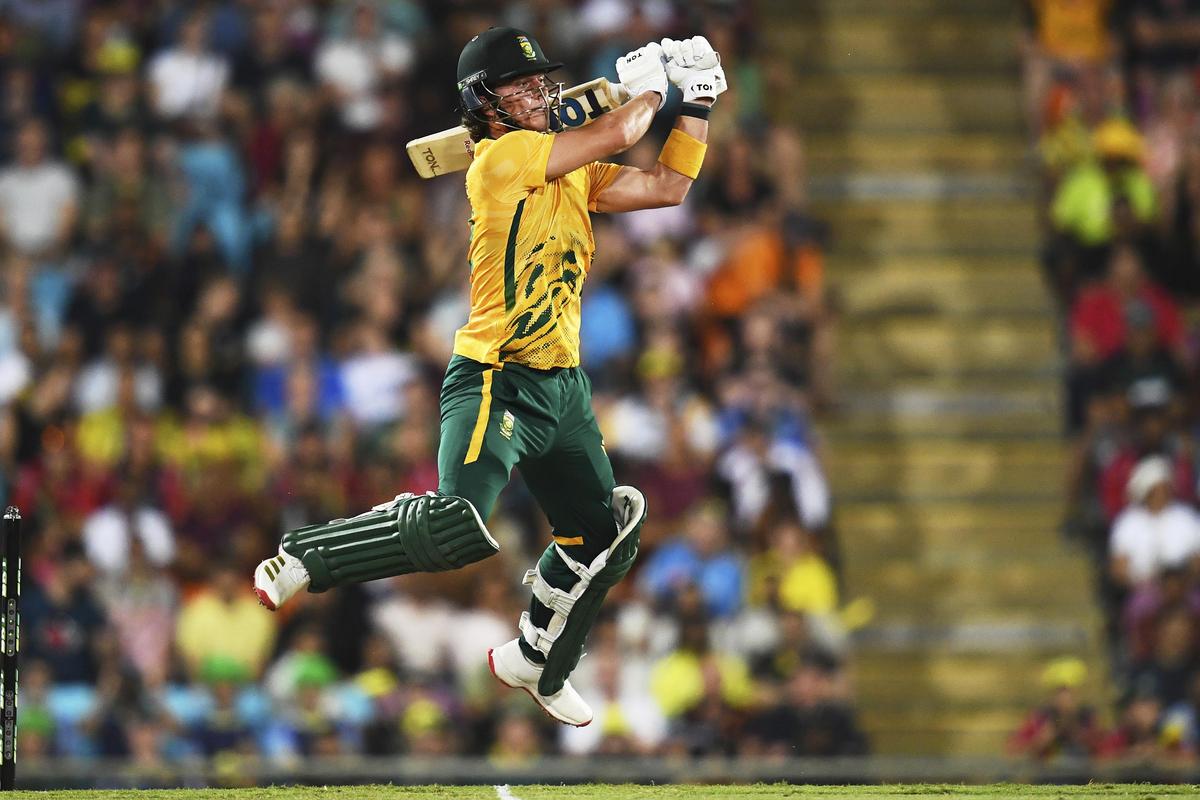
Peaking at the right time: Dewald Brevis’s recent SA20 form, highlighted by a 75 not out in Qualifier 1 and a 101 in the final, could be South Africa’s biggest batting weapon at the T20 World Cup.
| Photo Credit:
AP

Peaking at the right time: Dewald Brevis’s recent SA20 form, highlighted by a 75 not out in Qualifier 1 and a 101 in the final, could be South Africa’s biggest batting weapon at the T20 World Cup.
| Photo Credit:
AP
Apart from his addition, South Africa will hope consistent selections reap rewards. Aiden Markram, Tristan Stubbs and David Miller are still around from the last edition and can deliver better yields than they have managed of late. None of the three has a strike rate of more than 140 or an average of more than 30.
The Proteas’ bowling line-up also wears a familiar look, with Kagiso Rabada and Anrich Nortje still in the ranks. However, their injury-prone nature has meant that Corbin Bosch leads South Africa’s wicket-taking charts with 20 wickets from 13 matches, with Lungi Ngidi and Kwena Maphaka next on the list.
Tabraiz Shamsi opting out of South Africa’s central contracts since the last World Cup cost him a place in the squad, leaving George Linde to deputise for Keshav Maharaj in the spin department.
Spin-rich, batting-light
Afghanistan blazed a trail to the semifinals last time, but it would need more from its batters to emulate that success in the subcontinent. On sluggish wickets in the Caribbean, its spinners almost single-handedly tilted games in Afghanistan’s favour.
While it sticks to the three-pronged attack of Rashid Khan, Mujeeb Ur Rahman and Noor Ahmad, Afghanistan’s underlying batting numbers paint a worrying picture.
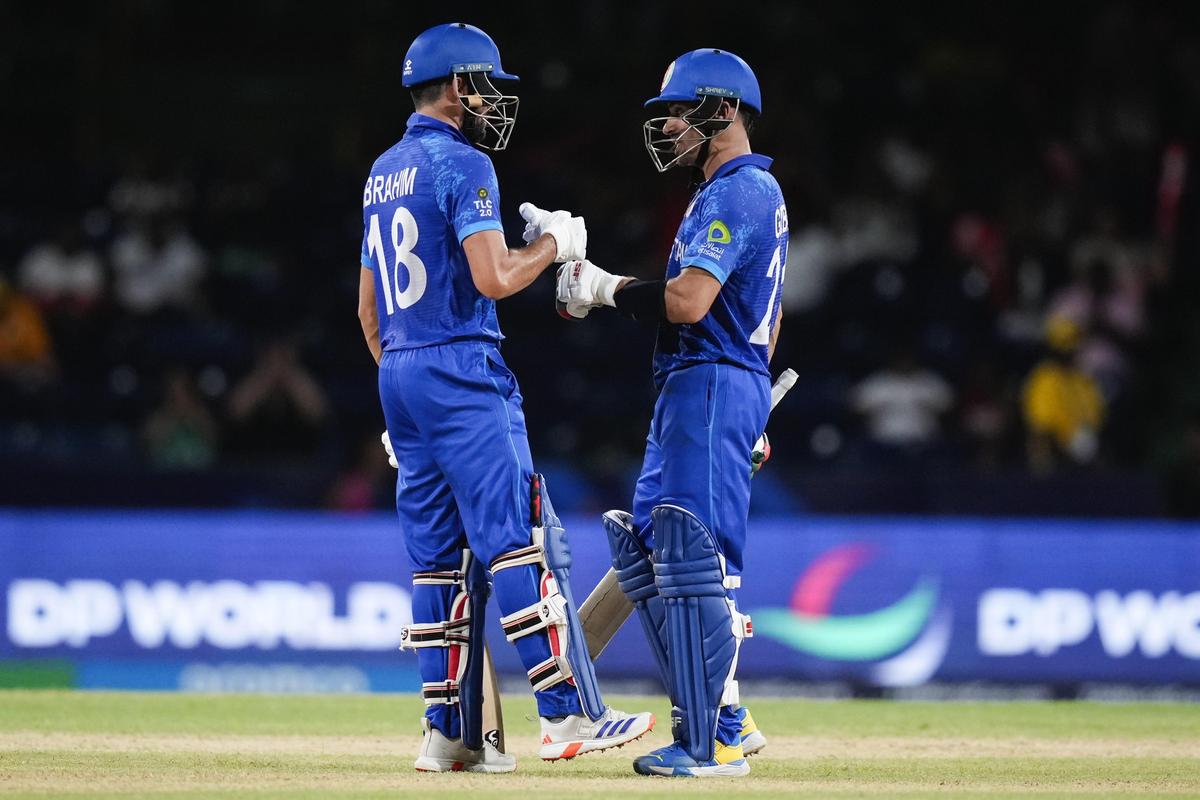
Quandary: Afghanistan’s batting has heavily relied on Rahmanullah Gurbaz and Ibrahim Zadran, who have struggled to give quick starts. In this World Cup cycle, the side has scored at just 6.74 in the PowerPlay.
| Photo Credit:
PTI
Quandary: Afghanistan’s batting has heavily relied on Rahmanullah Gurbaz and Ibrahim Zadran, who have struggled to give quick starts. In this World Cup cycle, the side has scored at just 6.74 in the PowerPlay.
| Photo Credit:
PTI
In this World Cup cycle, the side has scored at just 6.74 in the PowerPlay, the lowest among the 12 Full-Member nations. Further, it remains a top-heavy team, leaning on Rahmanullah Gurbaz and Ibrahim Zadran. Of the seven batters who have played at least 10 innings since July 2024, none strikes at more than 150, including Gurbaz and Zadran.
In conditions where dew will be an added hurdle for spinners, Afghanistan needs a contingency unit to step up.
The chasing pack
It will be all the more wary of the other two teams snapping at its heels. In the Asia Cup last year, UAE nearly chased down 170 against Afghanistan.
UAE’s time in the Asia Cup, where it fell just four short of a chase of 170 against Afghanistan, and its 2-1 series win over Bangladesh in 2025 will remind teams that it is no pushover.
Canada qualified for the competition after winning the Americas Regional Final on home soil, where it overcame the Bahamas, the Cayman Islands and Bermuda. But a lack of experience against Full-Member nations might leave the North Americans in the lurch.
(Stats as of January 22)
Published on Feb 06, 2026


