
IS Bindra, a gentleman who gave Indian cricket its backbone
If anyone epitomised gentlemanliness, it was Inderjit Singh Bindra, who died at 84 after a long illness. His legacy lives on in Indian cricket and in the strong position it enjoys in the world.
In Delhi, for fledgling sports journalists in the early 1980s, Bindra was our role model, a guide and friend who supported us during assignments in Punjab. Among cricketers, he carved out his own space: elegant, erudite, and visionary, with a sartorial sense that enhanced his personality.
Cricketers adored him. He was large-hearted. Administrators aspired to emulate him. He kept his word. Like Tiger Pataudi, he did not tolerate mediocrity and presented his arguments firmly yet politely. “I don’t like to hurt,” he told me once, when a junior had to be reprimanded for dereliction of duty during an international match in Mohali. The young official learnt his lesson.
Bindra feared none. He was lion-hearted. He dealt with his staff on merit and was not averse to saying “No” to unreasonable demands for complimentary tickets during big matches in Mohali. It was hard to please him. “I am doing my job. You do yours,” he would say, as a matter of fact, if a colleague sought an undue favour. Yet he looked after players affectionately, taking a personal interest in their playing facilities and logistics.
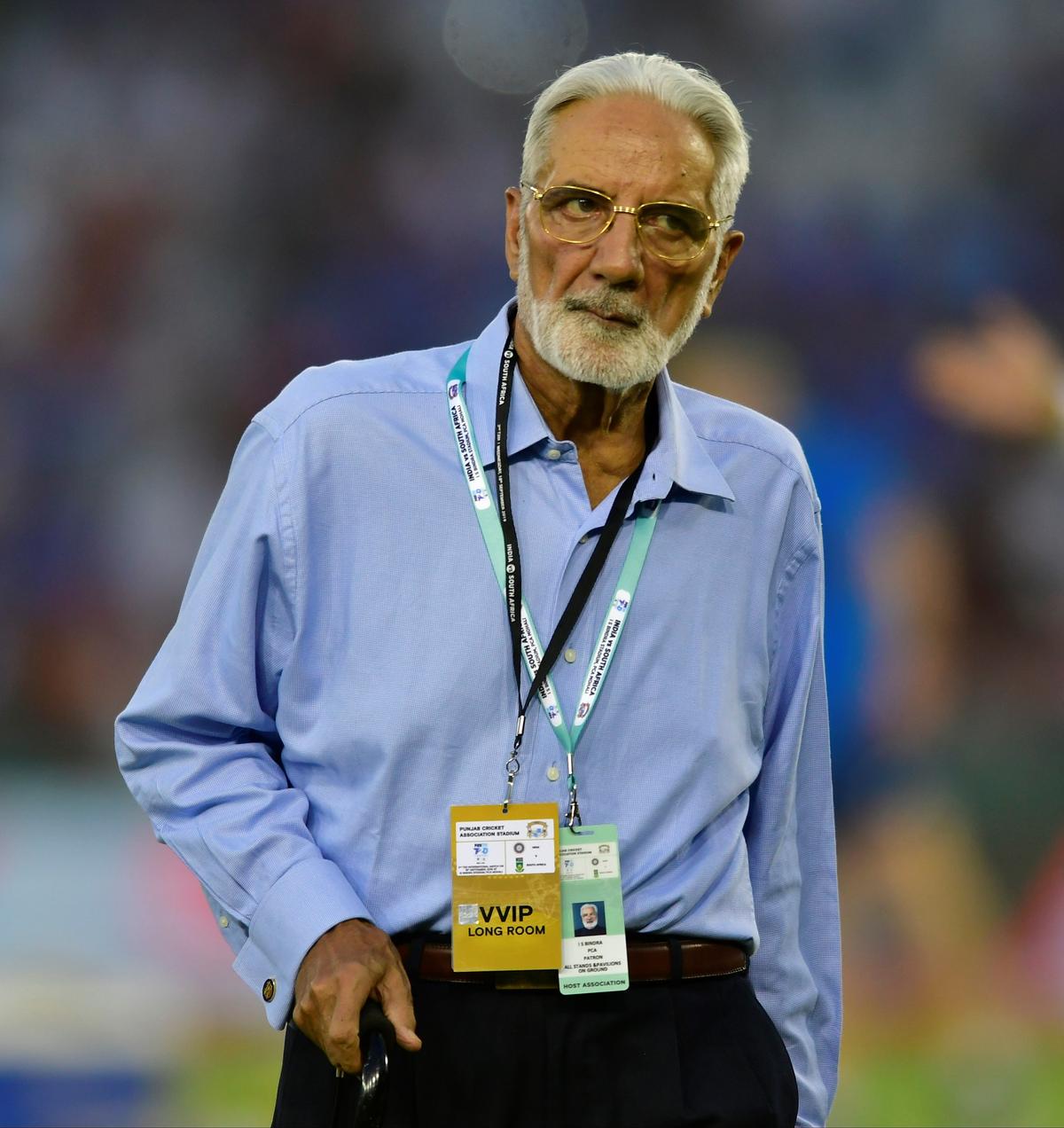
Inderjit Singh Bindra single-handedly created the professional infrastructure for cricket in India.
| Photo Credit:
AKHILESH KUMAR

Inderjit Singh Bindra single-handedly created the professional infrastructure for cricket in India.
| Photo Credit:
AKHILESH KUMAR
A bureaucrat accessible to all, from ground staff to the illustrious protagonists of the game, Bindra was always able to tackle a crisis with a smile. His calm countenance hid a storm within, as he executed his plans with precision. I have seen him personally visit each gate of the stadium in Mohali, assuring policemen and volunteers of his support. Not even high-ranking politicians or administration officers could enter the venue without valid access. An international match in Punjab was treated by him like a daughter’s wedding.
When it came to cricket, Bindra was the intellectual mind who lent class to the running of the game. A popular figure, he structured the season with meticulous care, down to the minutest details of appointing officials and cricketers to various posts. His doors were open to cricketers at any time of the day or night, and he granted instant approvals to players’ requests. “I am what I am because of them,” was his response.
Bindra single-handedly created the professional infrastructure for cricket in India. Along with Jagmohan Dalmiya, he helped make cricket a lucrative sport, compelling an official broadcaster like Doordarshan to pay for telecasting matches. Bindra believed the Board of Control for Cricket in India (BCCI) had to transform into a rich, sports-focused, self-sufficient body. The roots of the BCCI’s present-day affluence were laid by Bindra in Dalmiya’s company.
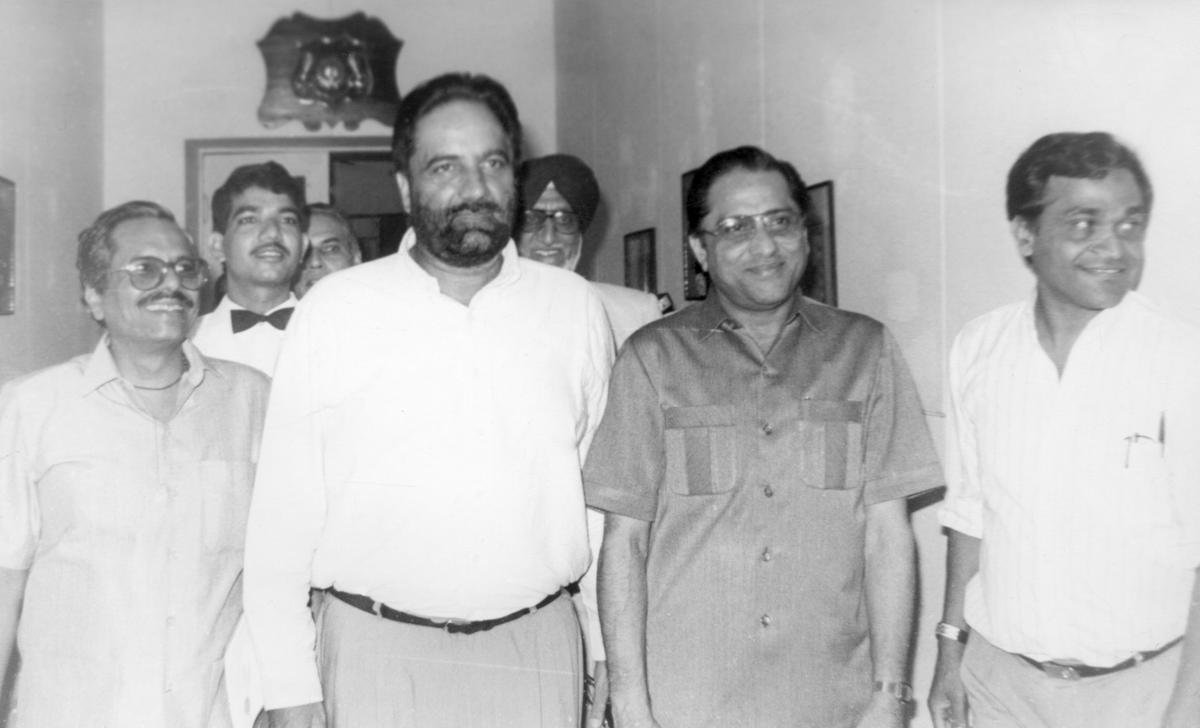
Newly elected BCCI President I.S. Bindra (2L) and Secretary Jagmohan Dalmiya (3L) pose for a photograph at the end of the two-day BCCI’s annual general meeting in Gwalior on September 30, 1993.
| Photo Credit:
THE HINDU ARCHIVES
Newly elected BCCI President I.S. Bindra (2L) and Secretary Jagmohan Dalmiya (3L) pose for a photograph at the end of the two-day BCCI’s annual general meeting in Gwalior on September 30, 1993.
| Photo Credit:
THE HINDU ARCHIVES
The 1987 World Cup, named the Reliance Cup, was a gift from Bindra to Indian cricket. He worked tirelessly with Dalmiya to ensure that the BCCI and the Pakistan Cricket Board worked in tandem to deliver a memorable tournament. He had been on the Lord’s balcony in 1983, savouring India’s Prudential World Cup triumph and vowing to take the event out of England for the first time. He fulfilled that promise with a flawless demonstration of administration, backed by sponsorship that eased the BCCI’s financial woes.
He loved competition. He did not retreat in the face of stiff opposition, and his devotion to cricket won him a great number of friends and admirers. Over time, he grew from Bindra to Bindra Saab, earning the respect even of his detractors through his work and through the players’ affection for him as mentor and benefactor. Sadly, in later years, he fell out with two of his closest allies, Dalmiya and Bishan Singh Bedi, owing to his uncompromising stance on issues demanding transparency and accountability.
Bindra, never known to show his worries, was also one of the key reasons cricket scribes never missed a trip to Chandigarh. He ensured the media had decent accommodation at discounted rates. The match-eve party at his residence was not to be missed, with players and social celebrities turning out in large numbers. Sharing a drink with the likes of Sir Viv Richards and Gordon Greenidge on a wintry night in 1987, on the lawns of his residence, remains a lasting memory, with Bindra taking personal care of every invitee.
Under his stewardship, the Punjab Cricket Association won its only Ranji Trophy title in 1993 and, the following year, staged its first Test, against the West Indies, at the beautiful Mohali Stadium. It was a modern venue with spacious dressing rooms, comfortable seating for the average cricket fan, and hospitality boxes for those who could afford them. The Long Room was a first-of-its-kind addition to an Indian cricket stadium, modelled on Lord’s. Bindra Saab also ensured excellent communication facilities for the media, though he regretted not having set up a spacious press box.
His stellar role in Indian sport will also be remembered for his tenure as president of the Table Tennis Federation of India, during which he organised the 1987 World Championships in Delhi.
On the personal front, I shared a close rapport with Bindra Saab. He would check with me on numerous occasions at the end of the day to ask if everything had gone well. I was not surprised to receive a call in my Manchester hotel room when Navjot Singh Sidhu walked out of the 1996 tour. “I expect you to tell me what transpired,” he demanded. I shared details of Sidhu’s original letter to the BCCI, outlining his grievance against skipper Mohammad Azharuddin and coach Sandeep Patil, and then redrafted it in the presence of wicketkeeper Nayan Mongia and physiotherapist Ali Irani. Bindra Saab later met Sidhu on his return to Delhi and convinced him to change his mind. Sidhu went on to score his maiden Test double century on India’s subsequent tour of the West Indies nine months later.
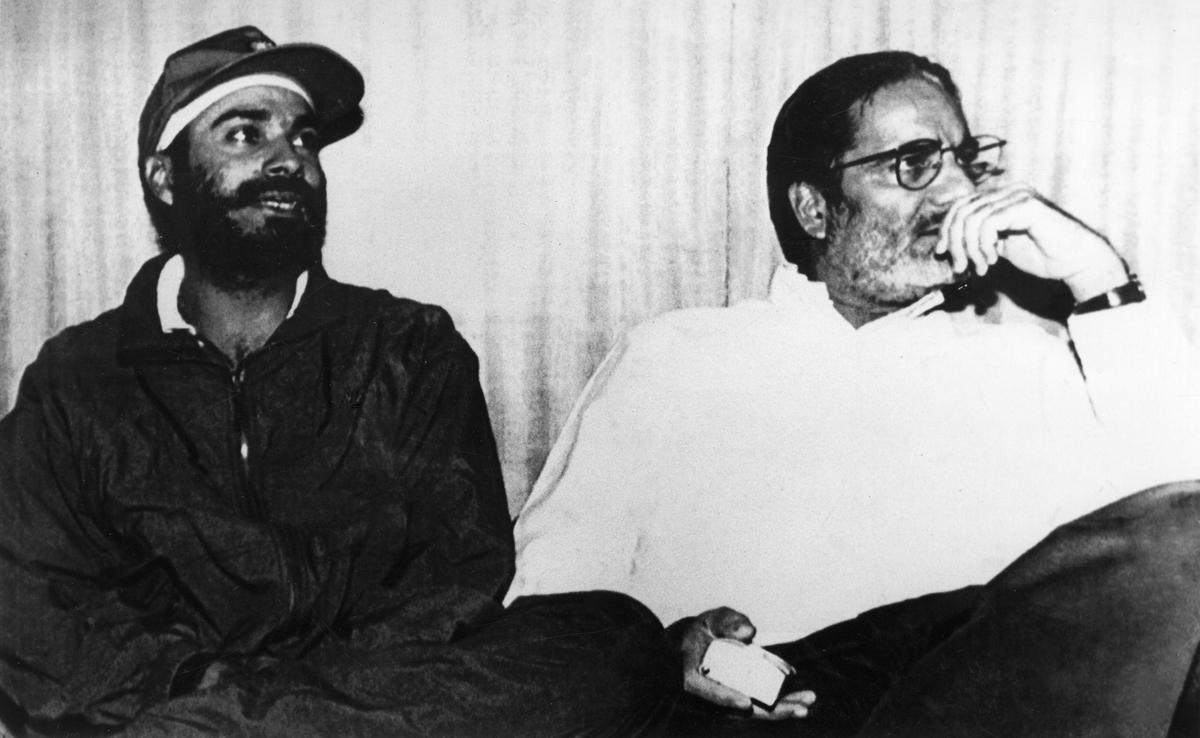
Inderjit Singh Bindra with former Indian cricket team player Navjot Singh Sidhu.
| Photo Credit:
THE HINDU ARCHIVES
Inderjit Singh Bindra with former Indian cricket team player Navjot Singh Sidhu.
| Photo Credit:
THE HINDU ARCHIVES
Bindra Saab missed his cricket and golf. His feeble gait pained his close associates as he retired to a reclusive life at his farmhouse near Delhi. His memory began to erode. When I went to see him some years ago, the stadium guard said, “He can’t meet you.” I insisted that he give Bindra Saab my visiting card. When he saw it, he came to the door. “Why didn’t you come in?” He had recognised my face, not my name. This was not the Bindra Saab I had known since 1985.
His contribution to cricket administration in India will remain unmatched, player-oriented, and focused on improving players’ financial well-being. Travel well, Sir. Indian cricket owes you a great deal.
Published on Jan 28, 2026


