
Economics of women’s cricket: How World Cup winner India went from scraping by to winning the lottery
Shubhangi Kulkarni was the bonafide star of her playing days, with locals flocking to cricket grounds to watch her take opponents to the cleaners. Long before she occupied crucial decision-making positions within the BCCI, Shubhangi, even as a player, was tasked with finding sponsors for the very team she represented.
“It was really tough. We relied mostly on our contacts and not anyone’s big vision for women’s cricket, per se,” she tells Sportstar.
“I remember playing a match in Jalandhar in the 80s, which was a big export hub for cricketing equipment then. My family is into business and manufacturing, so I had an interest too. I visited one of the factories and got the idea to open Sunny Sports Boutique, which I currently run.
ALSO READ | As women’s cricket takes off, what lies ahead for other women athletes in India?
“The Sunny brand brought out apparel which four top cricketers in the side – Shantha Rangaswamy, Sudha Shah, Sandhya Agarwal, and I – used.”
This was around the time SG began sponsoring top men’s players like Sunil Gavaskar. When the company expanded to include women, it was primarily to make kits available for free, a welcome relief to players operating in an era with no allowances or match fees.
Shubhangi’s monetary struggles only deepened once she crossed into administration after retiring in 1991. India played Tests against Australia, New Zealand and others, albeit sporadically, in the following years. While acquaintances obliged her early requests as secretary of the Women’s Cricket Association of India, funding for foreign tours and camps soon dried up enough for Shubhangi to consider breaking some of her fixed deposits. Players often pooled in their own money, as former India captain Mithali Raj revealed later, to fund their international tours. The team also relied on help from NRI families in New Zealand as a last-ditch stay option during the 90s, Nutan Gavaskar (Sunil’s sister) and long-standing secretariat of the WCAI told media ahead of the final in Mumbai.
Names like Sahara eventually entered the fray, sponsoring the women’s team in 2002. Broadcaster and actor Mandira Bedi took up the team’s cause a few years later, funneling her advertising income into the women’s side as its ambassador ahead of the 2005 World Cup.
In 2006, the WCAI merged with the BCCI after the International Women’s Cricket Council united with the International Cricket Council.
In the two decades since, three major inflection points helped pull Indian women’s cricket out of a prolonged monetary wilderness: the 2017 Women’s World Cup, the launch of the Women’s Premier League in 2023, and India’s triumph in the 2025 Women’s ODI World Cup.
ALSO READ | In Indian women’s cricket’s finest moment so far, remembering those who made it happen
The sleeping giant poked
The 2017 ODI showpiece was the first edition where every game was broadcast. It brought a fresh viewer base to the women’s game, rewarded by one of the sport’s biggest upsets when India cast Australia aside to reach the final. India fell short of a maiden ICC trophy by just nine runs, but India Inc. woke up. An estimated 180 million people globally followed the tournament, creating fertile ground for advertisers. In India alone, 156 million watched the event, including 80 million from rural areas, and the final drew 126 million viewers. India’s performances contributed to a fivefold increase in viewing hours. The ICC reported a threefold jump compared to the 2013 edition.
Advertising gigs, sponsorship deals and endorsements followed. Meanwhile, marketing and licensing companies like Baseline Ventures began tapping the potential of female athletes in brand spaces.
“When I co-founded Baseline, we wanted to look at sports beyond men’s cricket, which was the low-hanging fruit because everyone was in that space. So we started looking at a lot of non-cricket, non-men’s cricket sports,” says Tuhin Mishra, CEO of Baseline ventures.
Double Olympic medallist P. V. Sindhu was one of the company’s first signings around 2015, long before she amassed her biggest accolades.
“Nearly 70 per cent of our representation roster is female. Even within cricket, we understood that women’s cricket needs to be seen as its own entity, or its true value can never be unlocked. The vertical and the athletes need to stand on their own,” Tuhin adds.
Baseline signed Smriti Mandhana after the 2017 World Cup, seeing in the then 21-year-old the potential to become one of the most recognisable faces in global cricket in the decade ahead.
“She broke the glass ceiling not just on the field, but also in entering categories that were deemed to be male-dominated, and much of this was set in motion before the World Cup. She had ended up with long-term deals with Gulf Oil (which had M. S. Dhoni as its face), SBI Bank, Herbalife, and PNB MetLife – all predominantly carrying a male star’s brand value until then.
“Most brands come in on a transactional basis, when big events happen or when a World Cup like this comes along. People need to realise that this game is like the stock market. You need to be in it for the long haul to truly draw out the real value.”
In 2024, SportsPro featured only two cricketers among its 150 most marketable global faces: Virat Kohli and Smriti, a significant endorsement of women’s cricket in the branding space.
ALSO WATCH | Harmanpreet Kaur hopes for hike in value of women’s contracts post WC triumph
Cash cow
The Women’s Premier League cemented the sport’s commercial viability. The BCCI received a record Rs. 4,669.99 crore (USD 575 million) from auctioning the league’s five franchises to the Adani Group, Reliance, Diageo India, the JSW GMR joint venture, and Capri Global. By comparison, the IPL’s eight teams fetched USD 723.59 million in 2008.
Reliance-owned Viacom 18 won the WPL media rights for five years, valued at Rs. 951 crore, translating to a per-match value of Rs. 7.09 crore (USD 866,000). In comparison, the consortium of Sony Television Network and Singapore-based World Sports Group secured IPL’s media rights for the first 10 years at a cost of more than USD one billion (USD 908 million going towards telecast rights and 108 million towards tournament promotion). This is roughly Rs. 8,200 crore. A decade and a half into the tournament, that number increased nearly six-fold.
The WPL introduced hordes of new fans to the women’s game. Matches were regularly staged in traditional hubs like Delhi, Mumbai and Bengaluru, with Lucknow and Vadodara joining the roster this year. Women’s matches, bilateral or otherwise, had long been free-to-watch events played before sparse crowds. Ticketed fixtures in the WPL, priced mostly in the Rs. 150 to Rs. 200 range, changed that.
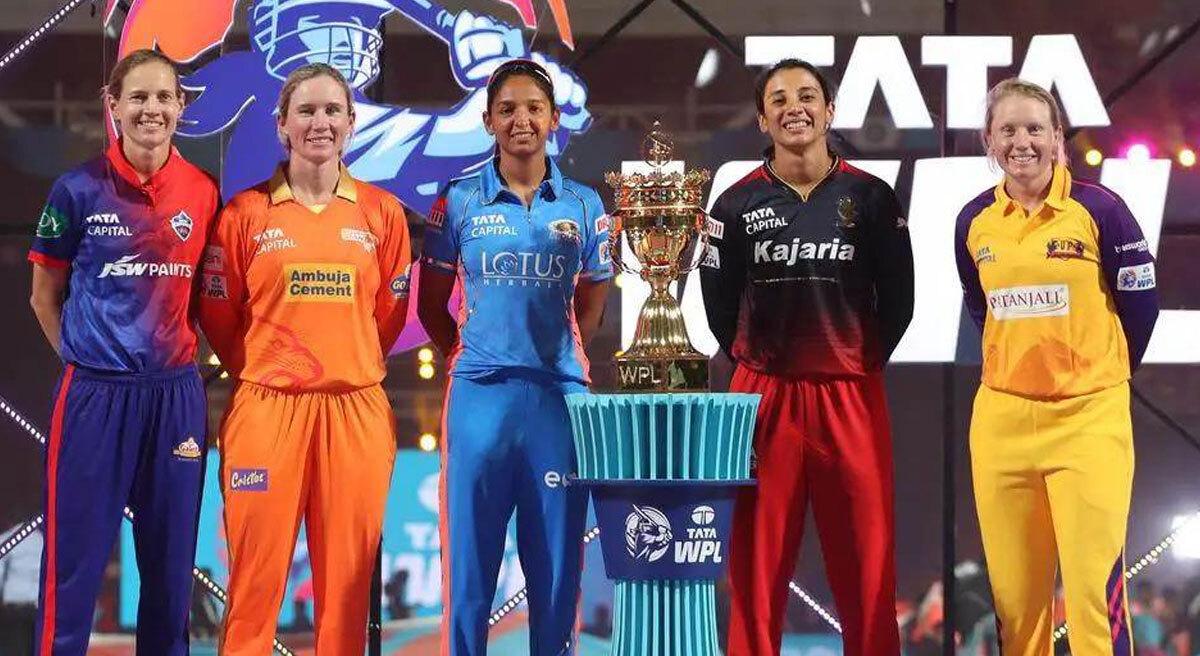
Captains of the five IPL teams — Meg Lanninhg (DC), Beth Mooney (GG, Harmanpree.t Kauur (MI), Smriti Mandhana and Alyssa Healy head of yo0ur during the 2024 edition
| Photo Credit:
Sportzpics

Captains of the five IPL teams — Meg Lanninhg (DC), Beth Mooney (GG, Harmanpree.t Kauur (MI), Smriti Mandhana and Alyssa Healy head of yo0ur during the 2024 edition
| Photo Credit:
Sportzpics
During the 2013 World Cup, invitations were issued to 50 schools in Mumbai for the opening game at the Brabourne Stadium. Fewer than 2,000 seats were filled. Images of empty stands from that tournament still circulate online. A decade later, both Brabourne and D. Y. Patil Stadium went houseful for several fixtures. Crowds of more than 30,000 attended big matches and weekday games still drew around 10,000 spectators.
Its predecessor, the exhibition-style Women’s T20 Challenge, was essentially a filler for the IPL. The WPL created a stage of its own, and the women’s game took ownership of it.
D. Y. Patil Stadium’s emergence as a premier venue was also driven by the WPL. Its batting-friendly pitch and high-profile matches strengthened its case for inclusion as a privately owned venue in the home World Cup schedule.
India’s commercial allure, long respected and feared in men’s cricket, extended naturally to the women’s game, drawing top international players eager for contracts worth up to USD 400,000.
ALSO READ | Pratika Rawal and the science of staying unshakeable
Brands embraced the league’s visibility. RCB’s Ellyse Perry famously broke the window of a Tata Punch EV parked at the sponsor podium. Beyond the instant publicity, Tata pledged a donation of Rs. 5 lakh every time a ball hit the sponsor car during the 2025 season.
Social welfare initiatives also found space. Weeks before the World Cup, the Indian women’s team wore a pink jersey through a collaboration with SBI Life to promote breast cancer awareness. UP Warriorz partnered with the United Nations on women empowerment programmes.
“The commercial and cultural changes are there for all to see over three seasons. We saw a significant rise in interest from brands in new categories, especially women-centric and lifestyle-driven sectors, which saw clear alignment with their audiences. It is no longer viewed as an emerging property. It is now a key platform,” Sanjay Adesara, CBO of Adani Sportsline, which owns Gujarat Giants, says.
IND vs SA final sees 23.5x ad surge
TAM Sports data shows a 23.5x surge in ad volumes for the 2025 World Cup final compared to the 2022 final. Across the tournament, ad volumes nearly tripled per match, with semifinals jumping 8.6x and the league stage rising 77%. Even matches without India clocked a significant 57% rise, highlighting a broader shift in audience interest and advertiser confidence.
Across teams, sponsor portfolios have diversified. The Giants have maintained steady backers in Ambuja Cements and Tata Capital while also adding FMCG brands like Himalaya, Patanjali, Hindustan Unilever Ltd., and Amul. Women-centric industries like beauty and jewellery have entered the ecosystem. Mia by Tanishq and make-up brands like Kay by Katrina Kaif have integrated themselves with franchises.
There have been hurdles too, notably the ban on real money gaming. D and P Advisory’s valuation report noted that the IPL ecosystem’s value fell from Rs. 82,700 crore to Rs. 76,100 crore, while the WPL dipped from Rs. 1,350 crore to Rs. 1,275 crore. Another contributor was the merger of Disney Star and Viacom 18 into JioStar, which consolidated IPL and WPL rights under one roof, removing the two horse bidding battles that previously fuelled rights inflation.
A World Cup win arrived at an ideal moment for a property like the WPL. When the women’s IPL was still an idea, many within the system doubted India’s depth to sustain a competitive league. Now, the ecosystem is overflowing with talent and there is increasing demand for more teams each season.
ALSO READ | PlayCom 2025: Participative disciplines redefining landscape of sporting business in India
“Honestly, the success of the first season is not surprising as a lot of research had gone into it. We had done our groundwork. We spent Rs. 55 crore on brand-building and marketing to showcase a product we believed in and the results are there for everyone to see. If you look at the scale at which BCCI operates, we were very clear that WPL has to be the biggest women’s cricket league in the world and it did. I am really glad that everyone invested in the concept,” former BCCI secretary and incumbent ICC chair Jay Shah said in 2023.
Expansion will take time, but individual players have already benefited immensely from the league’s visibility. JSW Sports, which manages Jemimah Rodrigues and Shafali Verma in addition to representing the Delhi Capitals franchise, says Jemimah’s brand value has risen from Rs. 60 lakh to Rs. 1.5 crore, while Shafali’s has climbed from Rs. 40 lakh to Rs. 1 crore.
Beyond commercial gains, the WPL has offered an alternative path for players. Like the Women’s Big Bash League, the now-defunct Kia Super League and The Hundred, it provides a platform for careers even without the India shirt.
With the auction set to take place weeks after the World Cup and many World Cup winners back in the pool, bidding dynamics may shift too.
Watershed moment
India’s famous triumph in Navi Mumbai to clinch its first ICC women’s trophy triggered a commercial surge in the weeks that followed. Beyond significant cash awards and personal incentives, a wave of endorsements arrived. Harleen Deol landed a campaign with Lakme, integrating it into her visit to the Prime Minister’s residence. Renuka Singh Thakur and Jemimah shot an ad for fast-food giant KFC the very next day. Surf Excel capitalised on Jemimah’s muddied semifinal jersey with a full-page ad using its “Daag achhe hain” tagline. Hours after the final, skipper Harmanpreet Kaur was announced as ambassador for real estate enterprise Omaxe.
“It’s become pretty close to a dangerous position where cricket is almost a product rather than an event,” image guru Dilip Cherian tells Sportstar.
“Men’s cricket is sliced and diced in so many ways. The women’s game is just entering that arena, thanks to three key developments: a big win in front of high-energy crowds, consumers’ ability to identify favourites by name, and the backing of funds by the system itself, like prize money, which we saw in this World Cup,” he adds.
Alongside marquee names like Smriti, Harmanpreet and Jemimah, the World Cup win thrust others into the spotlight. From Shafali and Deepti Sharma to Sneh Rana and Pratika Rawal, players have received endorsement deals, speaking engagements and television appearances.
“The huge advantage now is that a new batch of female heroes has entered the market at price points that are more affordable as well. The temptation to experiment at reasonable costs will be acted on by brands. I only hope players and industry players don’t fall for the easy route of sticking with cosmetics and household appliances.”
ALSO READ | Former India captain Rani Rampal: We work as hard as cricketers, so why don’t we get same support and money?
Across advertising, public relations and even journalistic spaces, target audiences are shifting. Women’s sports and female icons are no longer perceived as relevant only to women, and Cherian sees the industry recognising this change.
“It was not an all-female crowd at the D. Y. Patil Stadium on November 2. A crowd, largely male, came to watch their heroes do something incredible. Viewership numbers also suggest the same.”
Building bridges
The final between India and South Africa attracted 185 million users on JioHotstar, drawing a peak concurrency of 21 million viewers. This matched the viewership of the Men’s T20 World Cup 2024 final between the same nations and exceeded the average daily reach of the Indian Premier League.
The tournament recorded a reach of 446 million, the highest ever for women’s cricket and more than the combined total of the previous three Women’s World Cups. Ninety-two million watched the historic clash on connected TV, matching the connected TV viewership of the Men’s T20 World Cup 2024 final and the Men’s ODI World Cup 2023 final.
It is no surprise, then, that several WPL teams anticipate a 40 to 60 per cent rise in player valuations, particularly for top performers.
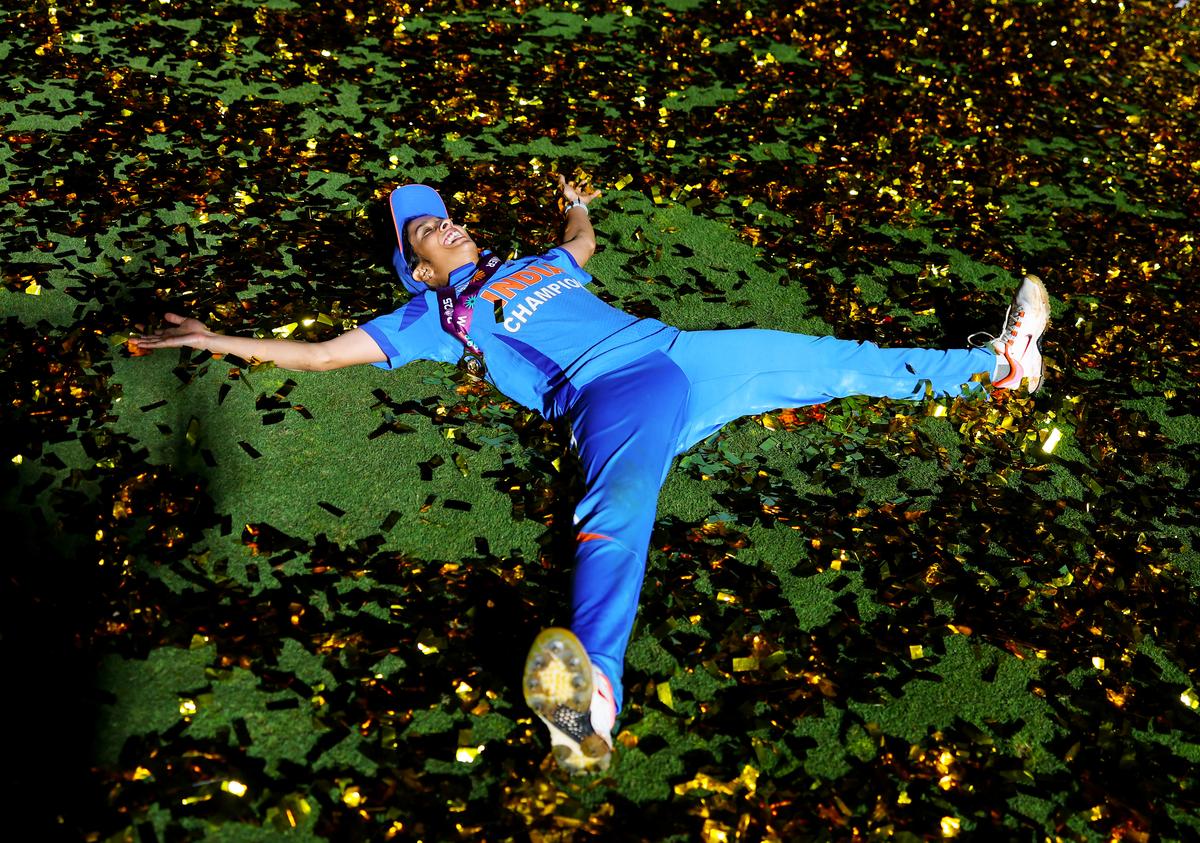
The final between India and South Africa attracted 185 million users on JioHotstar, drawing a peak concurrency of 21 million viewers.
| Photo Credit:
Getty Images
The final between India and South Africa attracted 185 million users on JioHotstar, drawing a peak concurrency of 21 million viewers.
| Photo Credit:
Getty Images
While commercial gains have brightened the ecosystem’s surface, Nandan Kamath, co-founder and managing trustee of the GoSports Foundation, stresses the importance of strengthening its foundations.
“Success is such an important driver of a belief system, right? And the highest value is not just in spectatorship or commercials, but what it does for the micro conversations that happen around sports,” he tells Sportstar.
“That includes young girls speaking to their parents about sport, an academy owner deciding whether to accommodate girls in his establishment. Academies are often set up with low infrastructure and can be quite unfriendly to girls in aspects like washrooms, safety, etc. Kit producers can now think of tuning equipment for women better. Success can make discussions that were marginal more mainstream.”
A tier up, the BCCI’s age group tournaments for women have also become more regular in the years since the pandemic. A U-19 World Cup held every two years, which India has already won twice, helps keep boards alert and provides a clear incentive to maintain a steady talent pipeline.
Published on Nov 20, 2025


