
Abhishek Sharma and Phil Salt Had Quiet World Cups. That Should Terrify Bowlers in IPL 2026 — Here’s Why
Lights…camera…oh, the camera was still rolling? The curtain has barely fallen on the T20 World Cup, and already the IPL, cricket’s most glamorous spectacle, returns.
Fresh off having faced off in national team colours, some of the world’s biggest stars will be duelling again, this time in a two-and-a-half-month-long franchise marathon defined by hyper-competition featuring the world’s biggest stars.
The T20 World Cup was a tournament filled with a number of fascinating storylines — not least of all India’s path to a historic glory at home — and many will be wondering what implications those could have on the IPL.
A glance into the past
There is little historical precedent to refer to while decoding how much bearing a T20 World Cup can have on the IPL. Indeed, an IPL taking place so soon after a T20 World Cup is somewhat unusual, with the last instance coming in 2016. Just six days after Carlos Brathwaite hoisted Ben Stokes into the Kolkata sky to hand West Indies its second T20I title, Mumbai Indians took on Rising Pune Supergiants to start the 2016 IPL.
Seven of the players named in the ICC’s Team of the Tournament from that event featured in that year’s IPL, with mixed results.
Virat Kohli was undoubtedly the top performer, carrying his form as Player of the Tournament at the World T20 into a historic 973-run season for Royal Challengers Bangalore, while Shane Watson, Andre Russell, and Mustafizur Rahman all had strong seasons for their respective sides.
On the other hand, Quinton de Kock and Jos Buttler found the going slightly tough, while Ashish Nehra played eight games before suffering an injury.
On the flipside, IPL 2016 was won by Sunrisers Hyderabad on the back of exceptional seasons from openers David Warner (848 runs) and Shikhar Dhawan (501 runs), both of whom struggled at the preceding international event, averaging 9.50 and 10.75 respectively.
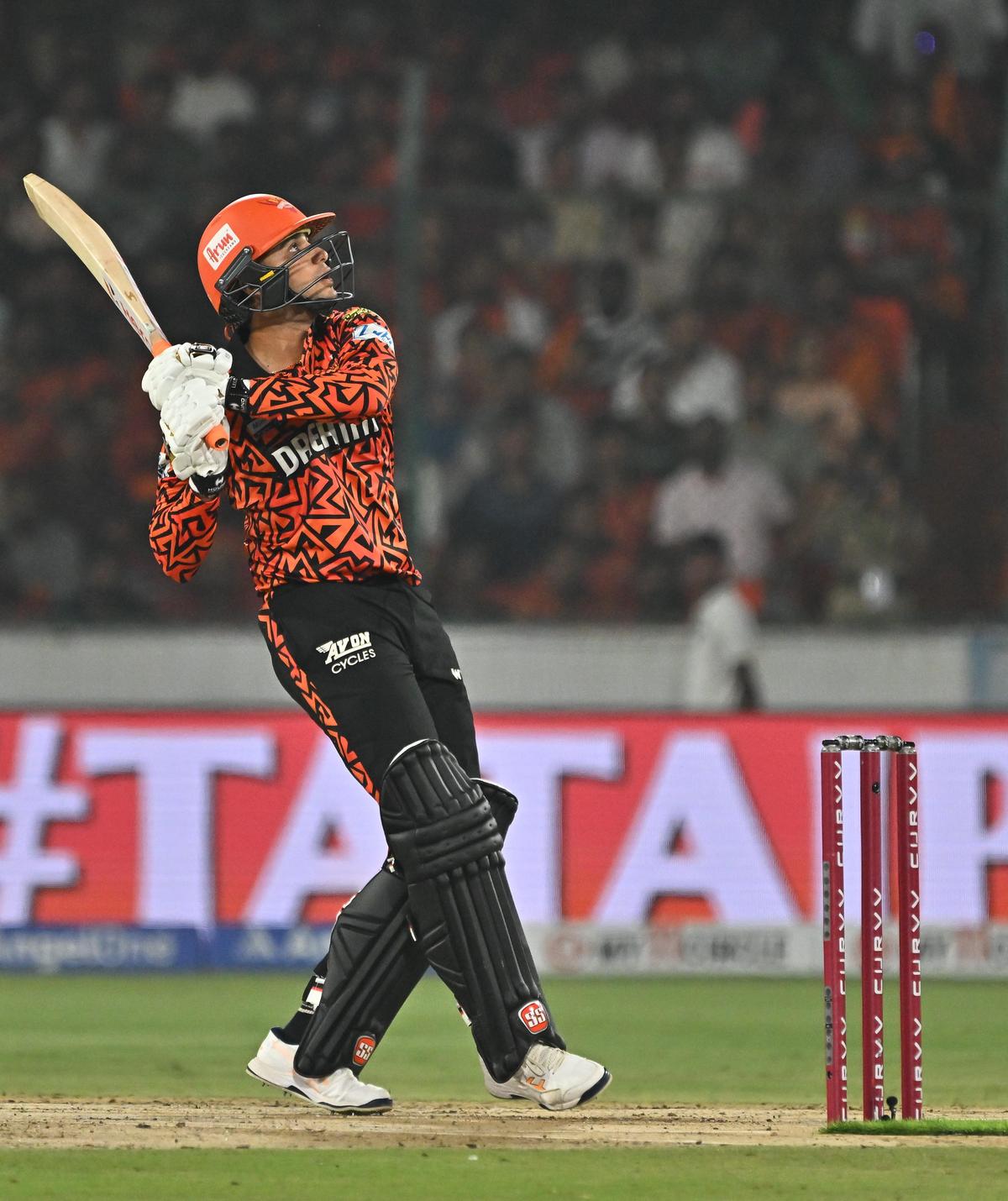
Among the poster boys of the T20 batting revolution are Abhishek Sharma and Phil Salt. Abhishek has been the spearhead of both SRH and India’s attacking turn, while Salt has been similarly impressive for England and has won back-to-back IPL titles as an aggressive opening batter.
| Photo Credit:
K.V.S GIRI

Among the poster boys of the T20 batting revolution are Abhishek Sharma and Phil Salt. Abhishek has been the spearhead of both SRH and India’s attacking turn, while Salt has been similarly impressive for England and has won back-to-back IPL titles as an aggressive opening batter.
| Photo Credit:
K.V.S GIRI
Past performance does not indicate future returns
Dhawan and Warner are prime examples of the fact that performances in a T20 World Cup are not the strongest indicator of how a player will perform in the IPL, and the 2026 IPL season is unlikely to be any different.
Heading into the T20 World Cup 2026, many asked whether any team would be able to reach 300 in a T20I innings, with some even suggesting it could happen more than once. The genesis of that question has much to do with the IPL, where, enabled by batting-friendly wickets and the introduction of the Impact Player rule, run rates have skyrocketed and batting records have tumbled with ease.
Among the poster boys of that batting revolution are Abhishek Sharma and Phil Salt. Abhishek has been the spearhead of both SRH and India’s attacking turn, while Salt has been similarly impressive for England and has won back-to-back IPL titles as an aggressive opening batter.
Both have made their name playing attacking cricket that naturally lends itself to high variance, taking high-risk options in search of high reward despite the greater threat of dismissal. Both, however, had middling World Cups, with the odd performance of note (including Abhishek’s fifty in the final) punctuating campaigns replete with low scores.
While both are quality batters capable of destruction in any conditions, they have excelled on flatter, more batter-friendly wickets like those seen in the IPL over the last two years.
By contrast, the wickets at the T20 World Cup were — especially in the early stages — more even. Despite scoring rates being higher than any previous edition, batting was not as easy as it has been in the IPL and in bilaterals in the recent past, with pitches offering a touch more assistance to bowlers. Salt even played three innings in Sri Lanka, where runs were harder to come by than in India.
For high-risk, high-reward batters like Abhishek and Salt, this meant some reversion to the mean, with their wings clipped more often than in the immediately preceding period.
While both will undoubtedly have hoped for more fruitful returns at the World Cup, a return to familiar, more supportive conditions could easily trigger a return to the form that earned them reputations as two of the most dynamic batters on the international circuit.
Conditions are not the only variable that will change heading into the IPL.
Suryakumar Yadav began the T20 World Cup with an unbeaten 84 against the USA, but he was less successful thereafter, managing 158 runs from the next eight matches.
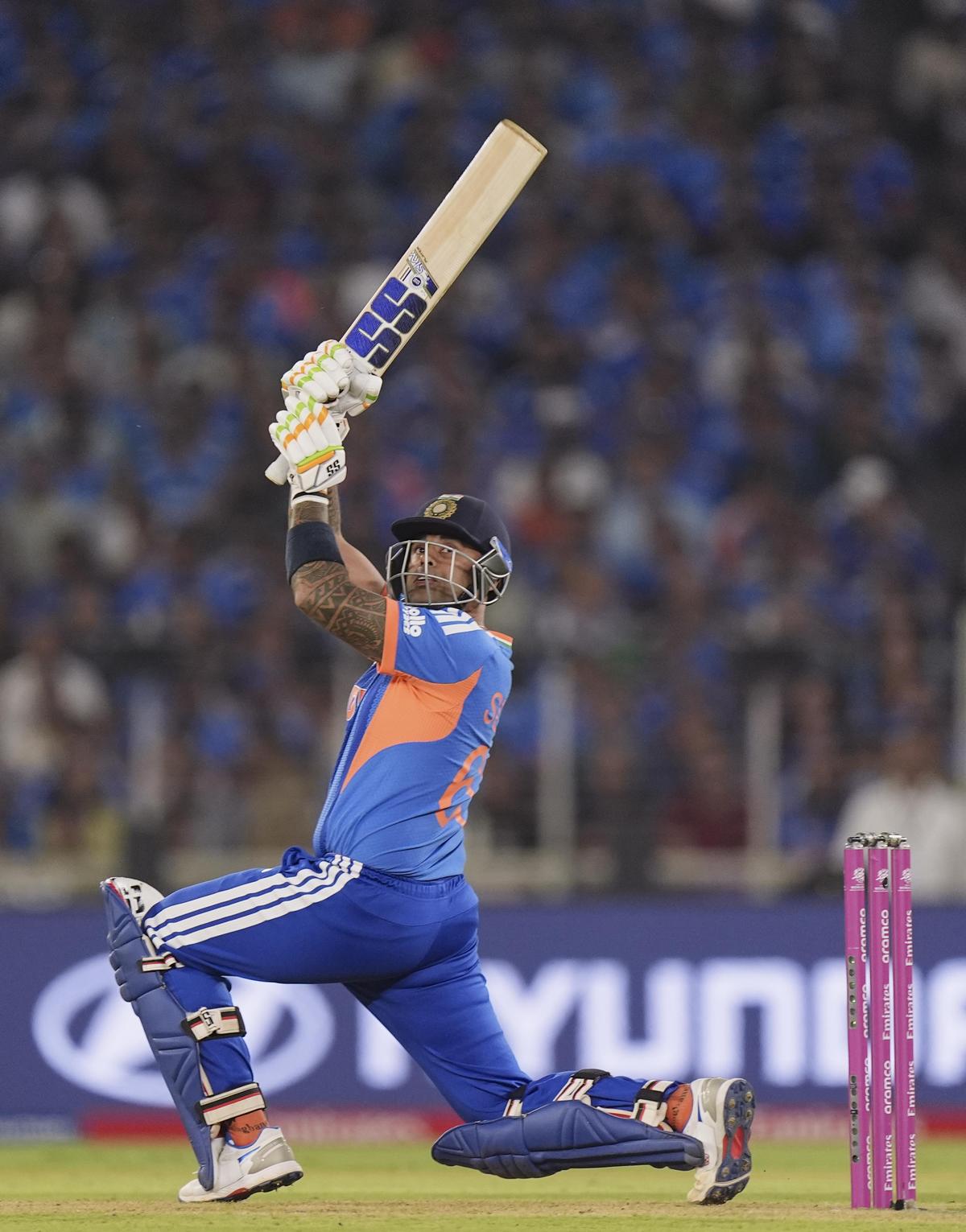
In the 2026 T20 World Cup, Suryakumar Yadav often found himself operating in a role different from the one he regularly plays as a top-order batter. In four of India’s last five matches (after Sanju Samson’s return to the XI), the Indian captain walked in after the 10th over. On those occasions, the game state dictated that he eschew any notion of building an innings and instead look to score from his first ball in order to ensure that India keep its run-rate up in the second half of the innings. This is a role he is unlikely to do as regularly for Mumbai Indians.
| Photo Credit:
PTI
In the 2026 T20 World Cup, Suryakumar Yadav often found himself operating in a role different from the one he regularly plays as a top-order batter. In four of India’s last five matches (after Sanju Samson’s return to the XI), the Indian captain walked in after the 10th over. On those occasions, the game state dictated that he eschew any notion of building an innings and instead look to score from his first ball in order to ensure that India keep its run-rate up in the second half of the innings. This is a role he is unlikely to do as regularly for Mumbai Indians.
| Photo Credit:
PTI
However, Suryakumar often found himself operating in a role different from the one he regularly plays as a top-order batter. In four of India’s last five matches (after Sanju Samson’s return to the XI), the Indian captain walked in after the 10th over.
On those occasions, the game state dictated that he eschew any notion of building an innings and instead look to score from his first ball in order to ensure that India keep its run-rate up in the second half of the innings. This is a role he is unlikely to do as regularly for Mumbai Indians.
Aside from conditions and role clarity, perhaps the biggest difference between the tournaments is length. India played nine games at the T20 World Cup — just over half the length of the IPL league phase. Over a longer season, a player’s campaign is less likely to be defined by the vagaries of form and circumstance, with quality evening out over time.
What to take from the World Cup
While it may not be prudent to expect World Cup form to provide much by way of a one-to-one relation to IPL form, it can be an interesting source of tactical insight.
In a game increasingly centred around role definition, franchises could gain an understanding of how they might structure their teams in order to get the best out of their players.
An excellent example is India’s Player of the Tournament, Samson. Before his World Cup-winning exploits, Chennai Super Kings traded in for the 31-year-old to inject further vibrancy into a batting line-up that seemed to be discovering the power of intent in the second half of the 2025 season. However, CSK faced the question of where to place its latest recruit in a batting order already filled with exciting talents.
Prior to the World Cup, number three would have been a tempting option for Samson, given that it is the position he batted at most frequently for Rajasthan Royals and his propensity for taking down spin. However, post his World Cup exploits, it seems almost inconceivable that Samson will be anywhere other than at the top of the order, with the express charge of setting the tone at the outset.
Kolkata Knight Riders will likely have taken similar lessons. The three-time champion endured a tough 2025 season, often struggling due to a lack of ballast with the bat. While the arrival of Cameron Green is expected to partially solve this, it still faces questions about how it will structure the rest of its batting.
Its options include keeping Sunil Narine at the top of the order and playing Rovman Powell to add heft to the middle order, but what seems likely is that at least one of its blazing Kiwi openers, Finn Allen and Tim Seifert, will start the tournament given their stunning campaign (a collective 624 runs at a 180.86 strike-rate), where they showed a penchant for providing fast starts.
With the ball, Rajasthan Royals’ bowling attack seems structured towards taking wickets with the new ball, particularly with trump card Jofra Archer. Archer had mixed returns for England but was at his best with the new ball in hand, taking eight wickets at 20.37 and often bowling three overs in his first spell to create early incisions.
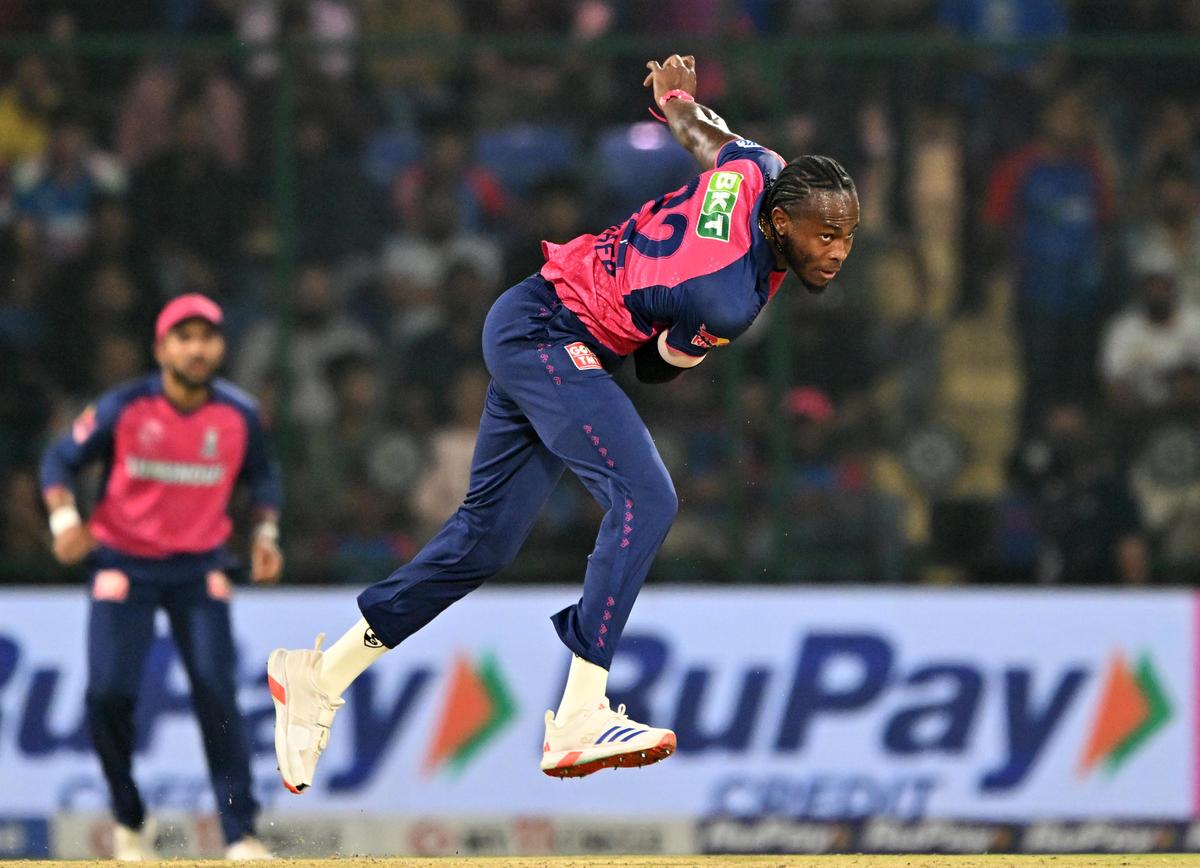
With the ball, Rajasthan Royals’ bowling attack seems structured towards taking wickets with the new ball, particularly with trump card Jofra Archer. Archer had mixed returns for England but was at his best with the new ball in hand, taking eight wickets at 20.37 and often bowling three overs in his first spell to create early incisions.
| Photo Credit:
R. V. MOORTHY
With the ball, Rajasthan Royals’ bowling attack seems structured towards taking wickets with the new ball, particularly with trump card Jofra Archer. Archer had mixed returns for England but was at his best with the new ball in hand, taking eight wickets at 20.37 and often bowling three overs in his first spell to create early incisions.
| Photo Credit:
R. V. MOORTHY
Getting creative
The Royals are also among the teams that could use the World Cup as inspiration to rethink player roles. They have generally used Shimron Hetmyer as a finisher, but the Guyanese batter shone at number three for West Indies, proving especially effective at taking down spin through the middle of the innings and pushing the scoring rate up in a team with relatively calculated openers.
Moving Hetmyer up the order thus becomes tempting for the Royals, albeit it may be tempered by the pre-existing logjam and the proliferation of left-handers at the top.
Similarly, Mumbai Indians would have been buoyed by the form of Tilak Varma and Will Jacks. Both batters have previously been part of a race for top-order spots, but both showcased their versatility lower down the order.
Tilak emerged as an adept pace-hitter at the end of innings, while Jacks (a reasonable candidate for Player of the Tournament) became England’s designated crisis man and finisher.
Who wins the space race?
Where a World Cup features a wide distribution of talent between its competing teams, the IPL has a far more even spread of quality, with every team capable of stunning highs on its day.
In such a competitive field, success becomes defined by which team can maximise its resources — and assemble enough to take the extra step required to be champion.
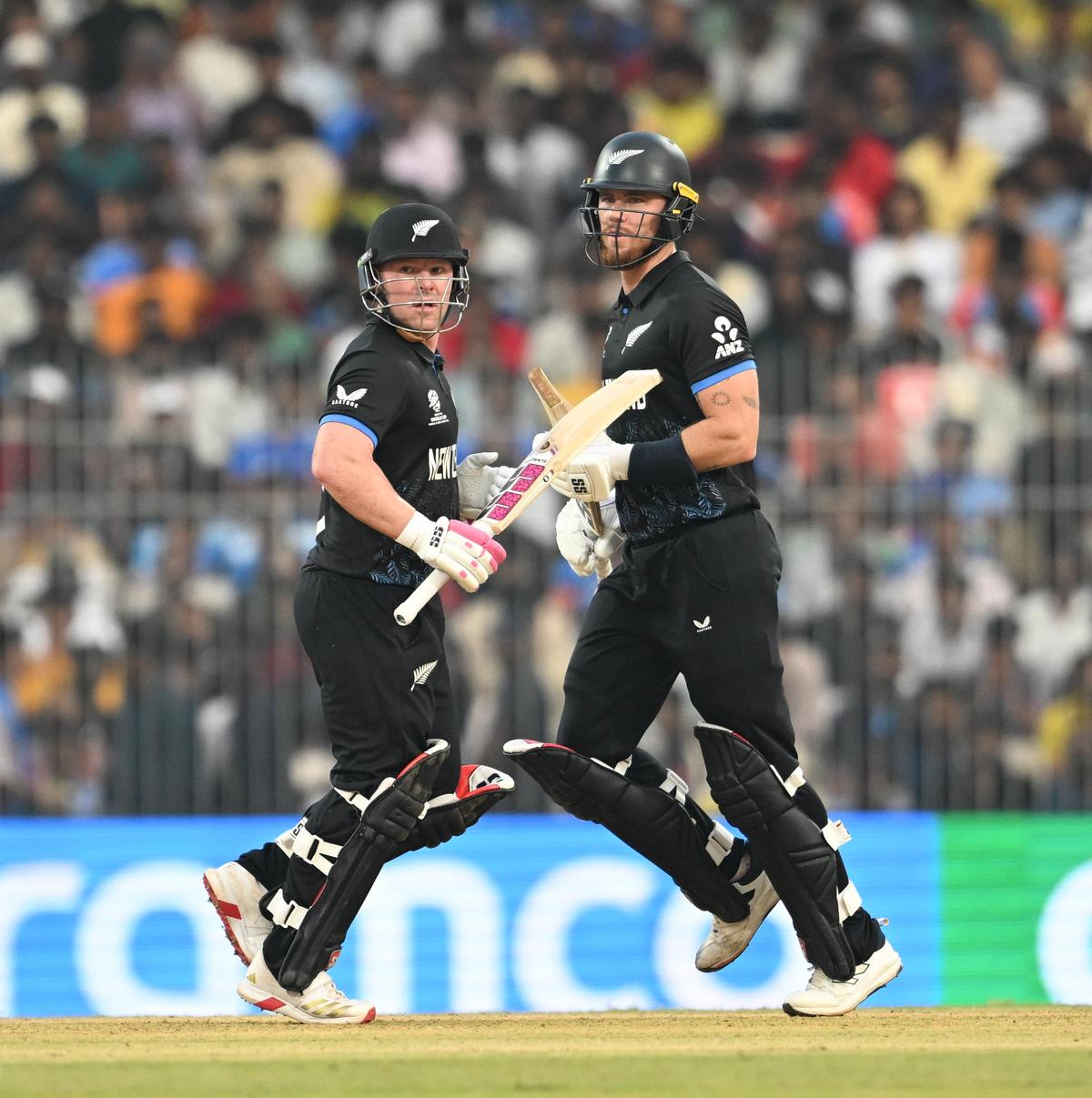
Rapid fire: KKR’s Finn Allen and Tim Seifert showcased a clear penchant for fast starts while opening for New Zealand at the T20 World Cup.
| Photo Credit:
B. JOTHI RAMALINGAM
Rapid fire: KKR’s Finn Allen and Tim Seifert showcased a clear penchant for fast starts while opening for New Zealand at the T20 World Cup.
| Photo Credit:
B. JOTHI RAMALINGAM
The T20 World Cup thus becomes a cauldron of ideas, a source of inspiration for franchises to see how they can get the best out of their players and, cumulatively, chart a path to becoming the next IPL champion.
Published on Mar 26, 2026


