
T20 World Cup 2026: Match-ups in spotlight as South Africa, New Zealand clash in semifinal
Semifinals are meant to distil a tournament to its essence. At Eden Gardens, they also summon memory. When South Africa returns to Kolkata for the first semifinal of the ICC T20 World Cup against New Zealand on Wednesday, it does so with recent proof that this ground can yield to visiting ambition.
In November last year, the Proteas outplayed India here, winning a low-scoring Test by 30 runs to secure their first victory on Indian soil since February 2010. Eden Gardens has staged moments that have tilted eras and reputations alike. Yet history offers no protection in a format that moves rapidly.
Between South Africa riding the crest of a wave in this competition and New Zealand’s habit of clarity under pressure lies a contest that will turn on choosing the right risks.
New Zealand’s use of left-arm spinner Rachin Ravindra during the Super 8s in Colombo made sense. Slow surfaces and grip suited him on those vast outfields. Kolkata, however, is unlikely to offer the same comfort. South Africa will field three left-handers in its top seven, neatly spread through the order: Quinton de Kock at the top, Ryan Rickelton in the middle, and David Miller at the death. Since June 30, 2024, South Africa’s run rate against left-arm spin in the middle overs (7–15) is 8.10 runs per over, with an average close to 40.
ALSO READ | Eden Gardens’ fabled concourses gear up for another taut World Cup clash
That spread of left-handers can make employing left-arm spin particularly difficult. If there is assistance for spin, captain Mitchell Santner will be the steadier option, with his change of pace and angles across the crease.
The flip side is that South Africa’s left-hander-heavy batting order brings off-spinners into the game. Expect Glenn Phillips to play a role in the PowerPlay, with de Kock showing a clear vulnerability against off-spin: 581 runs in 66 T20I innings at a strike rate of 119.30, while being dismissed 23 times.
Santner’s larger battle may be with his opposite number, Aiden Markram, who has been in barnstorming form in the PowerPlay this tournament, striking 164 runs off just 85 balls. If Phillips is used early, it will be as much about containing Markram’s tempo as exploiting de Kock’s discomfort.
Meanwhile, backloading Phillips might backfire for New Zealand, as it did against England, given the power-hitting prowess of right-handers Dewald Brevis, Tristan Stubbs and Marco Jansen.
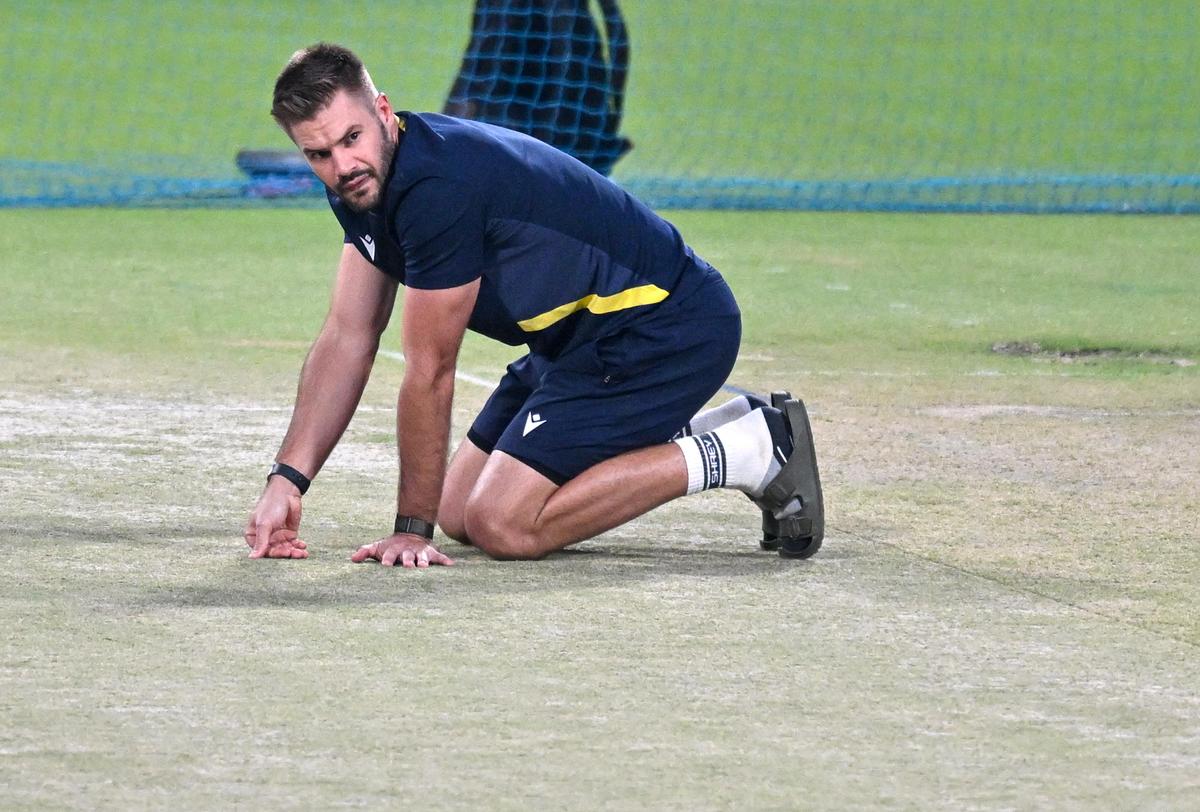
Aiden Markram has been in barnstorming form in the PowerPlay this tournament, striking 164 runs off just 85 balls.
| Photo Credit:
K R DEEPAK

Aiden Markram has been in barnstorming form in the PowerPlay this tournament, striking 164 runs off just 85 balls.
| Photo Credit:
K R DEEPAK
The bigger call is whether to persist with off-spin bowling all-rounder Cole McConchie or add seam in the form of Jimmy Neesham or Jacob Duffy. That decision could be shaped not just by whether Matt Henry, who has been away on paternity leave, is available but also by how much the pitch quickens and the ball skids under lights.
While New Zealand’s top order leans to the right, the lower middle order could tilt sharply left if Neesham were to play. Against a cluster of left-handers late on, South Africa’s quicks may need to adjust their angles and pace. Kagiso Rabada and Lungi Ngidi could lean more on their off-cutters into the pitch at the death, and there is even the possibility of holding back an over of off-spin to disrupt rhythm if the match-ups demand it.
The closing overs may ultimately decide which way the contest swings. New Zealand has conceded at 9.52 per over between overs 15 and 20 in this tournament. While South Africa’s boundary percentage of 16.16 in that phase is modest, its dot-ball percentage of under 24, the lowest among all teams, indicates a side adept at keeping the scoreboard moving even when the big shots dry up.
If that phase becomes decisive, yorker accuracy and pace variation are likely to outweigh the marginal value of an extra spinner. In that regard, neither side is uncertain about conditions. South Africa has played five of its seven games this World Cup in Ahmedabad, across red, black and mixed soils, and adapted fluently to each. New Zealand’s group matches in Chennai came on truer tracks before the slow turners in Colombo demanded recalibration. The margins will be thin. The side that wins its match-ups under lights will likely walk away with the night.
Published on Mar 03, 2026


