
FIFA World Cup 2026 — A tournament reborn as a truly global spectacle
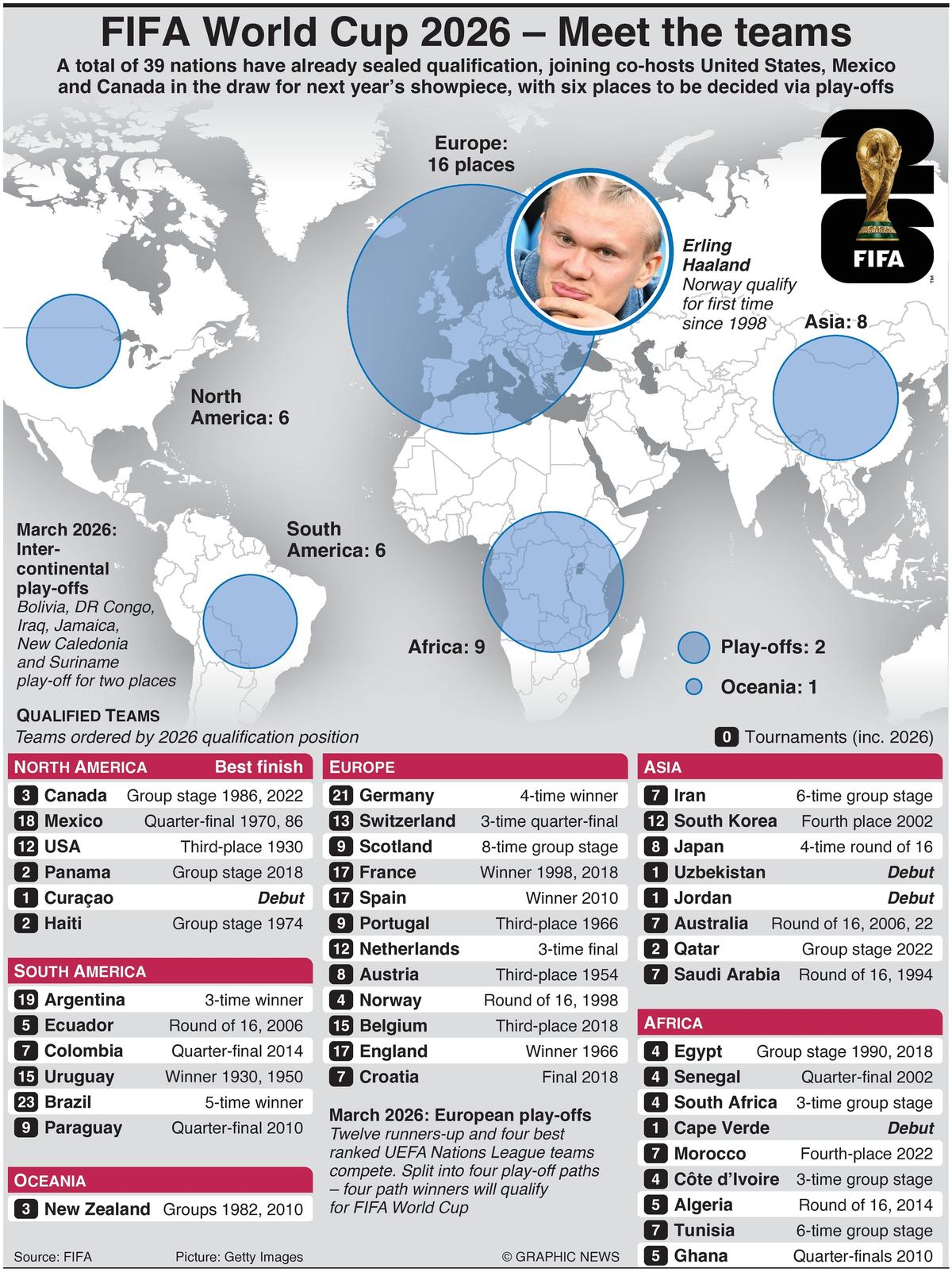
For nearly a century, the grand narrative of FIFA World Cup participation has been shaped most heavily by its two dominant continents, Europe and South America. Out of the eighty countries that have played in the World Cup so far, 34 have been from Europe and 10 from South America.
This glass ceiling looks set to crack in the 2026 edition, where the number of participating teams has been expanded from 32 to 48. As a result, the combined share of European and South American teams will fall below 50 per cent for the first time ever in the history of the tournament.
“We’re in the 21st century, and we have to shape the World Cup for the 21st century. We have to look at football as more than just Europe and South America,” FIFA president Gianni Infantino had said.
A moment in the sun for Africa
Africa, one of the biggest beneficiaries of the expansion, had called the disparity in representation at the World Cup “pathetic” before boycotting the 1966 edition.
The single combined slot for Asia, Africa and Oceania in 1966 has now grown to a cumulative 18 in the 2026 edition, the largest yet. It could rise to 20 if Iraq, Congo or New Caledonia qualify through the inter-confederation play-offs.
“These are proud moments for football in Africa. The main objective is for an African nation to win the World Cup.”Patrice Motsepe, president of the Confederation of African Football
Over the years, Africa has proved to be a potent contender in global football despite receiving limited World Cup slots, with Morocco finishing fourth in the most recent edition.
From North America, there will be at least nine teams, including debutant Cape Verde. A tiny archipelago off the coast of West Africa, it beat Eswatini to become the second-smallest country by land area and the third-least populous nation to qualify.
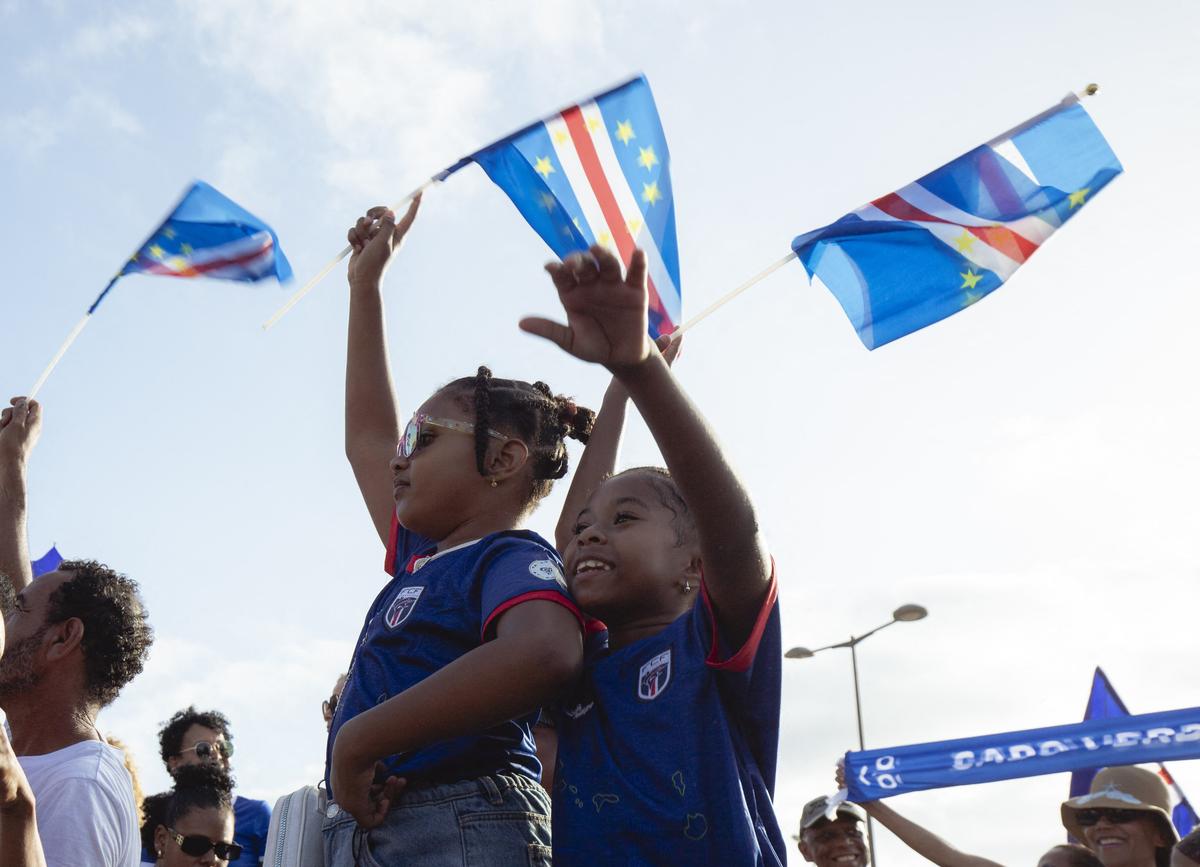
Giant leap: Fans of Cape Verde celebrate its World Cup qualification. The country will make its debut as the third-least populous nation and the second smallest by land area.
| Photo Credit:
AFP

Giant leap: Fans of Cape Verde celebrate its World Cup qualification. The country will make its debut as the third-least populous nation and the second smallest by land area.
| Photo Credit:
AFP
There could be another tale of renaissance from Africa — that of the Democratic Republic of Congo. Formerly known as Zaire, the country last appeared in the 1974 World Cup — a stint marred by player-bonus disputes and threats made to players after a poor showing in the finals.
It secured a place in the inter-confederation play-off for 2026 by beating African heavyweight Nigeria on penalties and could complete its redemption arc should it defeat New Caledonia or Suriname in the play-off final.
“These are proud moments for football in Africa. The main objective is for an African nation to win the World Cup,” Patrice Motsepe, president of the Confederation of African Football, previously said.
“We are absolutely confident that the performance at the World Cup will serve as a significant stimulus and accelerator for the very good work taking place in increasing the quality and global competitiveness of African football.”
Asia — an underrated chapter
Asia has been another overlooked presence in the World Cup, appearing in the knockouts just twice, with its best-ever performance — South Korea reaching the 2002 semifinals — becoming a footnote rather than a headline.
But the expansion has created room for success stories that would have otherwise slipped through the cracks of history.
Uzbekistan, which played its first international match post-independence in 1992, became the first Central Asian nation to qualify for the World Cup.
Meanwhile, Jordan, which had not even qualified for the Asian Cup until 2004, completed a dream run to the 2026 World Cup, beating Oman 3–0.
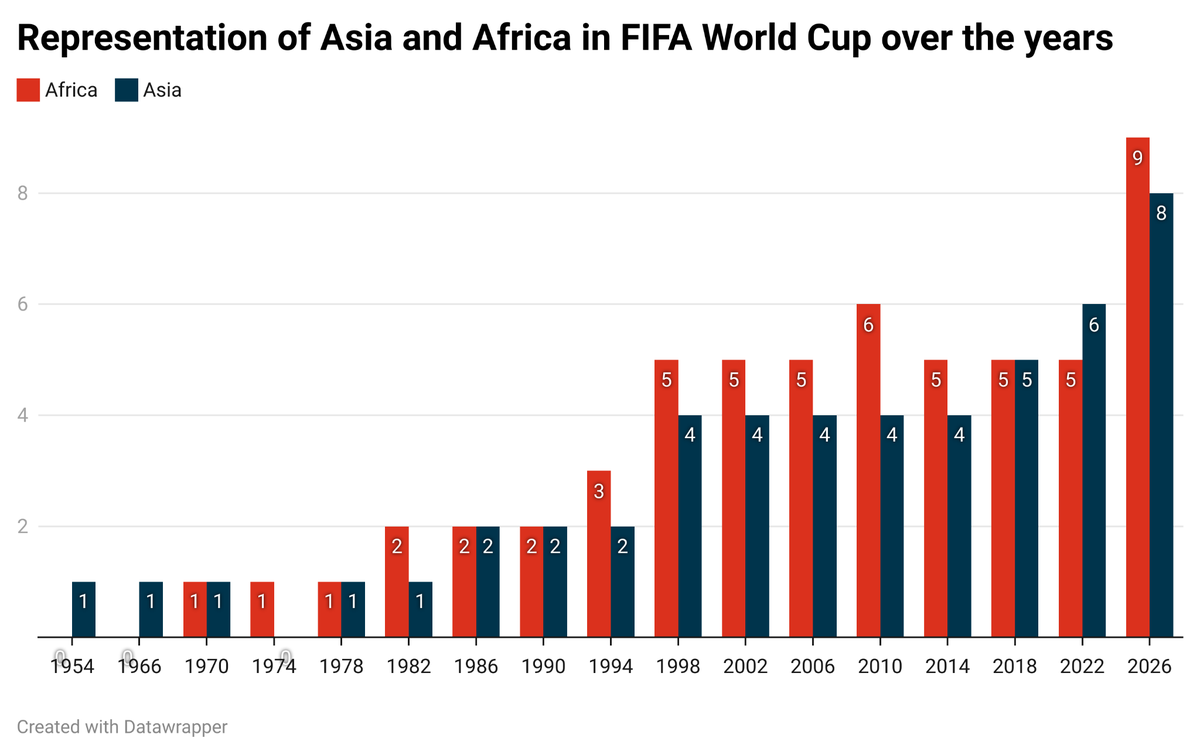
The first FIFA World Cup to have representation from Asia or Africa was in 1954. Since then, there has been a steady rise in representation from both the continents.
The first FIFA World Cup to have representation from Asia or Africa was in 1954. Since then, there has been a steady rise in representation from both the continents.
Beyond the usual suspects of Japan, Iran and South Korea, Qatar qualified on merit for the first time, while Iraq is one step away from its first World Cup appearance since 1986.
There are other success stories in the 2026 edition. The tiny Caribbean island of Curacao became the least populous nation ever to qualify for the World Cup. Haiti, infamous for gang violence, also made the tournament without playing a single qualifier on home soil.
The broader picture
The allure of playing at a World Cup also provides players with a chance to represent their native countries, which would otherwise not be possible with a smaller pool.
Axel Tuanzebe, a former England Under-21 international who has also captained Manchester United, failed to break into the Three Lions’ senior squad. He eventually switched allegiance to DR Congo, his birth country, in 2023.
So did his United teammate Aaron Wan-Bissaka, who was also born to Congolese parents. Congo is on the brink of making it to the finals.
Mason Greenwood — once touted as one of England’s best youth talents — switched to Jamaica after falling out of Thomas Tuchel’s plans.
Luca Zidane, son of France’s 1998 World Cup hero Zinedine Zidane, chose to represent Algeria, which qualified for the World Cup after a decade — after he could not break into a deep French squad comprising Mike Maignan and Luke Chevalier.
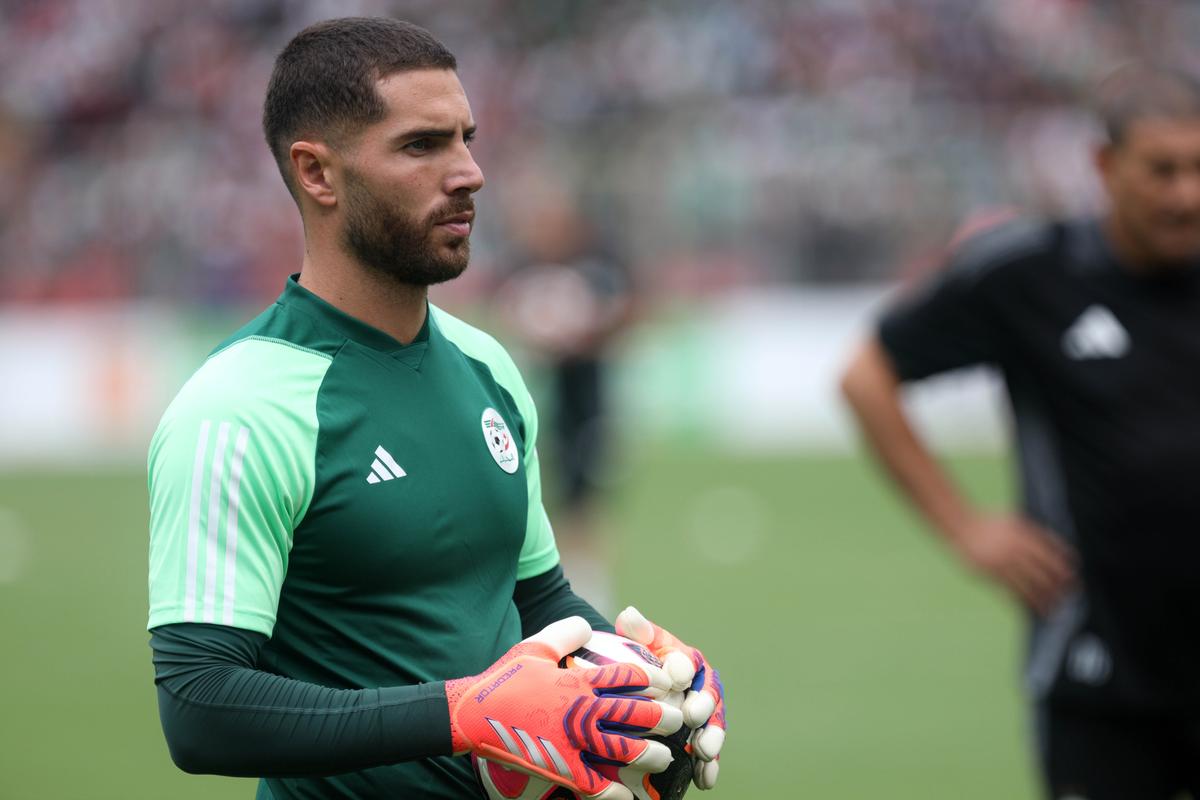
Different path: Luca Zidane, son of France’s 1998 World Cup hero Zinedine Zidane, chose to represent Algeria, which qualified for the World Cup after a decade — after he could not break into a deep French squad comprising Mike Maignan and Luke Chevalier.
| Photo Credit:
Getty Images
Different path: Luca Zidane, son of France’s 1998 World Cup hero Zinedine Zidane, chose to represent Algeria, which qualified for the World Cup after a decade — after he could not break into a deep French squad comprising Mike Maignan and Luke Chevalier.
| Photo Credit:
Getty Images
Another major consequence of a larger pool of teams is that it leaves the door open for a fresh set of ideas — be it Jordan’s fluid changes in formation or Uzbekistan’s astute youth development infrastructure.
Jordan’s change in manager — from Hussein Ammouta to Jamal Sellami — shifted the team’s shape to a counter-attacking 3-4-2-1 in the World Cup qualifiers, transforming it from a composed low-block side to one firing on all cylinders. The architect, Sellami, and the result: 16 goals in six matches and a direct World Cup qualification.
Uzbekistan, on the other hand, worked on building strong age-group teams, winning the U-20 Asian Cup (2023), consecutive U-23 Asian Cup finals (2022, 2024), an Olympic bronze medal, and reaching the U-17 Asian Cup semifinal in 2023.
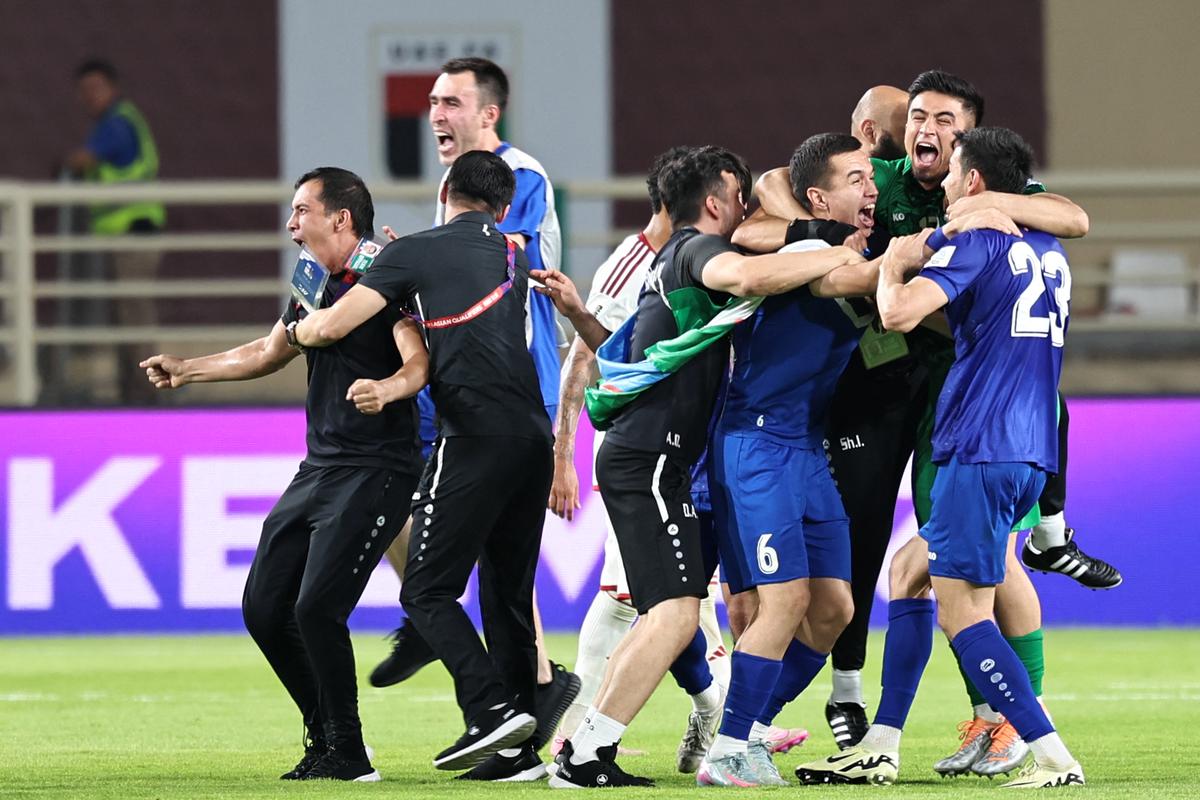
Historic debut: Uzbekistan, which played its first international match post independence in 1992, became the first Central Asian nation to qualify for the showpiece tournament.
| Photo Credit:
AFP
Historic debut: Uzbekistan, which played its first international match post independence in 1992, became the first Central Asian nation to qualify for the showpiece tournament.
| Photo Credit:
AFP
Unsurprisingly, the success in the World Cup qualification came through this proven assembly line, including Abbosbek Fayzullaev, the 2023 AFC U-20 Asian Cup MVP and AFC Youth Player of the Year, and Abdukodir Khusanov, a U-20 Asian champion and U-23 Asian Cup runner-up.
The impressive show of coaches like Sellami from unassuming corners of the world is bound to make Europe and South America, the long self-anointed gatekeepers of the game, rethink old assumptions — much like South Korea’s upset against Italy in 2002, or Walid Regragui’s Morocco against Portugal in 2022.
The beautiful game has always promised universality. Next year, with its most inclusive canvas yet, the FIFA World Cup will finally deliver it.
Published on Dec 04, 2025


