
Mithali Raj: Home Women’s World Cup will build on work done by WPL
Mithali Raj knows a thing or two about pressure. For long, she and Jhulan Goswami were flagbearers for India in the women’s game and the ecosystem’s most recognisable faces. She led India to two World Cup finals, the first in her very first assignment as skipper.
As India prepares to host the Women’s ODI World Cup, with the home side now one of the firm favourites, Sportstar caught up with the former captain to understand how far the game has evolved in India, how the nation can maximise on the opportunity to stage the ODI showpiece and more.
Q: Let’s begin at the 2005 Women’s ODI World Cup, where you were thrown into the deep end as captain at the age of just 23. The Indian team made the final, losing to Australia in the final at Centurion. How vivid are your memories of that experience?
A: I don’t remember much about that edition. It was my first assignment as a full-time captain. At that point, it was important for me to contribute as a batter. That was bigger than doing anything as captain because I was a very young person, the youngest perhaps, in a very senior team. I had two former captains in the ranks. So when it came to captaincy, I personally felt I didn’t do much because everyone knew what was expected of them. Anju Jain was a big help behind the stumps. I had help from Neetu (David). I had help from Deepa (Marathe).
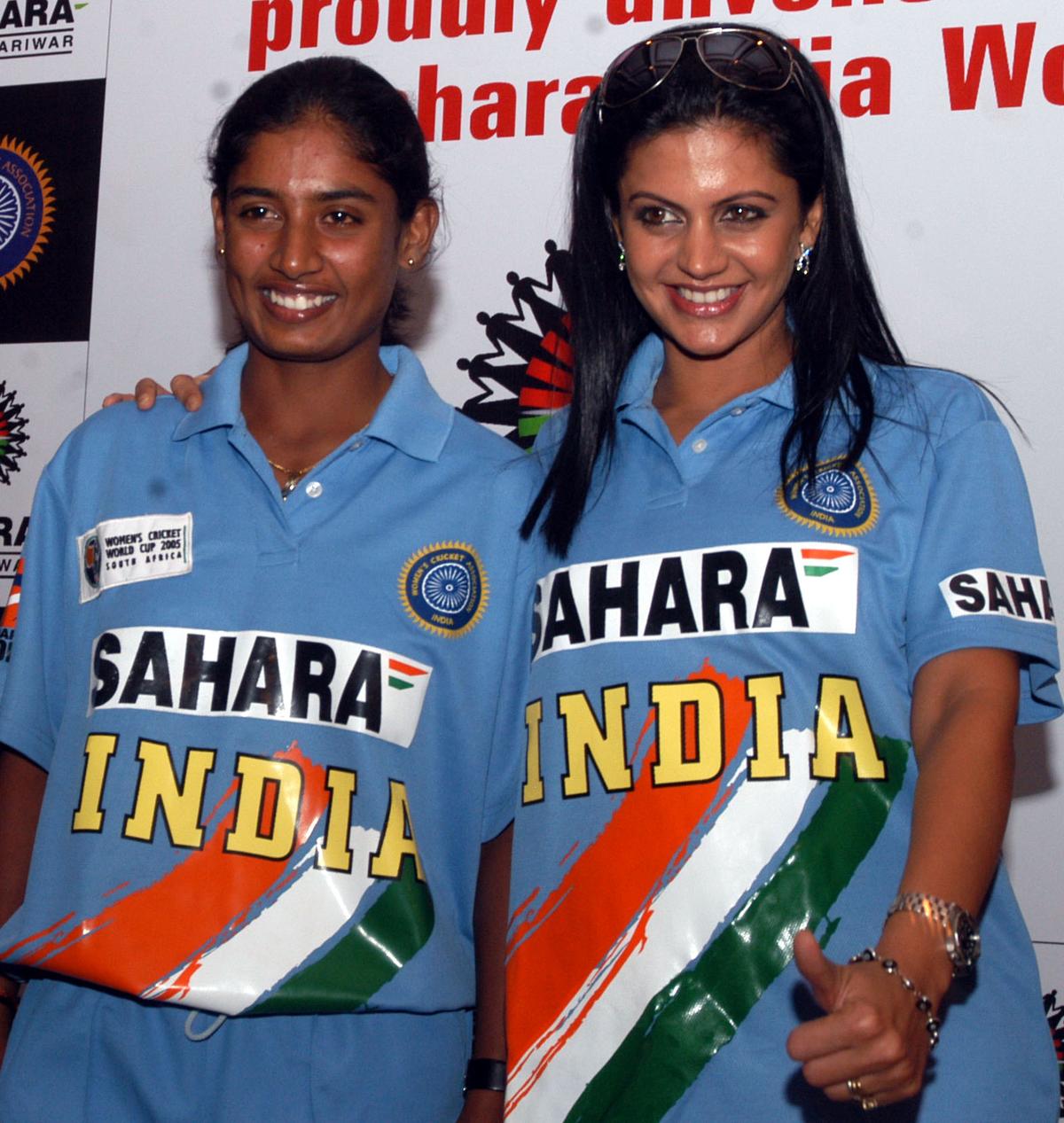
Mithali (left) with Mandira Bedi, then brand ambassador of the Indian women’s cricket team, ahead of the South Africa World Cup in 2005.
| Photo Credit:
Special Arrangement

Mithali (left) with Mandira Bedi, then brand ambassador of the Indian women’s cricket team, ahead of the South Africa World Cup in 2005.
| Photo Credit:
Special Arrangement
So, for me, I knew my contributions as a batter had more significance. I was scoring well until then and didn’t want to drop my performance as an individual.
The challenges as captain started after that World Cup. The tournament comes every four years, and a fresh crop of players comes in with each cycle.
When you made the final in 2005, did it change the way your competitors looked at you? The perceptions about what the Indian women’s team could and couldn’t do?
It did change the way we looked at ourselves, more than what the opponents felt. Our preparation for that World Cup was quite good. We played defending champion New Zealand at home and beat them 4-1. We played Australia at home and the scoreline was 3-4. It wasn’t one-sided. We played good sides before that World Cup. Until then, in World Cups, we had always made knockouts.
We realised we had undervalued ourselves. Everyone thought we should reach the finals and that was our goal but we never thought about winning after getting to that final. Maybe we should have. We might have won! But, that feeling we had of maybe not matching up to the best sides changed after the World Cup.
India next made the final in 2017, also under your captaincy. How different was the mindset then? How different was the team’s own belief in itself?
Things were very clear in 2017. We were coached by Tushar Arothe. We reached England late at night. He called us to the ground the next morning and said, “We are not here on a holiday to take time to get through the jet lag or complain about the cold. We are here to win the World Cup.” We were thrown into training right away.
During the tournament, we lost a few games but came back. Everybody contributed. Punam Raut, Smriti Mandhana started well. Players like Veda Krishnamurthy and Harmanpreet Kaur picked up later. Sushma Verma played a crucial innings against Pakistan. It’s a long tournament. Players sometimes peak early, sometimes late. How you peak as a team – that is important in a tournament like this.
The focus definitely wasn’t on just reaching the finals. We were clear about being there to win.
READ: Women’s ODI World Cup 2025: From Jemimah Rodrigues to Annerie Dercksen – Debutants to watch out
Ahead of this World Cup, India is one of the overwhelming favourites. How does it feel to see the side grow to this point?
This was bound to happen. Australia had a head start because the Women’s Big Bash League and the link to their 50-over tournament started much before our Women’s Premier League and The Hundred. With leagues like this, you have players from different parts of the globe coming together, and your game awareness improves considerably.
It’s just not about the national players who are playing or the elite athletes. It’s also about the domestic players. Suddenly, you see a defined change in the way they get onto the field because they’re all looking at their role models; some are even playing alongside them.
It’s not just about performance there. A player is no longer insecure about whether they will get picked or not. They can recognise an opportunity for what it is, rather than feeling insecure or feeling fear or pressure to perform, which we all did for the longest time because we had no other platform outside the domestic circuit. International games were scarce, like a series in two series in a year at best. It didn’t help gain any momentum.
Look at how many games players get now. It’s a busy year. If not internationals, you are busy with leagues.
There was a time when your own career had massive gaps between series, sometimes stretching to more than 400 days. When you look back, is there any regret for those missed opportunities?
You realise it more when people ask you about it. If you compare it to the current situation, yes, I could have played a lot more. My growth as a player wouldn’t have been as slow as it was then, and I would have had a lot more runs. Earlier, every time there was a series, we had to start from the beginning. I remember there was this England series where I notched up two scores in the 90s, but that was the only series the entire year. We didn’t know when we’d play next, and players would have to start from the beginning to build momentum again.
With the T20 format, I wasn’t very serious about it at the start. We’d hardly played one or two games to start with. Now, with regular fixtures and leagues, you realise how transferable T20 skills are into the other formats. Building that awareness took time for me.
How do you do all this in just five games a year? How do you know if a player is good enough with a small number of fixtures to gauge them on? How much could you truly experiment? We were torn between giving opportunities to new faces and sticking to tried and tested names who could win us games. It was a big dilemma back then.
Across the men and women now, we are seeing A tours increase. Happy to see that change?
I am sure they’ll streamline that. We’ve seen the side in Australia. A strong pool of players is also increasing. Besides that, the Centre of Excellence is also taking a lot of initiative in conducting camps and identifying talent to mould dedicatedly. Off-season camps for emerging players have been an important thing.
The BCCI Centre of Excellence is taking a lot of initiative in conducting camps and identifying talent.
| Photo Credit:
PTI Photo/Shailendra Bhojak
The BCCI Centre of Excellence is taking a lot of initiative in conducting camps and identifying talent.
| Photo Credit:
PTI Photo/Shailendra Bhojak
There is a massive difference between the Under-19 players who came to us after winning the inaugural U19 World Cup to the batch that came into the WPL in the past year. So much more skill development work has gone into this bunch. There’s a proper roadmap for progression now into the senior team.
It’s a home World Cup. The last time India hosted during your time as a player was in 2013 and then back in 1997. What are your standout memories from these two editions?
In 1997, I was too young to even understand the gravity of a World Cup at home. I was in class 10. I was attending these 20-day camps, and until the first match, I was with the team as first standby.
In 2013, we had just come back from a T20 Asia Cup and went straight into the World Cup. It was happening in Mumbai, but there was not much talk about it in terms of promotion. The media were there, of course. The cricket community knew a World Cup was happening, but not the world outside it.
ALSO READ: Jemimah Rodrigues Interview: Getting dropped before 2022 World Cup made me a better player
Compare that to this year. We have a trophy tour that I don’t remember happening before. 2013 didn’t have the volume of digital content created today. The media coverage has exponentially increased, which is all very positive for the sport.
In 2013, attendance was poor. How do you think things will be this time, given that the World Cup will play out in largely non-mainstream venues? What do you hope this World Cup will do for the legacy of women’s cricket in the country?
This World Cup is starkly different in its build-up. Promotions aside, we are also coming from a home series against Australia, which was a great endorsement ahead of the tournament.
It helps that surfaces are also increasingly good for scoring. We have the chance to show new audiences that the women’s game is no longer about 250 totals. 350 totals, too, can be chased now.
That third India vs Australia ODI saw close to 800 runs, and it was still not enough. People thought India could have completed that chase. With each cycle, you can see how much the women’s game is growing.
Teams have been improving and playing each other competitively. Games are no longer one-sided like they largely were before. There are favourites, yes, but no one is running away with the advantage early on. It is anyone’s World Cup, and the last few editions, particularly the T20 World Cup, have shown us just that.
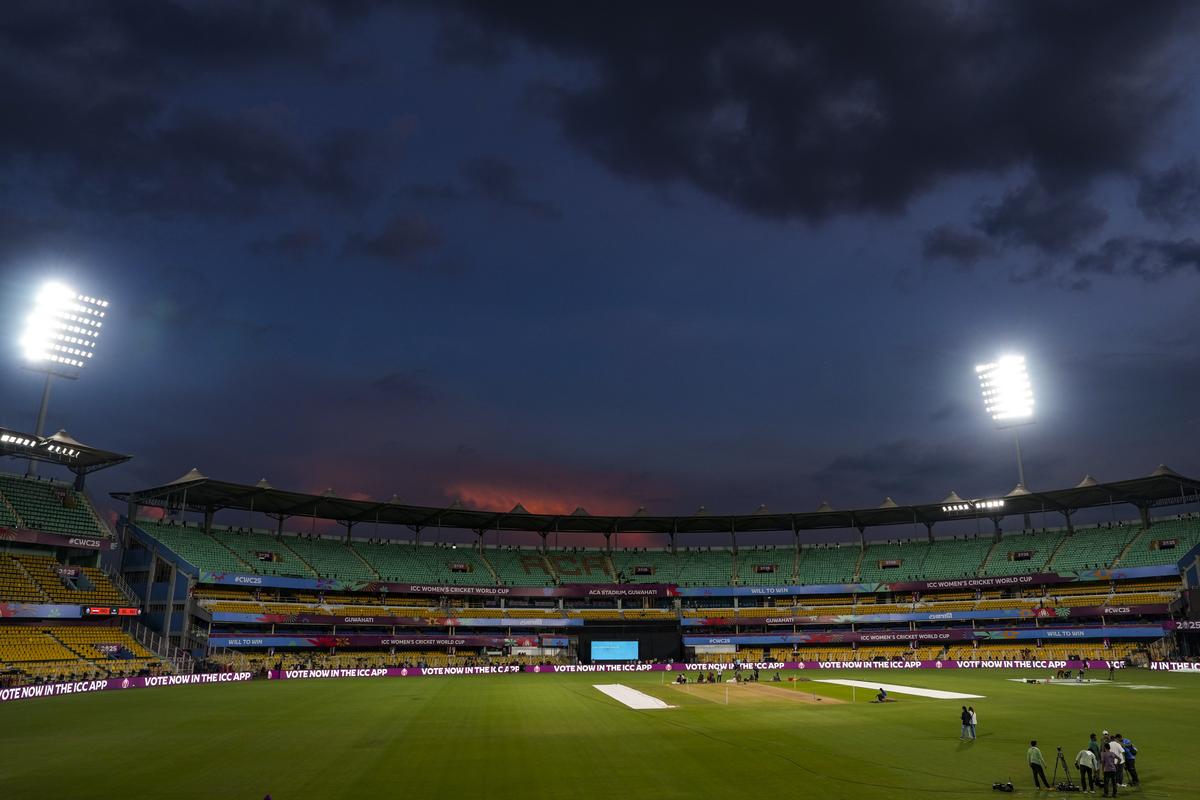
Groundsmen prepare the ACA Stadium in Barsapara, Guwahati, for the World Cup.
| Photo Credit:
PTI Photo/Swapan Mahapatra
Groundsmen prepare the ACA Stadium in Barsapara, Guwahati, for the World Cup.
| Photo Credit:
PTI Photo/Swapan Mahapatra
This World Cup will build on everything the WPL has put in place in the last three years.
You were at the helm when the women’s game veered more in favour of T20s. World Cups in this format are more frequent. How has the ODI format retained that top-tier space when you have this new, exciting, shorter format giving it competition? Is it because of the benefits the format brings in terms of ICC recognition?
I guess, because ODIs are not as frequent as T20Is. Every two years, you have another T20 World Cup. The ODI event is different. It comes every four years, and you see significant changes in trends and squads each time. It tests teams in transition. ODIs are still the pinnacle for the women’s game because of this. Most nations don’t play Tests, so the one-day event becomes the marquee.
You’ve always maintained that being captain for so long was a lonely experience for you. You can then empathise with characters like Chamari Athapaththu (Sri Lanka) or Nigar Sultana Joty (Bangladesh). What word of advice do you have for them from your own experiences?
If I had to go back in time and change something about how I went about my game, I would have enlisted the help of a mentor to navigate these things. I did a lot of my stuff on my own.
In today’s time, you need one, irrespective of whether you are a leader or not. There’s so much scrutiny, and a lot of information about you is out there. We meet so many people. How do you then work on your own energy and have that balance between working on your own skills and being at your best when you take to the field?
ALSO READ: Women’s ODI World Cup 2025: Records that could be broken this edition
To see where your head is. I did this more in the later stages of my career. I would take time to find my equilibrium. At events like this, as a skipper, you are wanted everywhere. Media work, shoots, meetings – the schedule is heavy for a captain. So make sure to take time for a walk and find your balance. It will help you be at your best the next day.
Going into the 2017 World Cup, you spoke of how retirement was on your mind. By 2022, you had announced you were done for good. We have a few characters in a similar situation here, for example, Sophie Devine. We know this is the last World Cup for a number of veteran players. What is it like to stay objective and tactical at a World Cup while you also have this emotional side to handle?
In 2017, I did think that maybe that was my last World Cup, but I would continue to play for a few years. But by 2022, I knew I was done. I wasn’t going any further at any level. For someone like Sophie, who has already made up her mind that this is her last World Cup, she will try to give her best while also enjoying the feeling of representing her country at the highest level.
I cannot really say it was hard or easy to walk away, but for someone who’s batted for hours every day all those years, I never wanted to bat again. My body and mind were in sync as I knew I was done and had nothing left to give. Cricket is sacred for me, and I didn’t want to dilute it by continuing when I am not at 100 per cent. It’s something my first coach taught me. I am sure the generations to follow will also get there at some point.
Going into this tournament, India has built a stable and in-form top six that has visibility ironed out longstanding technical and tactical issues. But the bowling still looks a bit undercooked. Given that we are operating in an age where the game is tilting towards batters, how confident are you about India’s current bowling reserves for the World Cup?
Honestly, I do know that we don’t have an out-and-out fast bowler. We do have bowlers who can swing the ball on a batting-friendly surface when there’s nothing to offer from the wicket, when it gets very difficult to sort of get pace on the ball. But then our spin department is doing much better because we have Deepti (Sharma), and we have Sneh Rana, who has been incredible after her comeback. You have the experience of Radha Yadav and a very interesting prospect in Sree Charani.
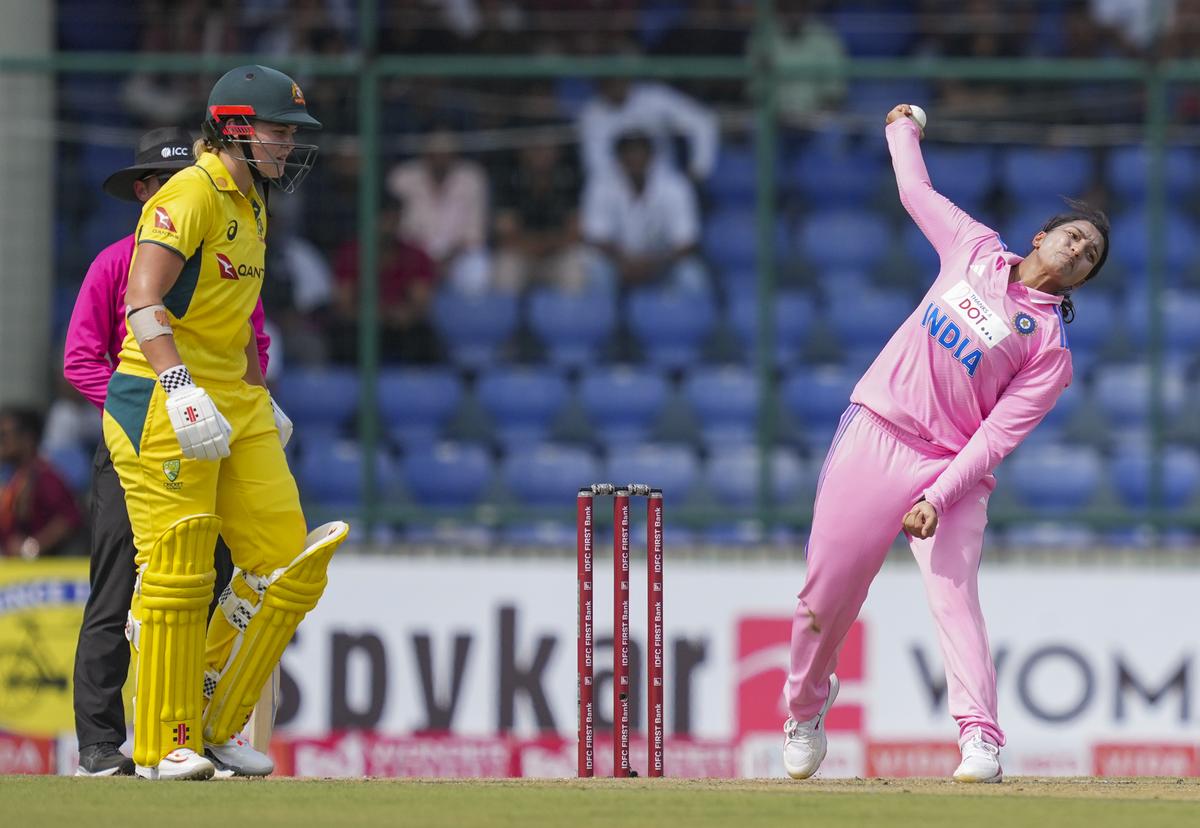
Sneh Rana bowling against the Australia women’s team during an ODI series on September 20, 2025.
| Photo Credit:
ATUL YADAV
Sneh Rana bowling against the Australia women’s team during an ODI series on September 20, 2025.
| Photo Credit:
ATUL YADAV
In the pace pool, barring Kranti Goud, we have experienced players in the mix. Given the batting line-up India has, the side is banking on scoring more and hoping the bowlers can defend.
We don’t have someone like Lauren Filer or Darcie Brown, who both bring in pure pace. But our bowlers are also good in their own right. They, especially Sneh, have done well in the middle overs. In the game where Australia scored 412, Sneh was better than most in the middle overs, despite not getting the wickets.
With youngsters like Charani and Kranti finding permanent roles in the team, do you think state associations should capitalise on them during the World Cup – particularly those hosting matches in India?
State bodies getting an opportunity to host, like Madhya Pradesh and Andhra Pradesh, should encourage players to go watch the games live. They should also try to have players in the system around training sessions, where there could be chances to interact with the teams. You can learn so much by watching how other players approach their drills. State associations could request a few interaction sessions with domestic players. Not everyone gets picked in the WPL, so this could be a way for players to get some time with elite athletes and ask questions.
We have to discuss that 412-run game. Postmortems have been done in detail. Do you think this will be the norm, or was it an exception? Is the game headed in the 400-plus totals direction?
It all depends on the surface. It was such a flat track that nothing was happening from the bowler’s side. It was on the batters to make mistakes and get out.
But I’m not too sure how it is going to be in the future. That said, 300-350 totals are now the standard most teams are playing to. Teams are mentally prepared for that. When you lock on that as a priority, you’ll be able to reach it more frequently. The bar then gets pushed higher and higher. Higher scores may be the case in the next five years, potentially, but for this World Cup, around 350 as the norm is what I think teams will try to reach.
In some ways, these conversations are a bit skewed, isn’t it? We’re applying many of these trends to the top four teams (Australia, India, England, South Africa, and maybe New Zealand). But Sri Lanka, Pakistan, Bangladesh – these sides are still a bit slow to catch up. There’s a clear tier two. What do you think the governing powers – be it their own boards or the ICC – can do to bridge that gap a little more?
Not too sure about how the ICC is seeing this. But apart from international series, do these sides have exposure playing in different leagues or different systems? If yes, how many players go?
For Sri Lanka, we largely see Chamari playing in leagues around the world. You can see the growth in her skill and approach. But one player evolving is not enough to change the system for the entire team. If you’re talking about these 400 targets or even 350-375, she requires other players to rally around her.
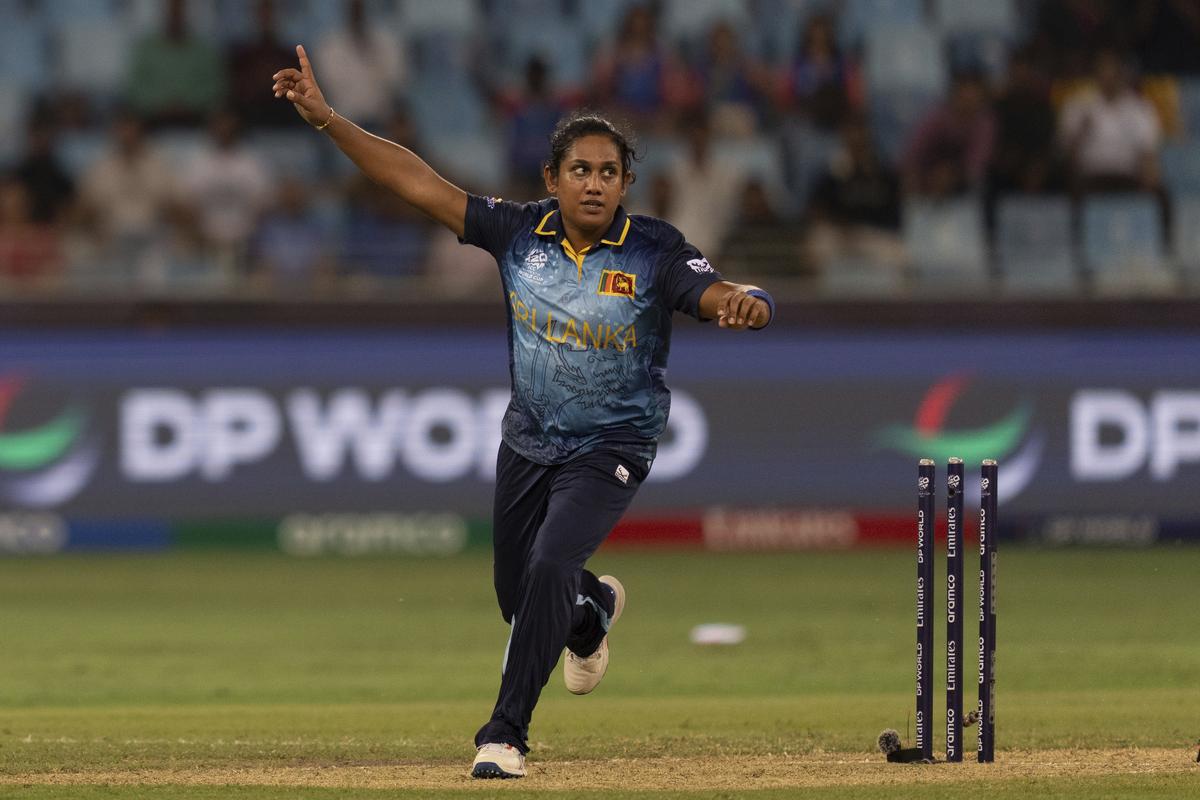
‘Sri Lanka’s captain Chamari Athapaththu needs other players to rally around her.’
| Photo Credit:
AP Photo/Altaf Qadri
‘Sri Lanka’s captain Chamari Athapaththu needs other players to rally around her.’
| Photo Credit:
AP Photo/Altaf Qadri
What about the other players? How much international cricket or exposure are they getting in a calendar year, apart from the bilateral series that they play with every team in the ICC cycle? How regularly do they play Australia? They don’t. How regularly do they play England? They don’t. How frequently are they touring abroad? That’s the question decision makers at every level need to sit down and think about. Send players abroad for exposure. Start with England and Australia and get girls into the domestic setup or County games. South Africa is a good example of a team that’s caught up in this regard.
Published on Sep 29, 2025


